We Help International Investors and Project Owners Deliver Major CEE Projects Without Expensive Surprises
Independent project intelligence and advisory across energy, transport, real estate and industrial construction.
Italy's Budget Bill Puts EUR 1.6bn Behind The Terzo Valico Geological Variant
Article 77 of Italy's draft 2027 budget bill carries about 5.43 billion euros for the rail network, including 1.6 billion euros for a geological variant on the Terzo Valico dei Giovi. On a sovereign megaproject the funding article, and not the contract clause, decides when ground risk gets paid for.
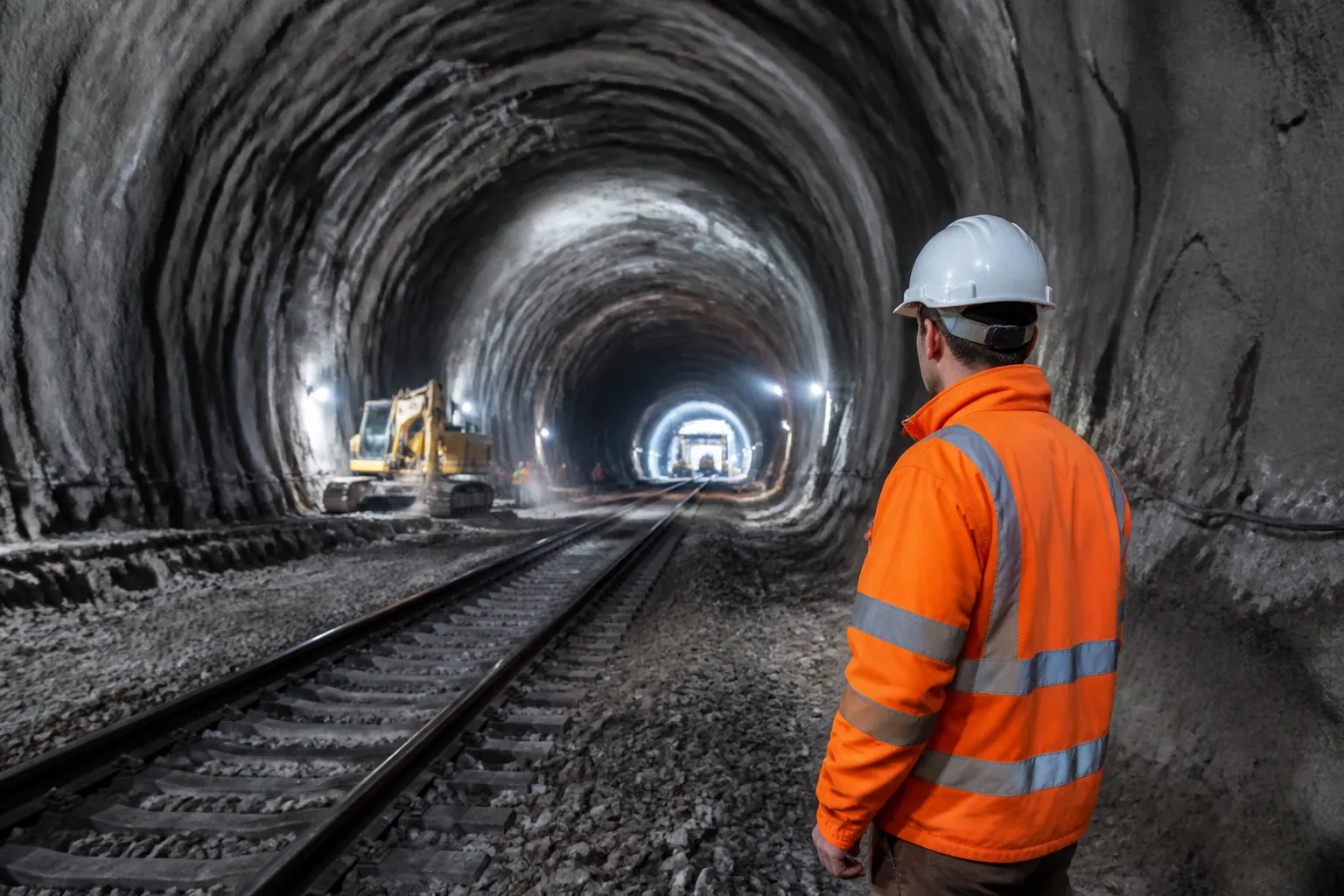
I would take the appropriation calendar off the finance team and hand it to the programme director. That single document decides when a tunnel variant actually gets paid for. Italy's draft 2027 budget bill now puts 1.6 billion euros behind a geological variant on the Terzo Valico dei Giovi. It arrived three weeks after 300 workers at two of the line's tunnel sites went onto wage support.
Ground risk now clears through a budget article
Article 77 of Italy's draft 2027 budget bill refinances the programme contract between the transport ministry and Rete Ferroviaria Italiana. Il Sole 24 Ore reported on 2 November 2026 that the article carries about 5.43 billion euros. That money is for the national rail network and is split between maintenance and investment across two financial years.
Inside that package sits the 1.6 billion euro line for the Terzo Valico. The bill ties it to significant geo-mechanical conditions that emerged during construction. That matters because a state infrastructure manager cannot pay an entitlement it has no appropriation for. RFI's spending authority is set by its programme contract with the ministry. So the budget cycle sets the payment date for the variant.
The sanctioned financial framework for the line itself runs to about 8.5 billion euros. Taken with the Genoa node and the Campasso upgrade it reaches about 10.6 billion euros. So the variant is close to a fifth of the line's own sanctioned cost arriving through one budget article.
Thirty-six kilometres of the line is tunnel
The Terzo Valico is a 53 km high-speed and high-capacity link between Genoa and the Milan-Turin axis. Webuild puts 36 km of it underground. A tunnel price is a geology forecast, and the face is where that forecast gets tested.
The reason is simple. A bid is priced against a ground investigation sampled at intervals along the alignment. Excavation reveals the rest of it. Gas-bearing rock changes the ventilation design, the support class and the achievable advance rate. Each of those changes the unit cost of a metre. So a geological variant is a re-pricing of method rather than a bolt-on extra.
What a 22 billion euro claim book is actually worth
Il Post reported on 16 October 2026 that Webuild cited about 800 million euros of overdue invoices. Its chief executive put the group's recorded claims across RFI work at about 22 billion euros. RFI disputes almost every one of those figures and says it has paid what it owed. The contested works run to roughly 30 billion euros of contracts.
Those claims are riserve, which an Italian contractor records in the project accounting books as the work proceeds. The mechanism matters. A collegio consultivo tecnico, a technical board of experts appointed by both sides, settles them without a court. Those boards have historically awarded contractors about 29 per cent of what they claimed. So both parties are arguing over a discount rate rather than over whether entitlement exists.
The crew stand-down is the pricing signal
TrasportoEuropa reported on 15 October 2026 that about 300 workers went onto 13 weeks of ordinary wage support. They work at the Radimero site in Arquata Scrivia and the Val Lemme site in Voltaggio. About 1,800 people work across the Terzo Valico sites including subcontractors.
A tunnel crew is a standing cost. That is why an unpaid variant shows up as a demobilisation long before it reaches a court. Idle plant and a stood-down face cost the contractor whether or not the claim is paid. Wage support moves part of that cost onto a state scheme. It also makes the funding gap a published fact, and a published fact is what reaches a budget drafting table.
Divisible scopes absorb the budget risk
The same bill carries 500 million euros for the Trento freight bypass and 170 million euros for the Naples-Bari completion. It carries a further 140 million euros for the Giampilieri-Fiumefreddo doubling in Sicily. It also carries about 1.45 billion euros for technology, including ERTMS signalling. ERTMS is the European Rail Traffic Management System used for train control.
A signalling rollout can be re-phased and a tunnel variant cannot. That happens because signalling is let in geographic packages with their own commissioning dates. An appropriation shortfall slips a package and nothing collapses. A tunnel face is either supported to the designed class or it stops. So the divisible scopes carry the budget risk and the indivisible ones get named in the statute.
The same mechanism runs on every European base tunnel
Europe's corridor programmes share this structure. The employer is a state-owned manager funded by appropriation. The contract puts unforeseeable physical conditions on that employer. Brenner, the Czech motorway tunnels and the Slovak D1 packages all sit on the same arrangement.
A FIDIC risk allocation is only as strong as the employer's funding line. That is what the appropriation does. The contractor's remedy for unforeseeable ground is time and money from the employer. The employer's money is a line in a public finance statute. So the enforceable value of that clause moves with a legislative calendar.
The analyst's read on where this lands
My call is that the 1.6 billion euros restarts the two stood-down sites inside this quarter. It settles nothing about the claim book. The mechanism is simple. An appropriation funds scope, and entitlement is decided by the technical board. The two run on separate clocks.
The figure that settles the Terzo Valico is what that board certifies on the recorded claims. Twenty-nine per cent of a claim book is a different company from all of it. Watch the 850 million euros the bill flags for the end of the decade. If the variant needs that money drawn forward, the ground is worse than the bill assumes.
📊 Analytics & Strategic Insight
Ground risk on a sovereign megaproject is a public finance instrument
The decision most in this industry are avoiding:
👉 Price the sponsor's funding mechanism, not only its credit. A state rail manager can be investment grade and still unable to pay a certified variant, because its spending authority comes from a programme contract and an annual statute. Bid teams model the employer's balance sheet. Very few model the employer's appropriation route.
👉 The claim book is a balance sheet item for both sides, and neither carries it at face value. A contractor that books claims at full value and a client that books them at nil are both wrong, and the gap between those positions is where the real negotiation sits. Nobody publishes the number they actually use.
👉 Demobilisation has become a legitimate commercial instrument on public works, and the market still reads it as distress. Standing a face down converts a private dispute into a public fiscal problem, which is the one channel that reaches a drafting table. Read it as escalation strategy.
Here's the full context:
→ 2012: Construction began on the Terzo Valico dei Giovi, a 53 km high-speed and high-capacity link between Genoa and the Milan-Turin axis, with 36 km of it in tunnel.
→ 2021 to 2024: The line was folded into Italy's recovery programme, which attached a hard completion deadline to works whose ground conditions were still being discovered at the face.
→ 15 October 2026: TrasportoEuropa reported about 300 workers at the Radimero and Val Lemme sites placed on 13 weeks of ordinary wage support, out of about 1,800 across the project.
→ 16 October 2026: Il Post reported the contractor citing about 800 million euros of overdue invoices and about 22 billion euros of recorded claims across roughly 30 billion euros of RFI contracts.
→ Most recent: Il Sole 24 Ore reported on 2 November 2026 that article 77 of the draft 2027 budget bill carries about 5.43 billion euros for the rail network, including 1.6 billion euros for the Terzo Valico geological variant.
What this means for infrastructure operators, contractors and investors:
✅ The bid team should add an appropriation test to its employer due diligence. Ask which statute or programme contract funds the variation budget, how often it is updated, and what the recent updates actually released. That answer predicts cash timing better than the employer's rating.
✅ The project board should separate the entitlement decision from the funding decision in its own reporting. A board that reports a single claims line cannot see that one half is a legal question and the other is a fiscal one. They move at different speeds and need different owners.
✅ The equity sponsor should price the adjudication discount explicitly into its tunnelling exposure. Where a technical board historically awards a fraction of what is claimed, carrying claims at face value overstates recoverable value. Set the haircut as policy and apply it before the dispute starts.
3 moves you can make this week:
1️⃣ Pull the funding article behind every public tunnel contract in your order book. Name the statute, the amount and the years it covers, then flag any contract whose remaining variation exposure has no identified appropriation.
2️⃣ Re-run your ground-risk register against the support classes actually encountered. Compare what the tender investigation assumed with what the face has shown, section by section, and convert the difference into a priced method change rather than a narrative.
3️⃣ Write the demobilisation decision rule before you need it. Agree with your board the unpaid balance, the elapsed weeks and the wage-support route that trigger a stand-down, so the choice becomes a policy and never a panic.
The analyst's read:
This proves the sponsor will fund a geological variant on a corridor it cannot abandon. It does not prove the recorded claims will be paid, because an appropriation buys scope while a technical board decides entitlement. The figure that settles it is the percentage that board certifies on the Terzo Valico riserve, and the tell to watch is whether the money flagged for the end of the decade has to be drawn forward.
Share it with your peers
Help your network stay ahead of CEE capital projects.
Related analyses
- Transport & Infrastructure
Budapest Swaps Its Unpaid Rákosrendező Land Bill for State Equity. The 800 Million Euro Rail Package Now Sets the Clock
Budapest and the Hungarian government have agreed to turn the unpaid balance on the Rákosrendező rail yard into a state stake in a joint project company. The deal fixes the city's balance sheet, but the railway works the state must fund now decide when the first homes can start.
Read analysis → - Transport & Infrastructure
Romania's A7 Bacău-Pașcani Opens Only 30 km This Year as Grant Money Stops Before the Build Ends
Romania's transport ministry now expects only 30 km of the A7 Bacău-Pașcani motorway to open this year, out of 77 km once planned. Recovery funding stopped paying for the works on 31 August, so the remaining lots wait on the state budget and on where the single contractor group puts its crews.
Read analysis → - Transport & Infrastructure
Port Polska's EUR 1.5 Billion EIB Appraisal Puts the Terminal Contract on Trial
The European Investment Bank has admitted Poland's new airport to appraisal for up to EUR 1.5 billion, just as CPK concedes its EU grant assumption looks too optimistic. The terminal tender now has to produce a contract that lenders will accept.
Read analysis →
Building in Central Europe?
Tell us what you're building. We'll tell you what can go wrong — and how to prevent it.