We Help International Investors and Project Owners Deliver Major CEE Projects Without Expensive Surprises
Independent project intelligence and advisory across energy, transport, real estate and industrial construction.
Budapest Swaps Its Unpaid Rákosrendező Land Bill for State Equity. The 800 Million Euro Rail Package Now Sets the Clock
Budapest and the Hungarian government have agreed to turn the unpaid balance on the Rákosrendező rail yard into a state stake in a joint project company. The deal fixes the city's balance sheet, but the railway works the state must fund now decide when the first homes can start.
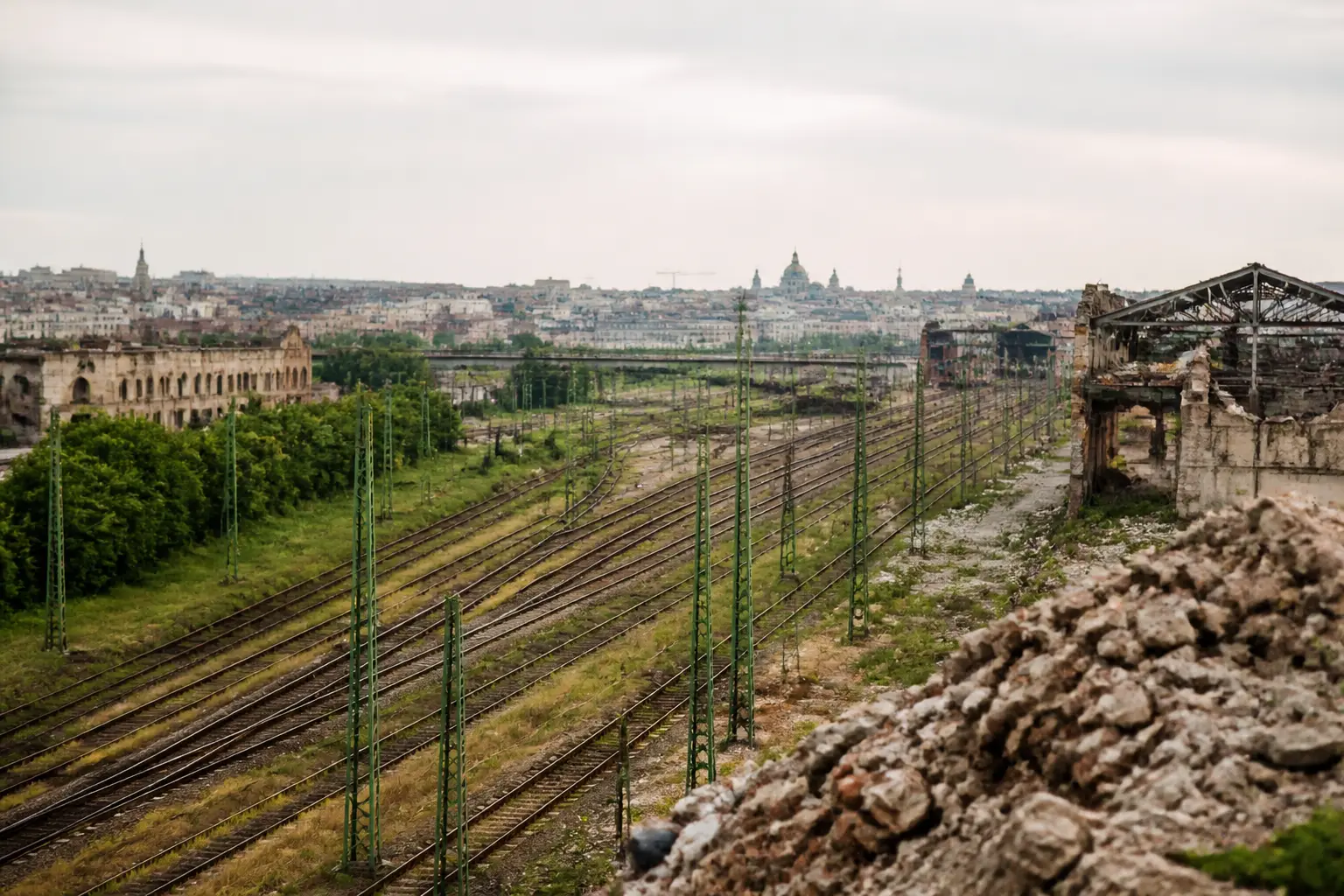
The one thing I keep asking about Rákosrendező is simple. Who pays to move the railway before anyone pours a foundation? On 26 November 2026, Budapest and the government gave half an answer.
The forum was the Fővárosi Közfejlesztések Tanácsa, the council that pairs the city and the state on public works. There, Mayor Gergely Karácsony and Minister Dávid Vitézy agreed a new structure for the site. It is an 85-hectare former rail yard in Zugló (Portfolio and HVG, 26 November 2026). The city stops paying for the land, and the state takes the unpaid balance as equity. Both sides will sit in a joint project company. Budapest keeps roughly 25 to 30 per cent, in line with what it has paid and invested (Budapest Business Journal).
How a land purchase became a shareholding
The site was state land that had belonged to the national railway, MÁV. In January 2025 the state sold it for a net EUR 138 million (50.9 billion forint). The deal was with the Emirati developer Eagle Hills, which had floated a high-rise district there (Telex). Budapest then used a pre-emption right and stepped into the buyer's place. It paid a first instalment that spring and still owed most of the price, HVG reported. Conversions here use about 370 forints per euro, the late November rate.
That matters because the later instalments were never simple payments. The second was tied to legal steps, such as new building rules and a priority-project status. The last was tied to about EUR 800 million of state infrastructure (Telex, quoting the economy ministry). In plain terms, the city owed money against works that only the state could deliver. The new deal removes that mismatch. The state now owns most of the asset that its own spending will improve.
Why the railway sets the timetable
Rákosrendező is a long, narrow strip beside working rail lines. Before homes can rise, the state has to reorganise and partly relocate the rail areas. It also has to build new stops, road links and utility backbones (Economx, February 2026). Earlier plans included covering part of the track. The buyer, for its part, carries the clean-up of the brownfield, waste removal and environmental remediation.
Here is why that order matters. A developer prices a plot by what can be sold on it. A plot with no station, no road and no mains is worth little, whatever the master plan shows. So the land value at Rákosrendező is created by public works first and private buildings second. Vitézy said money is available to design a new Rákosrendező railway station (Portfolio). Construction would come in the next seven-year EU budget, which starts in 2028.
What the city wants built
The city's targets are large. It wants 8,000 to 10,000 new homes, with at least 20 per cent affordable (Economx, February 2026). It also wants a car-free street grid and at least 25 hectares of public park. A transport hub would link rail, an extended metro line and a tram line. An international master-plan competition, run by the city's asset company BFVK, drew 43 first-round entries. Firms such as BIG and Foster + Partners reached the second round.
The reason is simple. A district of that size needs a transport hub before it needs towers. Affordable homes add a further squeeze. Each affordable flat earns less per square metre, so the land beneath it supports a lower price. Somebody must still fund the station, the roads and the clean-up. In this structure that somebody is mostly the state, through its majority stake.
What the shareholders still have to agree
The deal is still a direction. It needs legislation and decisions by the Budapest Municipal Assembly before it binds anyone (Infostart). Management and decision rights will sit in a later shareholders' agreement (Portfolio). HVG reports that the state will be the majority owner.
That matters because the shareholders' agreement settles what a builder cares about. It sets who approves the phasing. It sets the price at which plots pass to developers. It also sets who funds overruns on the enabling works. A state majority with a city minority can work well. It can also stall, if each side holds a veto on land pricing or on the affordable share. Contractors should read that document before they read any render.
My read: enabling works first, homes after 2029
I expect the first public contracts here to be rail relocation, utilities and remediation. Housing plots should reach developers no earlier than 2029. The mechanism is the funding sequence. The station depends on an EU budget that only opens in 2028. The original deal framed the state infrastructure around 2030. That happens because developers will not pay a full plot price before the enabling work is visibly under way.
For contractors, the near-term opening is civil and rail work for a state client. For developers, it is a long option on a central site, with a public partner carrying the early risk. The figure that would change my call is the state's first budget line for the Rákosrendező infrastructure. A funded line in the 2027 budget would pull the first plots forward. No line at all would push housing past 2030.
What we are watching next is the rail work itself. The new station and the track relocation will join the Hungarian rail tender pipeline. They will compete for the same crews as the main-line renewals. Our CEE Rail Build-Out 2027-2030 report tracks that pipeline, contractor capacity and bid risk lot by lot. You can download the free sample to see how it is built.
Share it with your peers
Help your network stay ahead of CEE capital projects.
Strategic Insights
📊 Analytics & Strategic Insight
At Rákosrendező, the state now pays for the value it will own
The decision most in this industry are avoiding:
👉 Removing a debt can also remove a deadline. Under the old schedule, the city's payments waited on the state's works, so the state had a reason to move. Now one party pays and benefits, and nobody outside holds the clock.
👉 Affordable quotas move value from the land to the residents. That is a fair policy choice. It also means public money carries the infrastructure bill for longer, and developer margins on those plots stay thin.
👉 The first winners are rail and civil builders. Housing developers come later. A bid team that treats this as a housing story will arrive years too early.
Here's the full context:
→ Spring 2024: The government agrees a high-rise district plan for the site with Eagle Hills.
→ 16 January 2025: The state completes the sale of the site for a net 50.9 billion forint.
→ March 2025: Budapest uses its pre-emption right and pays a first instalment of 12.7 billion forint.
→ 2025 to February 2026: The city's asset company BFVK runs an international master-plan competition with 43 first-round entries.
→ Most recent: On 26 November 2026 the city and the state agree that the unpaid balance becomes state equity, with Budapest keeping 25 to 30 per cent.
What this means for infrastructure operators, contractors and investors:
✅ Project sponsors should treat the shareholders' agreement as the document that sets value. Land pricing, phasing and overrun funding all sit there. A weak clause on any of them costs more than a weak render.
✅ Rail and civil bid teams should plan capacity for enabling works. Track relocation, utilities and remediation come first. They also go to a state client with state money, which lowers payment risk.
✅ Residential developers should price these plots on the infrastructure date. A plot is only as valuable as the day the station and roads open. Discount any offer that comes before those works are funded.
3 moves you can make this week:
1⃣ Ask the transport ministry about the station design tender. Find out who will procure the Rákosrendező station design and when the notice is due.
2⃣ Add the enabling works to your rail pipeline. Log track relocation, utility backbones and remediation as separate future lots, with a state client.
3⃣ Watch the Budapest Municipal Assembly agenda. The vote on the project company will show how much control the city keeps over land pricing.
The analyst's read:
This deal proves the city and the state will share the site instead of fighting over it. It does not prove the infrastructure is funded, because no budget line has been published. The figure that settles it is the first state budget allocation for the Rákosrendező works, due in the next budget cycle.
CEE Capital Projects reports
🚆 CEE Rail Build-Out 2027-2030
Rail tender pipeline to 2030, contractor capacity and bid risk across 17 markets in Central Europe, the Baltic states, Greece, Bulgaria, Croatia and the Western Balkans. PDF report plus Excel database.
→ See the report and free sample
📋 Coming next
CEE Contractor League Table and Financial Health Monitor: awards, order books and financial health across CEE contractors. Join the waitlist to hear first when it is published.
→ Join the waitlist
⚡ CEE Grid Procurement Pipeline 2027-2030
Contract opportunities, suppliers and bid risk in electricity transmission and distribution across 19 markets.
→ See the report and free sample
Related analyses
- Transport & Infrastructure
Romania's A7 Bacău-Pașcani Opens Only 30 km This Year as Grant Money Stops Before the Build Ends
Romania's transport ministry now expects only 30 km of the A7 Bacău-Pașcani motorway to open this year, out of 77 km once planned. Recovery funding stopped paying for the works on 31 August, so the remaining lots wait on the state budget and on where the single contractor group puts its crews.
Read analysis → - Transport & Infrastructure
Port Polska's EUR 1.5 Billion EIB Appraisal Puts the Terminal Contract on Trial
The European Investment Bank has admitted Poland's new airport to appraisal for up to EUR 1.5 billion, just as CPK concedes its EU grant assumption looks too optimistic. The terminal tender now has to produce a contract that lenders will accept.
Read analysis → - Transport & Infrastructure
Czech Road Bids at 76% of Estimate: Why Indexation and Land Send the Discount Back to ŘSD
Czech road tenders keep landing a fifth or more below estimate, with even a sole bidder on the D6 at 80%. Indexation clauses, local asphalt plants and unfinished land purchases mean part of that discount returns to the client at the final account.
Read analysis →
Is your project leaking money through its subcontractors?
Most owners lose 3–8% in vendor packages without noticing. Tell us about your project — we'll tell you where we'd look first.