We Help International Investors and Project Owners Deliver Major CEE Projects Without Expensive Surprises
Independent project intelligence and advisory across energy, transport, real estate and industrial construction.
Gothenburg Skandiaporten: how a EUR 210 million dredging award cleared the budget by cutting scope
Sweden has named Boskalis, Van Oord and Rohde Nielsen for the Gothenburg fairway after a failed first tender. The second price fits because the job got smaller, and the last metre of depth now sits in an option.
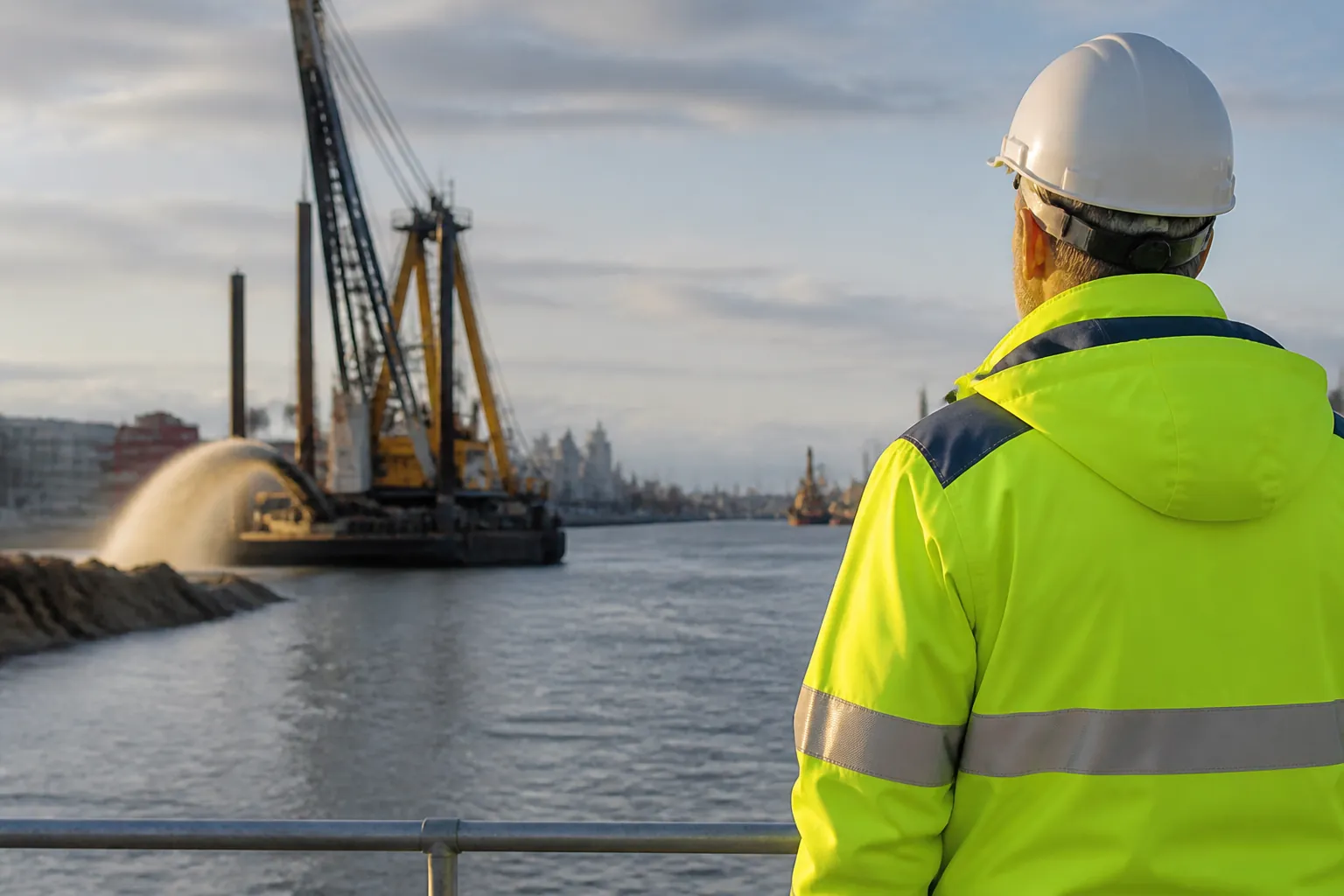
I keep seeing the same ending when a large contract goes back out to tender. The second price fits the budget. The scope quietly got smaller. Gothenburg's fairway award last week follows that script almost exactly.
On 17 November, Sjöfartsverket, the Swedish Maritime Administration, picked its contractor for the Gothenburg fairway. The winner is a joint venture of Boskalis, Van Oord and Rohde Nielsen. The base contract is worth about EUR 210 million (SEK 2.3 billion). That is according to the agency's release and the trade title Infrastrukturnyheter. Values here are converted at about 11 kronor to the euro.
Why the first tender failed
The first attempt collapsed in October 2025. Sjöfartsverket said the bids were significantly higher than the budget allowed for the state-funded part. It published no bid amounts. The agency did not wait for the market to get cheaper. It changed what it was buying.
That matters because dredging is priced mostly on volume and material. Rock costs far more to remove than loose sediment. Every extra cubic metre also keeps an expensive vessel on site for longer. So the fastest way to lower a dredging bid is to dredge less.
Since then, the design was optimised and the dredging volume reduced. The new contract covers about 7 million cubic metres of loose material and rock. The work was also split. The port company took the dredging next to the quay, about 5% of the total. It gave that piece to Boskalis for about EUR 18 million (SEK 202 million) in April 2026.
The joint venture also changes the competition. Rock dredging at this scale needs heavy cutter and backhoe vessels, and few European groups own them. The reason is fleet scarcity. When two of the largest groups pool vessels with a specialist, each partner carries less mobilisation cost and less risk. The trade-off is fewer rival bids. The agency has not said how many it received this time.
The metre that moved into an option
Draught is the depth of water a ship can use. The base contract takes the fairway's draught from 13.5 metres to 16.5 metres. An option lets Göteborgs Hamn, the city-owned port company, order 17.5 metres. The last metre is the one the largest ships need, and it now sits outside the base price.
Here is why that matters. The design ship in the port's 2023 state-aid case is 430 metres long and draws 17.5 metres. At 16.5 metres, such a ship can still call. It cannot sail in fully loaded.
The option moves a decision from the state to the port. The mechanism is simple. The state buys the base depth inside its budget. The port decides later whether the extra metre is worth its own money, at a price set in this tender.
For the contractor, the option is an open door with a fixed price on it. The extra metre was priced in a competitive round. The call comes later, when no rival bid exists. If fleet rates rise in the meantime, the joint venture holds a price it may regret. Either way, that risk was priced once and is now fixed.
Two budgets, two kinds of money
The European Commission cleared state aid for the project in 2023, capped at EUR 145.7 million. Sjöfartsverket has since been granted a larger budget, but has not said by how much. The port borrows its share. The European Investment Bank lent it about EUR 77.5 million (SEK 850 million) late last year.
That split matters because the two halves behave differently under cost pressure. The state's share depends on what the national budget grants. The port's share is debt, and debt is repaid from port charges. So the port's real limit is what shipping lines will pay per call.
The fairway is a rail project too
Gothenburg handled a record 934,000 TEU in 2025, the port said in February. TEU means twenty-foot equivalent units, the standard container measure. Just over 60% of those containers moved by rail, also a record. A deeper channel only pays back if bigger ships fill it, and bigger ships need trains waiting behind the quay.
That happens because a larger ship drops more boxes per call. Those boxes arrive in one surge. If the rail paths behind the terminal are short, the surge turns into a crowded yard and slower turnarounds. The depth gain is then lost on land.
My read: the base holds, the option waits
My call is that the contract is signed and the base price holds. Signing may slip into early 2027 if a losing bidder seeks review. I also expect the port to delay the 17.5 metre option. The reason is cash. It is carrying new debt while part of its main container quay is closed for the works.
Delay has a price, because dredgers are expensive to bring back. Ordering the extra metre while the fleet is on site is cheap. Ordering it after the works finish in autumn 2028 means paying for mobilisation again. The figure that would change my call is the port's 2026 container count. A third record year, towards 1 million TEU, makes the option easy to justify early.
For sponsors in Central and Eastern Europe, the lesson travels. Baltic and Adriatic ports are planning deeper berths of their own. When a re-tender comes in under budget, compare the price per cubic metre with the cancelled round. If that unit price held, the market did not soften. The client simply ordered less, and the gap will return later as an option.
What we are watching next is the land side. A deeper berth on the Baltic or the Adriatic only earns its cost one way. The rail line behind it must carry the extra boxes. Our CEE Rail Build-Out 2027-2030 report covers the rail tender pipeline, contractor capacity and bid risk across 17 markets. See the report and download the free sample.
Share it with your peers
Help your network stay ahead of CEE capital projects.
Strategic Insights
📊 Analytics & Strategic Insight
A re-tender buys a lower price by buying less
The decision most in this industry are avoiding:
👉 A cheaper re-tender is usually a smaller one. Boards read a price that fits the budget as a softer market. Check the unit rate first. If it held, nothing got cheaper and the promise to users got smaller.
👉 Options are where deferred scope hides. A depth option looks like flexibility. It is also the part of the original promise the base budget could no longer carry, priced by a bidder who faces no competition when it is called.
👉 Splitting the job splits the claims. One contractor for the port and one for the state now work the same channel. Survey disputes, sediment that drifts between zones and handover dates all sit on the line between two contracts.
Here's the full context:
→ 2020: Budgets of about SEK 1.26 billion each are set for the port's quay works and the state's fairway works, in 2017 prices.
→ 2023: The European Commission clears state aid. The design ship is 430 metres long with a 17.5 metre draught.
→ 2024: Quay reinforcement works start in April.
→ 2025: In October, Sjöfartsverket cancels the dredging tender because bids exceed the budget. In December, the EIB lends the port SEK 850 million.
→ Most recent: On 17 November 2026, the Boskalis, Van Oord and Rohde Nielsen joint venture is named for a base contract of about SEK 2.3 billion. Signing is planned for the end of 2026 if no review is sought.
What this means for infrastructure operators, contractors and investors:
✅ The port's finance team now owns a timing decision. The option is cheapest while the fleet is on site. Waiting for more traffic data protects the balance sheet but raises the price of the same metre.
✅ Marine bid teams should price options as profit, carefully. A re-tender after cancellation rewards a sharp base price. The option is where margin can sit, but an option priced too high simply never gets called.
✅ Procurement authorities should publish the unit price trail. When a tender is cancelled for cost, releasing the cancelled unit rates later lets lenders and auditors see whether the market moved or the scope did.
3 moves you can make this week:
1⃣ Compare unit rates on any re-tendered contract. Take the cancelled round and the new award side by side, per cubic metre, per kilometre or per square metre, before anyone calls it a saving.
2⃣ List every option in your live contracts with its expiry logic. Note the date after which calling it means the contractor must remobilise, and put that date in front of the board.
3⃣ Ask the rail infrastructure manager behind your port for path availability. A depth or quay investment should come with a written view of train paths for the larger call sizes it is meant to attract.
The analyst's read:
This award proves Sweden can buy a deeper fairway inside its budget. It does not prove the full design depth is affordable, because the last metre sits in an option nobody has ordered. The decision that settles it is whether Göteborgs Hamn calls that option while the dredging fleet is still on site.
CEE Capital Projects reports
🚆 CEE Rail Build-Out 2027-2030
Rail tender pipeline to 2030, contractor capacity and bid risk across 17 markets in Central Europe, the Baltic states, Greece, Bulgaria, Croatia and the Western Balkans. PDF report plus Excel database.
→ See the report and free sample
⚡ CEE Grid Procurement Pipeline 2027-2030
Contract opportunities, suppliers and bid risk in electricity transmission and distribution across 19 markets.
→ See the report and free sample
📋 Coming next
CEE Contractor League Table and Financial Health Monitor. Join the waitlist to hear first when it is published.
→ Join the waitlist
Related analyses
- Transport & Infrastructure
Budapest Swaps Its Unpaid Rákosrendező Land Bill for State Equity. The 800 Million Euro Rail Package Now Sets the Clock
Budapest and the Hungarian government have agreed to turn the unpaid balance on the Rákosrendező rail yard into a state stake in a joint project company. The deal fixes the city's balance sheet, but the railway works the state must fund now decide when the first homes can start.
Read analysis → - Transport & Infrastructure
Romania's A7 Bacău-Pașcani Opens Only 30 km This Year as Grant Money Stops Before the Build Ends
Romania's transport ministry now expects only 30 km of the A7 Bacău-Pașcani motorway to open this year, out of 77 km once planned. Recovery funding stopped paying for the works on 31 August, so the remaining lots wait on the state budget and on where the single contractor group puts its crews.
Read analysis → - Transport & Infrastructure
Port Polska's EUR 1.5 Billion EIB Appraisal Puts the Terminal Contract on Trial
The European Investment Bank has admitted Poland's new airport to appraisal for up to EUR 1.5 billion, just as CPK concedes its EU grant assumption looks too optimistic. The terminal tender now has to produce a contract that lenders will accept.
Read analysis →
Get a second opinion before it gets expensive.
Contractor selection, tender strategy, a project drifting off track — send us the situation and we'll come back with a clear plan.