We Help International Investors and Project Owners Deliver Major CEE Projects Without Expensive Surprises
Independent project intelligence and advisory across energy, transport, real estate and industrial construction.
SWIETELSKY Turns Over €3.7bn a Year. Hungary Just Ordered €9.8bn of Rail Through 2035 — and the Bidding Rules Flipped
Hungary's new government has unveiled a €9.76bn railway programme to 2035, its largest in six decades, funded by newly unlocked EU money. For rail specialists like SWIETELSKY the prize is huge, but the EU conditions attached rewrite who can win it.
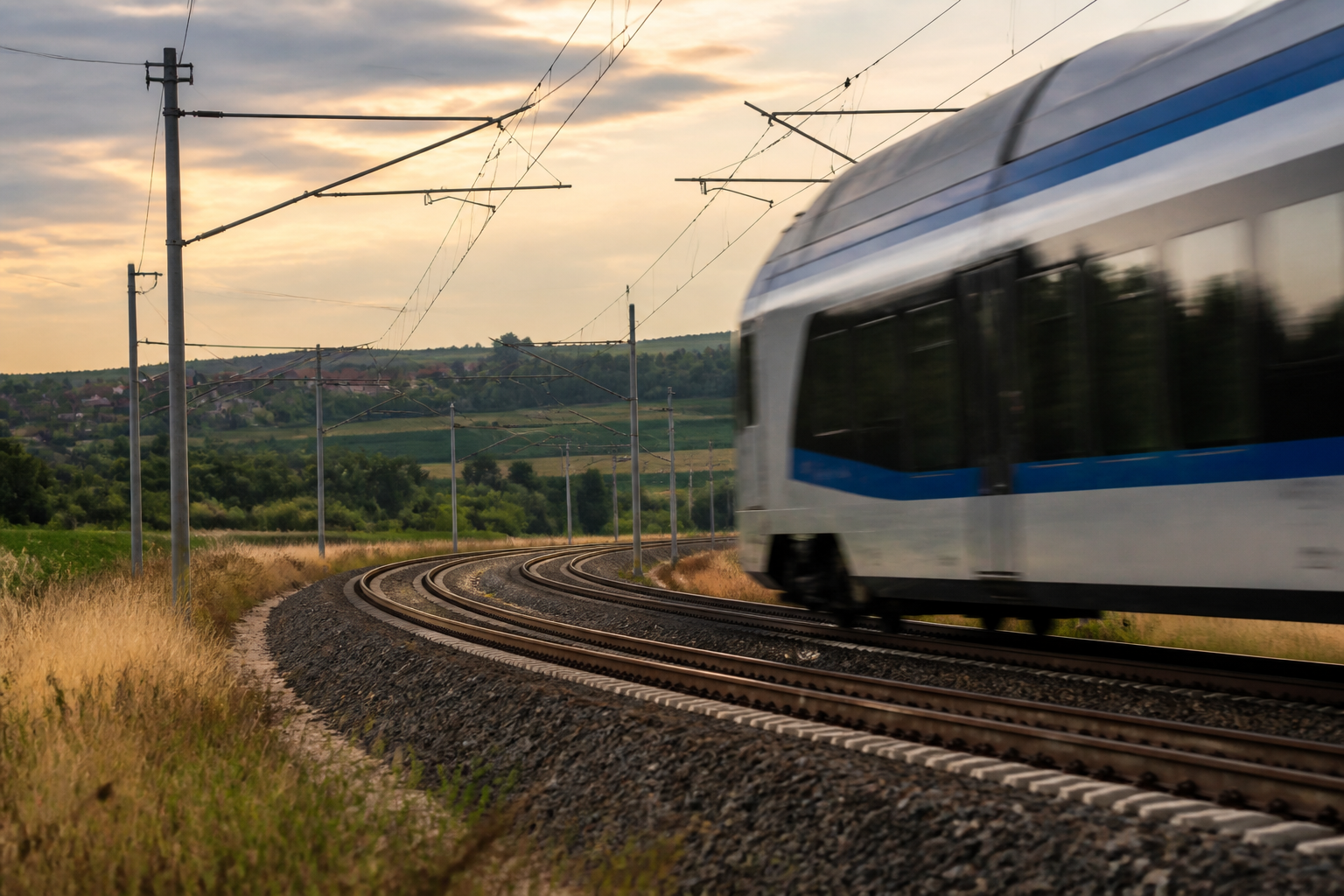
On 22 July, standing at a run-down Budapest commuter station, Hungary's new prime minister and his transport minister announced the largest railway programme the country has seen in sixty years: HUF 3,550bn, roughly €9.76bn, of track, trains and stations to be delivered by 2035. For a contractor the size of SWIETELSKY, which turned over €3.67bn of construction output last year and counts Hungary as one of its four core markets, that is the kind of pipeline you build a decade around. The catch is who now gets to bid for it.
A €9.8bn work order, and where the money comes from
The Gábor Baross Railway Development Plan, named after the 19th-century minister who built Hungary's state railways, was presented by Prime Minister Péter Magyar and Minister of Transport & Investment Dávid Vitézy at Rákospalota-Újpest station, chosen precisely because it is derelict and slated for renewal as the new terminus of an extended metro Line M3.
The financing is layered across five instruments: HUF 1,100bn from the EU's Cohesion Fund, HUF 950bn from the 2028–2034 EU budget period, HUF 700bn from the Recovery and Resilience Facility, a HUF 400bn European Investment Bank loan, and HUF 400bn through private concessions. "Today's event is not just a presentation of plans, it is a work order for the ministry and MÁV to deliver until 2035, and this is all already financed," Vitézy told guests. The scope runs from 35 double-deck inter-city trains and 42 suburban units to battery-electric fleets, station rebuilds, the Budapest Southern Circle flyover at Ferencváros and three tram extensions.
Why the money was frozen, and what changed
The plan is remarkable mostly because, until weeks ago, none of this money was available. For years Hungary's EU cohesion and recovery funds were largely blocked over rule-of-law and public-procurement concerns, rail investment stalled, and the average age of a MÁV passenger vehicle drifted out to 43 years. Railway Gazette described the period bluntly as "years of railway destruction." The April general election changed the arithmetic: Viktor Orbán was defeated, Magyar took office, and on 29 May the new prime minister and Commission President Ursula von der Leyen signed an agreement opening the EU taps, on condition that a set of governance and procurement reforms is delivered by 31 August.
The bidding rules just flipped
That condition is the real story for contractors. Under the previous model, the largest Hungarian rail and road budgets tended to flow to a tight group of domestic, politically connected builders. EU-conditioned money comes with open, auditable tendering, and that structurally favours firms that can prove capacity and compliance over firms that were simply close to power. It rewards rail-specialist plant most of all: track-renewal trains, tamping machines, electrification crews and the industrial discipline to run them at scale.
That is SWIETELSKY's profile almost exactly. The Austrian group runs about 12,200 staff across 21 countries, keeps a dedicated railway-construction division, and lists Hungary alongside Austria, Germany and Czechia as a core market; its own outlook flags civil and railway construction as its steadiest growth segment. The same logic lifts STRABAG and PORR. Domestic champions such as Duna Aszfalt, V-Híd and Market Építő are not shut out, but they will now compete on documented capability rather than proximity, a different game from the one CEE roads and rail have been played by.
The conditions that could still bite
None of this is a signed contract yet. The reform package must clear by 31 August or the Cohesion and RRF tranches slip. Nearly HUF 950bn of the total sits in a 2028–2034 EU budget that has not been legislated. The HUF 400bn concession pillar needs private capital and lenders to price Hungarian rail risk. And the cautionary tale is already on the network: the Budapest–Belgrade line, modernised with Chinese finance and signalling, is still stuck in certification, with revenue services now pencilled in for September at the earliest.
For operators, contractors and investors the signal is to pre-position rather than wait. The €9.8bn will tender in packages over a decade, and the firms that win the first ones are standing up plant, local entities and clean compliance files now. Hungarian rail money is back. It just no longer travels the road it used to.
Share it with your peers
Help your network stay ahead of CEE capital projects.
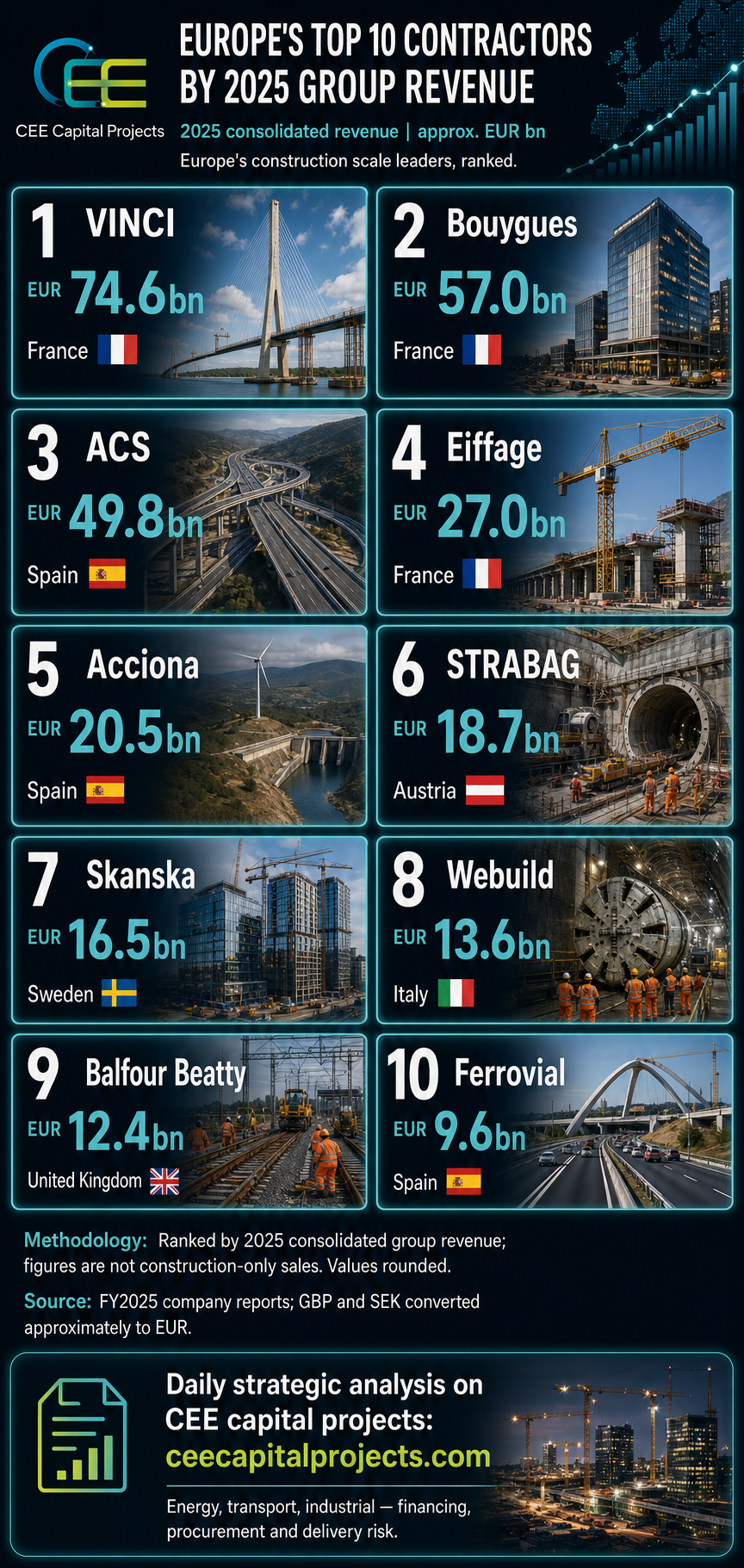
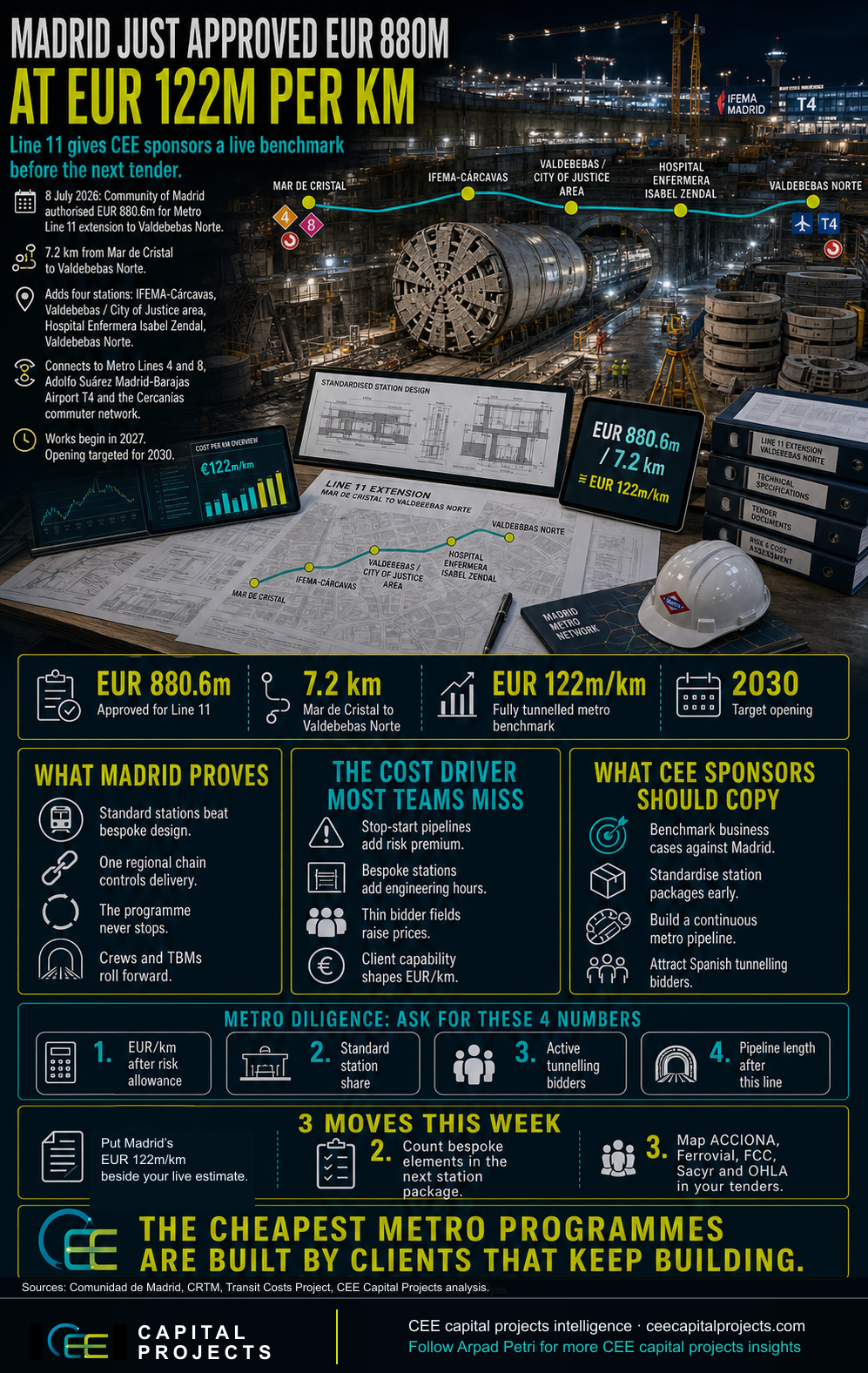
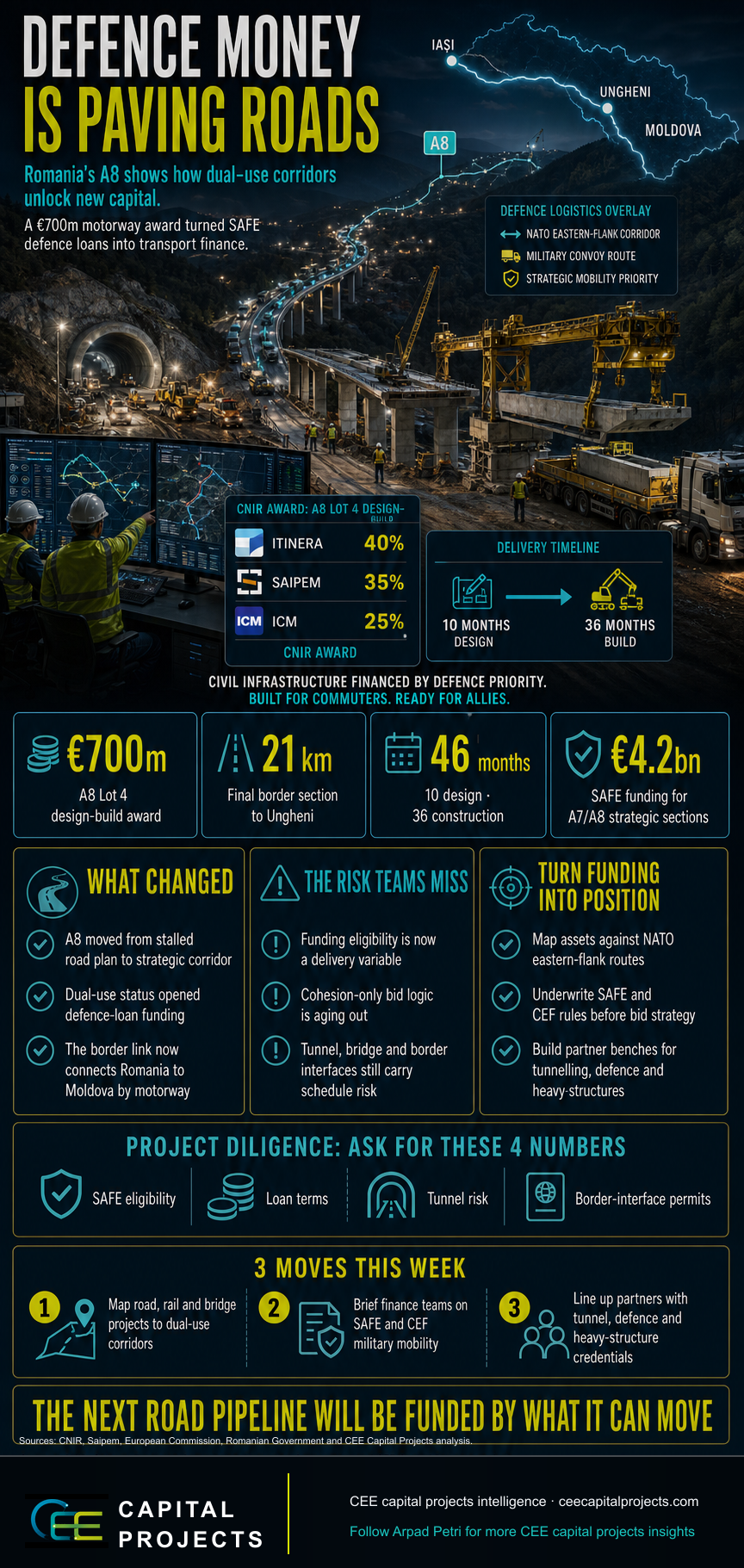
Explore our infograph library — strategic visuals for CEE capital projects leaders.
Project benchmarks, financing structures, tender dynamics and delivery risk — at a glance. Free access for investors, owners, contractors and strategy teams tracking CEE capital projects.
Browse the libraryStrategic Insights
📊 Analytics & Strategic Insight
Hungary's rail money is back, but it now flows through Brussels' rulebook, not Budapest's favourites
The decision most in this industry are avoiding:
👉 Reading this as a Hungarian-contractor story. The plan is EU-funded and reform-conditioned; the natural winners are rail specialists that can pass an EU procurement audit, not whoever sat closest to the last government.
👉 Waiting for tenders before positioning. The plant, the local entity and the compliance file take 12 to 24 months to stand up. The firms that win the first packages are staffing them now, before a single contract is advertised.
👉 Treating "already financed" as "already certain." Five funding streams, a 31 August reform deadline and a not-yet-legislated 2028–2034 EU budget sit between the podium and a signature.
Here's the full context:
→ 2022–2025: Hungary's EU cohesion and recovery funds were largely frozen over rule-of-law and procurement concerns; rail investment stalled and MÁV's fleet aged to an average of 43 years.
→ April 2026: Viktor Orbán's government was defeated at the general election and Péter Magyar took office.
→ 29 May 2026: Magyar and Commission President Ursula von der Leyen signed an agreement opening EU funding, conditional on reforms delivered by 31 August 2026.
→ June 2026: Dávid Vitézy was appointed Minister of Transport & Investment, promising a "golden age of railways."
→ Most recent: On 22 July 2026 the government unveiled the €9.76bn (HUF 3,550bn) Gábor Baross Railway Development Plan to 2035, funded from the Cohesion Fund, the 2028–2034 EU budget, the RRF, an EIB loan and private concessions.
What this means for infrastructure operators, contractors and investors:
✅ Rail-specialist capacity is the moat. Double-deck EMUs, battery trains, tram-trains, HÉV renewals and the Ferencváros flyover reward industrialised, repeatable delivery, structurally favouring SWIETELSKY, STRABAG and PORR over general civils firms.
✅ Compliance is now a commercial asset. EU-conditioned money means auditable procurement; a clean tendering record and documented capacity beat political proximity for the first time in years.
✅ The HUF 400bn concession pillar opens a finance play. Private concessions inside the package invite infrastructure funds and lenders (the EIB is already in for HUF 400bn), a pipeline of equity and debt, not only EPC work.
3 moves you can make this week:
1️⃣ Map the corridors to your plant. Line up the named priority sections (Hatvan–Miskolc, Kiskunfélegyháza–Szeged, Debrecen–Nyíregyháza) against your track-renewal and electrification fleet availability through 2030.
2️⃣ Stand up the local, compliant entity. If you want EU-funded Hungarian rail work, get the Hungarian subsidiary, references and procurement file audit-ready before the first package is advertised.
3️⃣ Diarise 31 August. Treat the reform deadline as the real go/no-go on timing, and model your bid pipeline in two scenarios: funds unlocked on schedule, or slipping into 2027.
Related analyses
- Transport & Infrastructure
V-Híd Just Lost Hungary's HUF 338 Billion Déli Körvasút at 42 Per Cent Complete. The Grant Clock Is the Real Story
Hungary halted construction of the Budapest Southern Circle Railway on 9 October 2026 and barred V-Híd from every ongoing rail investment. The HUF 367 billion of EU money behind the job survives only if a lawful re-tender lands inside two years.
Read analysis → - Transport & Infrastructure
Afcons Wins Croatia's EUR 899m Dugo Selo-Novska Rail Contract: Four Bids, No European Prime
Croatia signed its largest ever railway contract on 1 October 2026, handing 83 km of double-tracking to India's Afcons Infrastructure at EUR 677.06m excluding VAT. Four bids were priced for the work and not one of them came from a European prime contractor.
Read analysis → - Transport & Infrastructure
STRABAG Closes BAWI Construction Buy in Romania as Rail Qualification Becomes the Scarce Asset
STRABAG has closed its purchase of BAWI Construction, a Bucharest rail specialist with 240 employees and about EUR 60 million of 2025 output. The number that matters is the qualification it buys, as Romania opens a EUR 5.99 billion rail programme with the EU recovery window shut.
Read analysis →
Facing a decision on a CEE capital project?
Describe the situation in a few sentences. Within 72 hours you get an experienced read: the risks we see, what we'd check, and whether we can help — no calls, no obligation.