We Help International Investors and Project Owners Deliver Major CEE Projects Without Expensive Surprises
Independent project intelligence and advisory across energy, transport, real estate and industrial construction.
Afcons Wins Croatia's EUR 899m Dugo Selo-Novska Rail Contract: Four Bids, No European Prime
Croatia signed its largest ever railway contract on 1 October 2026, handing 83 km of double-tracking to India's Afcons Infrastructure at EUR 677.06m excluding VAT. Four bids were priced for the work and not one of them came from a European prime contractor.
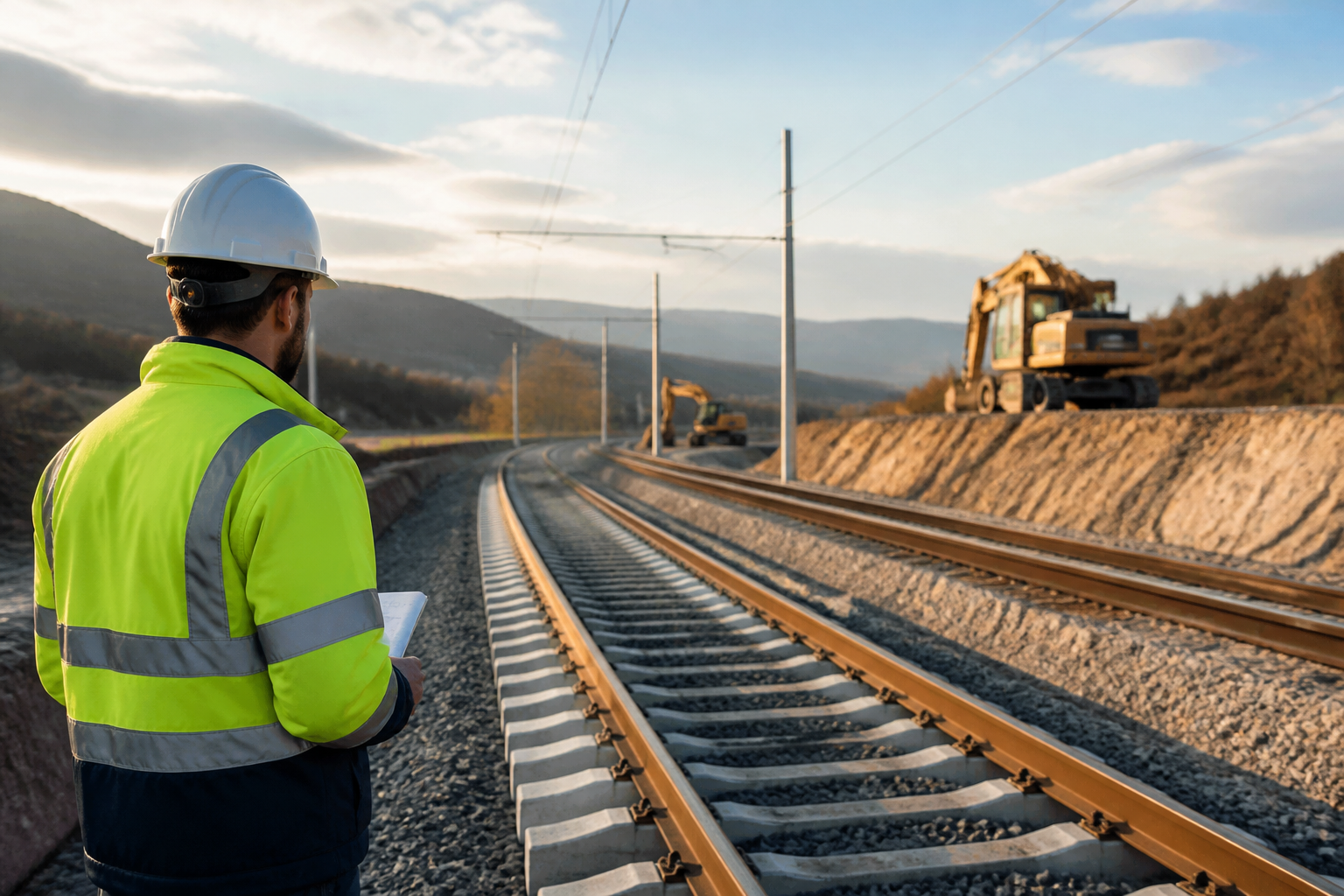
I think the bid list tells you more here than the winner does. Four companies priced Croatia's largest ever railway contract. Not one of them was a European prime.
On 1 October 2026 in Zagreb, HZ Infrastruktura signed the works contract for the Dugo Selo to Novska line with Afcons Infrastructure Limited of India. The works are priced at EUR 677.06m excluding VAT inside a project of about EUR 899m. Eptisa Adria took the construction supervision contract the same day.
Four bids, and the cheapest still sat above the estimate
HZ Infrastruktura estimated the job at EUR 620m excluding VAT and received four bids, reported by Croatian outlet Baustela on 2 August 2026 from the regulator's published decision. Afcons bid EUR 677.06m. A joint venture of Ashoka Buildcon, Serneke International Group and Konkan Railway Corporation bid EUR 779.89m. Cengiz Insaat bid EUR 873.12m. Dogus Insaat bid EUR 989.89m.
By my arithmetic on those published figures the winning bid sits about nine per cent above the estimate and the highest about sixty per cent above it. Two bidders are Indian, two are Turkish, and the only European name is Sweden's Serneke, sitting inside an Indian led joint venture rather than leading one. Croatia's biggest rail job drew no European prime at all. That is a verdict on the risk allocation and the timetable.
The appeal was fought over a reference file
HZ Infrastruktura named Afcons on 30 April 2026. Cengiz Insaat, the third most expensive bidder, appealed on 18 May. The State Commission for Supervision of Public Procurement, DKOM, published its decision on 30 July 2026 and rejected the appeal as unfounded.
What Cengiz challenged is instructive. It attacked the subcontractor nominations in the winning ESPD form and three reference projects in Ghana, India and Zambia, arguing that the Ghana track was built without a ballast layer, that the stated values and their euro conversion were unclear, and that no certificate carried an explicit completion statement from the other contracting party. The authority answered that the certificates proved the requirements and that the tender had never demanded double track or named facilities. DKOM agreed. Nationality and subsidy rules were not the battleground. A reference file was, and it held.
The grant clock runs shorter than the build
About EUR 610m is eligible cost under the Competitiveness and Cohesion Programme 2021 to 2027, being EUR 518.5m of European Regional Development Fund money and EUR 91m of national co-financing, with EUR 289m more from the Connecting Europe Facility.
Croatian magazine Nacional reported on 11 August 2026, citing a source close to the top of the European Commission, that the CEF element is EUR 245,615,155.10 and that the right to draw it ends on 31 December 2027. The same report says the grant was requested in the 2022 call, on the assumption that works would start in September 2023. Works are now due to begin in the first half of 2027 and to run five years and ten months. The drawdown right therefore expires in the job's first full year on site, and anything unspent falls to the national budget. Treat the figure as reported, because it came through an unnamed source while the losing bidder's camp was briefing.
What the sponsor bought, and what it must write in
The scope is 83 km in four sections, from Dugo Selo through Ivanic-Grad, Popovaca and Kutina to Novska. It covers a second track throughout, rebuilt stations, grade separation or closure of more than thirty level crossings, noise barriers, new signalling and renewed electrification, lifting design speed to 160 km/h where parts are now held to 40 or 60 km/h. This is the only single track section of the RH1 corridor inside Croatia.
What the contract does not carry is a local delivery base. Afcons is building in Europe for the first time, so plant, certified welding and signalling crews, supplier accounts and claims history have to be assembled inside the contract rather than inherited from the market. Several Croatian firms are expected on the job, which puts the domestic supply chain into subcontract positions on a programme it would once have led. Scale is not the worry: for the year to March 2026 Afcons reported total income of INR 123.22bn, EBITDA of INR 14.39bn at 11.7 per cent, and an order book of INR 324.96bn.
What happens next
Two routes into European rail works now sit side by side. In late September 2026 STRABAG completed its purchase of BAWI Construction, a Bucharest rail contractor with about EUR 60m of revenue, which is the buy route to local references. Afcons has taken the import route, qualifying on work delivered in Africa and Asia.
For European contractors the question is no longer whether third country bidders arrive. They have, they are cheaper, and they clear the qualification gates. The question is which parts of this risk allocation made an EUR 899m project unbiddable for firms that already own plant in the region. For public sponsors the Croatian file shows that a competition can be legally sound and commercially thin at once. For lenders and grant managers the exposure sits between a drawdown date and a six year build.
📊 Analytics & Strategic Insight
An empty European bid list is a pricing signal, not a procurement footnote
The decision most in this industry are avoiding:
👉 Stop treating a legally clean tender as a competitive one. DKOM upheld this award and the process survived a full appeal. The competition still produced no European prime and a winning bid above the sponsor's own estimate. Legal soundness and commercial depth are separate tests, and most boards only run the first.
👉 Price the qualification route, not the nationality. The appeal failed on references from Ghana, India and Zambia. Overseas delivery history is now a working qualification path into EU rail works, so a contractor without regional references is no longer excluded by that fact alone.
👉 Decide now whether you want to be a prime or a subcontractor in your own market. Several Croatian firms are expected on this job in subcontract positions. That is a structural move down the contractual chain, and it changes who holds the claim, the cash flow and the sequencing risk for the next decade.
Here's the full context:
→ 2012: The cost estimate that framed this procurement dates from that era, and the tender was later estimated at EUR 620m excluding VAT, a figure Croatian reporting has questioned against today's input prices.
→ 2022: The Connecting Europe Facility grant was requested in that year's call, on the assumption that works would begin in September 2023.
→ 30 April 2026: HZ Infrastruktura named Afcons Infrastructure as the selected bidder at EUR 677.06m excluding VAT, ahead of three higher bids from Indian and Turkish groups.
→ 30 July 2026: DKOM published its decision rejecting Cengiz Insaat's appeal as unfounded, clearing the way to signature after a challenge that ran for over two months.
→ Most recent: On 1 October 2026 the works contract was signed in Zagreb, with construction expected to start in the first half of 2027 and to last five years and ten months.
What this means for infrastructure operators, contractors and investors:
✅ Thin bid lists move the price before the contract does. A four bid field whose cheapest entry sat about nine per cent above the estimate, by my arithmetic on the published figures, tells you the estimate was stale. Budget holders with similar tenders in preparation should rebase before they publish, not after they open.
✅ A non-EU prime shifts the delivery risk into the contract document. Plant, certified crews, supplier accounts and claims history arrive with a local contractor by default. On a first European project they have to be written in, so mobilisation evidence, named key personnel and supply chain security clauses carry far more weight than usual.
✅ A grant deadline that expires mid build is a sovereign exposure. Reported CEF drawdown rights on this project end on 31 December 2027 while the works run into the next decade. Anything unspent moves to the national budget, and that pressure usually reaches the contractor as acceleration instructions.
3 moves you can make this week:
1️⃣ Count the primes, not the downloads, on your own live tenders. Pull the bidder list for every job you have in procurement above EUR 100m and mark which entries are prime contractors with regional plant. If the count is below three, your risk allocation is doing the pricing.
2️⃣ Audit one reference file to the standard the Croatian appeal used. Take a reference you rely on and check three things: whether the scope genuinely matches, whether the counterparty signed an explicit completion statement, and how the value was converted into your currency. Fix the gaps before an appeal finds them.
3️⃣ Put the funding expiry date on the same page as the completion date. For every grant funded scheme you touch, write the drawdown deadline next to the contractual completion date and name who pays the difference. If nobody can name that party in a meeting, you have found the project's real risk owner.
Share it with your peers
Help your network stay ahead of CEE capital projects.




Explore our infograph library — strategic visuals for CEE capital projects leaders.
Project benchmarks, financing structures, tender dynamics and delivery risk — at a glance. Free access for investors, owners, contractors and strategy teams tracking CEE capital projects.
Browse the libraryRelated analyses
- Transport & Infrastructure
V-Híd Just Lost Hungary's HUF 338 Billion Déli Körvasút at 42 Per Cent Complete. The Grant Clock Is the Real Story
Hungary halted construction of the Budapest Southern Circle Railway on 9 October 2026 and barred V-Híd from every ongoing rail investment. The HUF 367 billion of EU money behind the job survives only if a lawful re-tender lands inside two years.
Read analysis → - Transport & Infrastructure
STRABAG Closes BAWI Construction Buy in Romania as Rail Qualification Becomes the Scarce Asset
STRABAG has closed its purchase of BAWI Construction, a Bucharest rail specialist with 240 employees and about EUR 60 million of 2025 output. The number that matters is the qualification it buys, as Romania opens a EUR 5.99 billion rail programme with the EU recovery window shut.
Read analysis → - Transport & Infrastructure
FS International Says Europe Can Find the EUR 345bn for High-Speed Rail. A EUR 10m Certification Bill in Every Country Is What Stops It
At InnoTrans 2026 the chief executive of FS International told the industry that money is not the constraint on Europe's high-speed network. The constraint is a technical specification that keeps moving, and it prices into every concession, lease and availability payment.
Read analysis →
Building in Central Europe?
Tell us what you're building. We'll tell you what can go wrong — and how to prevent it.