We Help International Investors and Project Owners Deliver Major CEE Projects Without Expensive Surprises
Independent project intelligence and advisory across energy, transport, real estate and industrial construction.
STRABAG Signed Croatia's Zagreb–Rijeka Rail Upgrade in 2022. The Permits Never Came — Now COMSA Builds It for 53% More
A signed EUR 228 million contract to double-track Croatia's Zagreb–Rijeka mainline stalled for years because the permits were never in place, then was amicably unwound and re-tendered. Spain's COMSA is now starting the same 44 kilometres at EUR 348.5 million — a 53% jump that shows consenting, not the tender, is the real risk in CEE's EU-funded rail boom.
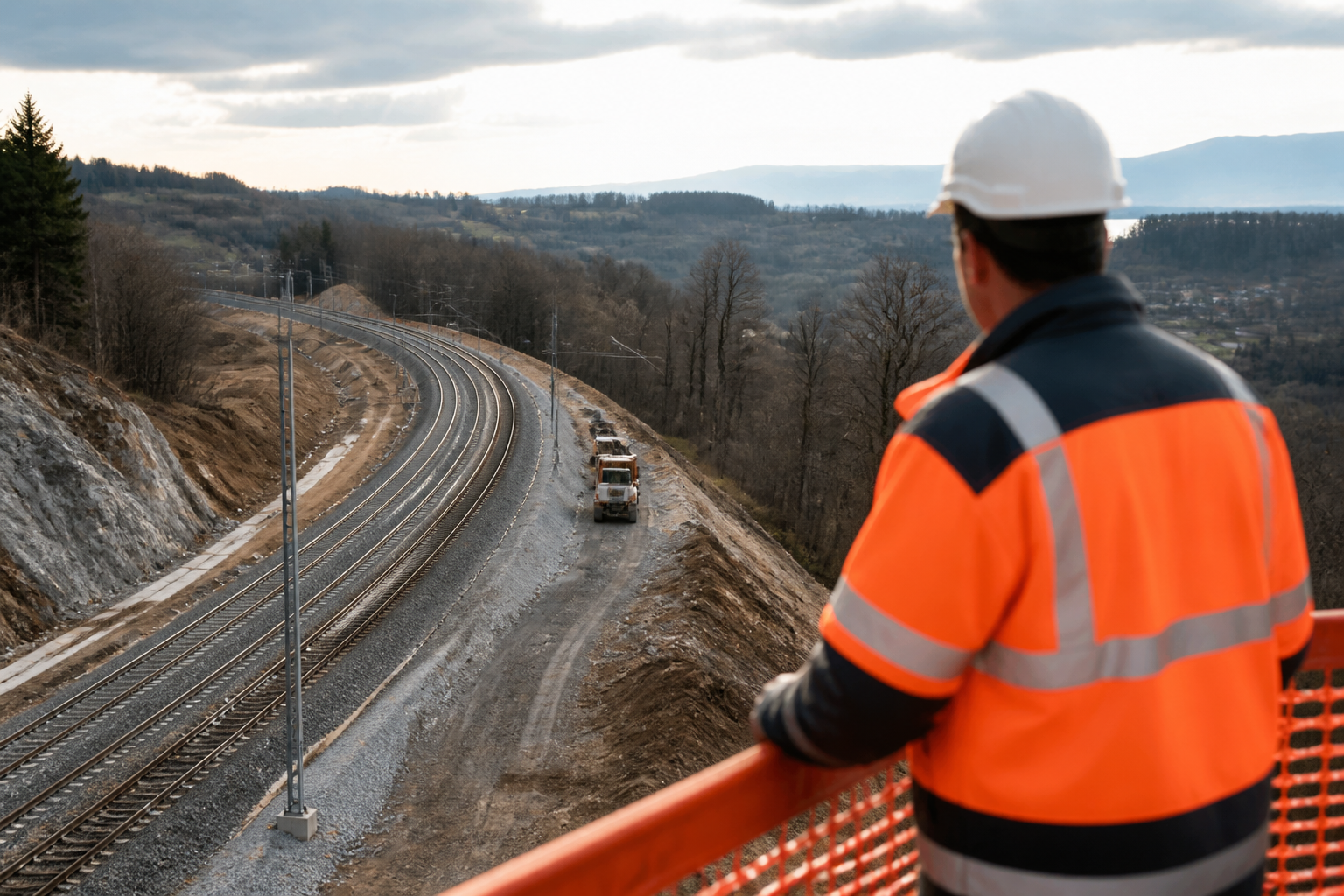
In 2022, Croatia's state rail manager signed a EUR 228 million contract with a STRABAG-led consortium to rebuild and double-track a 44-kilometre stretch of the country's most important railway, the line from Zagreb to the port of Rijeka. The contractor was ready and the money was European. The one thing missing was a full set of permits. Four years later, that gap has handed the same job to a Spanish rival at 53% more.
A contract that could be signed but not built
HŽ Infrastruktura, Croatia's rail infrastructure manager, signed the Hrvatski Leskovac–Karlovac contract with a consortium led by STRABAG (STRABAG d.o.o., STRABAG AG and STRABAG Rail a.s.) in July 2022, for about HRK 1,713 million, or roughly EUR 228 million. The section is the central 44 kilometres of the Zagreb–Rijeka corridor, part of the TEN-T Mediterranean route linking the capital to Croatia's main seaport.
The contract never proceeded in its original form. Not all the necessary building permits had been obtained, so work went ahead only on a handful of individual structures while the bulk of the line waited. After an amicable agreement between STRABAG and HŽ Infrastruktura, the deal was unwound and a fresh tender was launched at the end of 2024.
The re-tender: 53% more for the same 44 kilometres
In April 2026, HŽ Infrastruktura awarded the re-let contract to Spain's COMSA Corporación at about EUR 278.8 million net, or EUR 348.5 million gross including VAT, once appeals from losing bidders had been rejected. Measured against STRABAG's 2022 figure of roughly EUR 228 million, that is a headline increase of more than 53% for essentially the same scope of works (sources: STRABAG newsroom, August 2022; Railway News and RailFreight.com, April 2026).
The work itself has not changed: reconstruction of the existing track plus a second line, electrification, modern signalling and interlocking, rebuilt stations and stops, and new bridges and viaducts, all engineered for speeds up to 160 km/h. It is co-financed by the EU Competitiveness and Cohesion programme for 2021–2027. COMSA is due on site in summer 2026, with roughly three years of construction ahead.
The permit gap is the pattern, not the exception
The instinct is to read this as one messy Croatian file. It is better read as a warning about where risk actually sits in CEE's EU-funded rail wave. The competitive tender was never the hard part, and neither was contractor capacity. The hard part was consents: permits, land acquisition, expropriation and design approvals, most of which sit with the public client and the planning system, not the builder.
When those consents lag, a signed contract turns from an asset into a liability. Construction costs across Europe rose sharply between 2021 and 2025, so every year a project waits, the same kilometres cost more to build. A stalled contract that has to be unwound and re-tendered does not just lose time; it re-prices the whole job at the new market rate. Croatia's 53% is that mechanism in a single number.
Croatia is spending against a clock
The stakes are rising because Croatia is running a rail programme worth close to EUR 6 billion to 2030, covering the TEN-T Mediterranean and Rhine–Danube corridors and regional lines, backed by EU grants and the European Investment Bank. In May 2026 it awarded its largest-ever single rail contract, the EUR 677 million double-tracking of the 83-kilometre Dugo Selo–Novska line, to India's Afcons Infrastructure in that group's first European job, part-funded by the Connecting Europe Facility (about EUR 289 million) and the Recovery and Resilience Facility (EUR 140.7 million for the Kutina–Novska stretch).
Cohesion and recovery money comes with hard spend-by deadlines. A re-tender that adds two years can push a project past the very funding window it was designed to use. That is the quiet risk under Croatia's programme and every other CEE pipeline racing to commit 2021–2027 money: the paperwork, not the diggers, sets the pace.
What comes next
For contractors, the lesson is blunt: price consenting risk into the bid, or refuse to mobilise until the permits are in hand. For public sponsors, the permits belong before the tender, not after it. For investors and lenders, a signed EU-rail contract is not a de-risked one until the consents are attached to it. Expect more amicable terminations and re-tenders across the region as 2021–2027 money is pushed out against deadlines, each one nudging the final bill higher. The builders who win the next decade of CEE rail will be the ones who can start on the day the permit lands.
Share it with your peers
Help your network stay ahead of CEE capital projects.
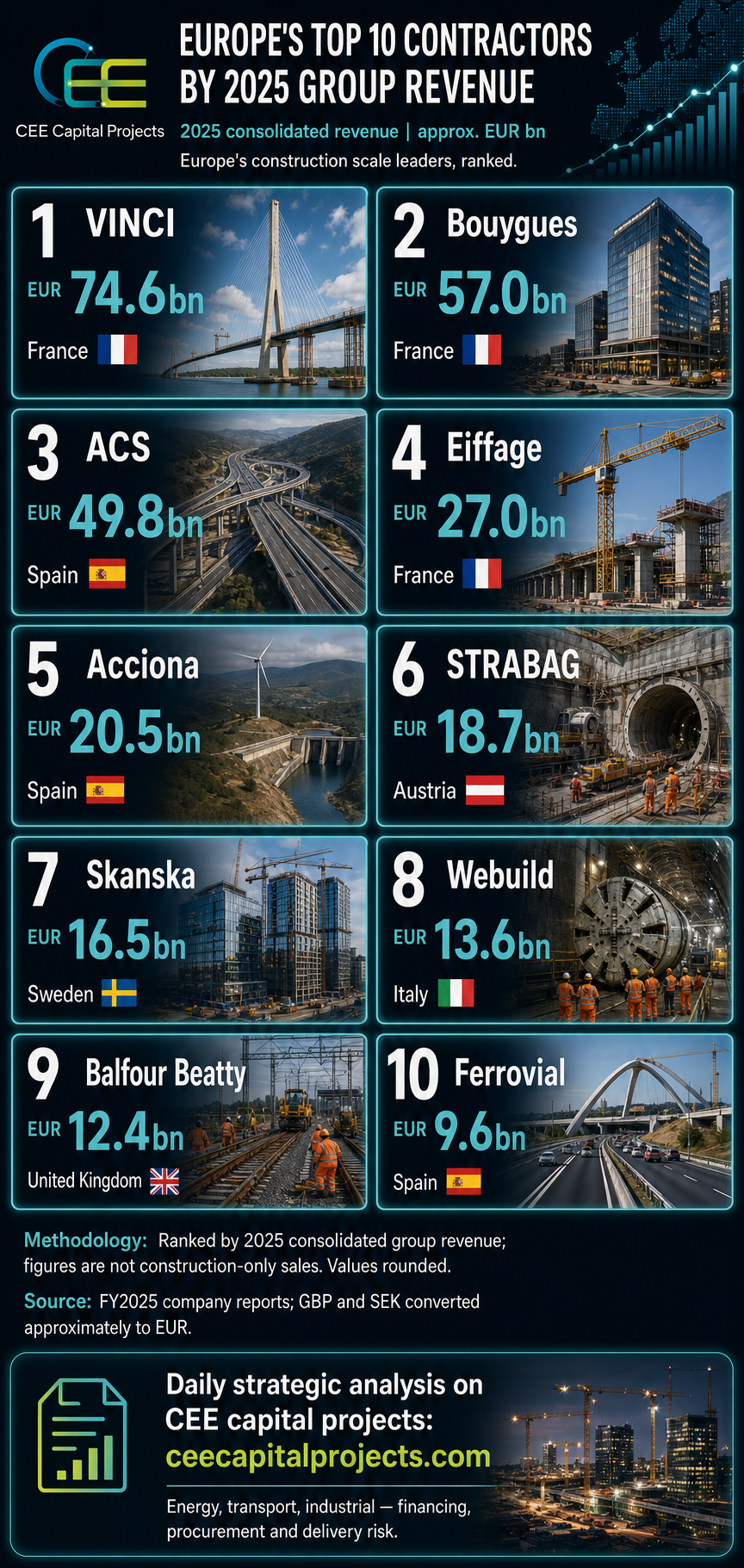
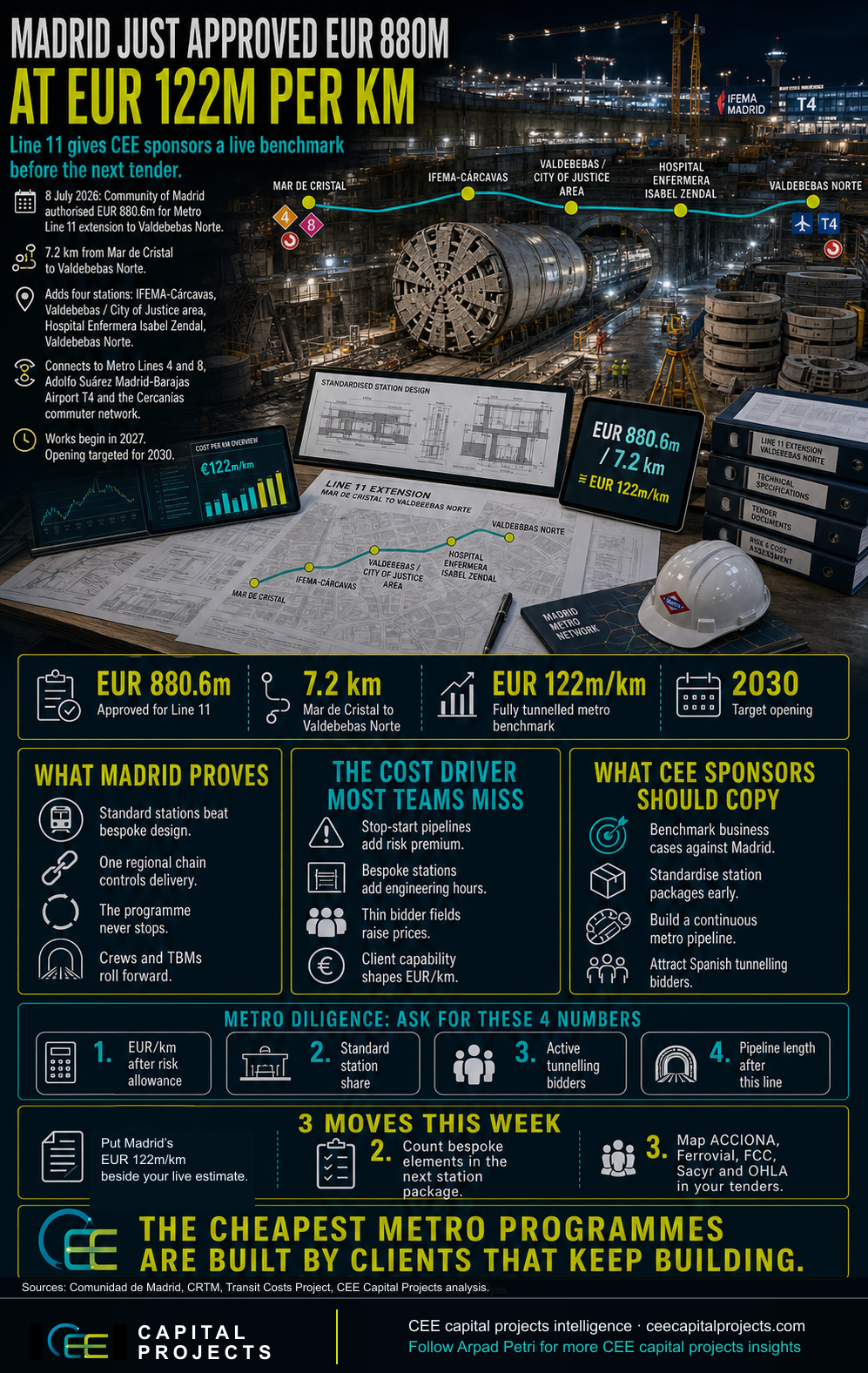
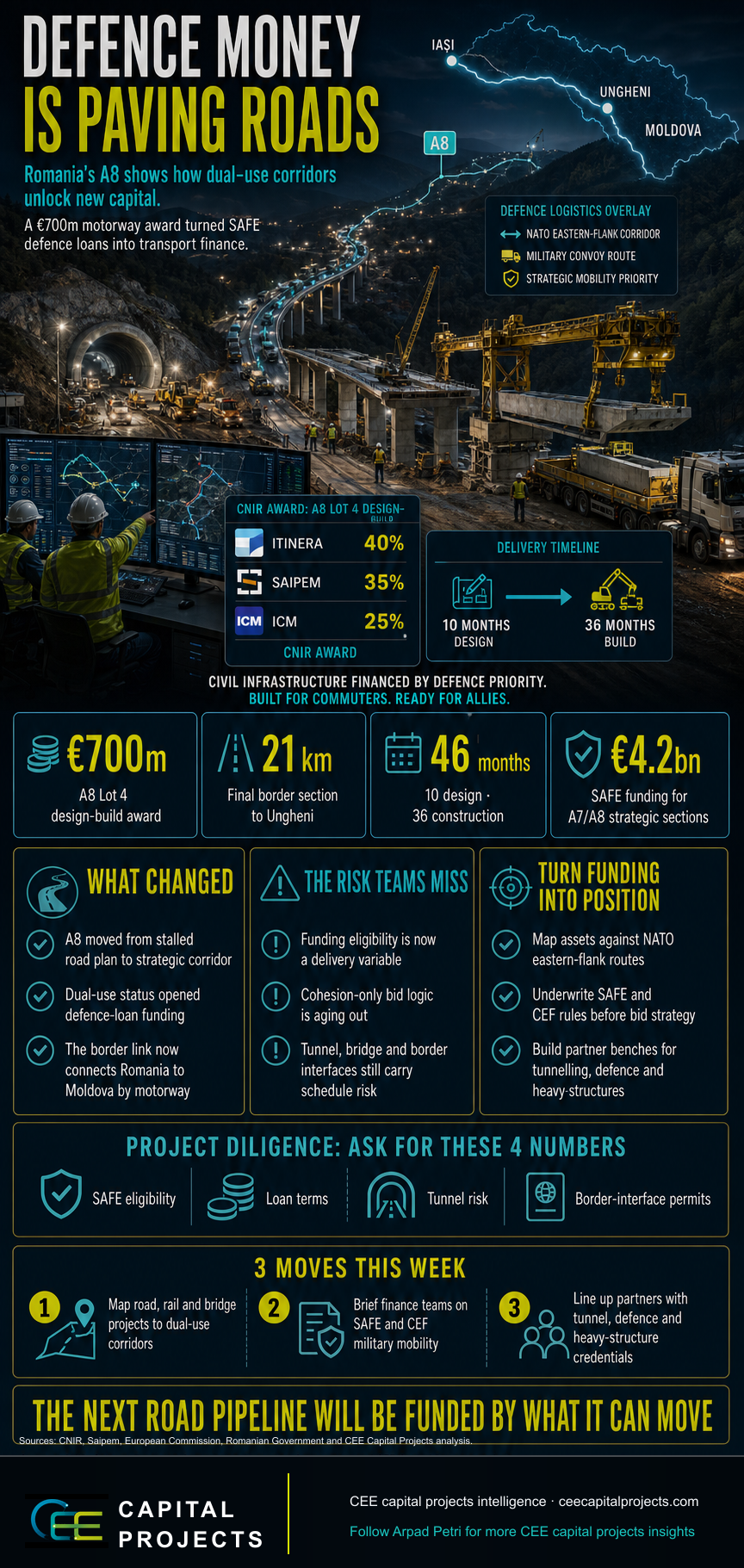
Explore our infograph library — strategic visuals for CEE capital projects leaders.
Project benchmarks, financing structures, tender dynamics and delivery risk — at a glance. Free access for investors, owners, contractors and strategy teams tracking CEE capital projects.
Browse the libraryStrategic Insights
📊 Analytics & Strategic Insight
Consents, Not Contracts: Where the Real Risk Sits in CEE's EU-Funded Rail Boom
The decision most in this industry are avoiding:
👉 Treating a signed contract as a de-risked one. A signature sets price and terms; it does not deliver a buildable site. In Croatia the contract existed for years while the permits did not, and the project went nowhere until the paperwork caught up.
👉 Leaving permitting risk with the client and pricing it at zero. Consents usually sit with the public sponsor, so contractors assume they are someone else's problem. They are not: when permits stall, it is the builder's mobilisation, overheads and re-tender exposure that absorb the hit.
👉 Rushing EU money out faster than the consenting system can move. Spend-by deadlines push sponsors to award early, before land and permits are secured, which is exactly how a contract ends up signed but unbuildable.
Here's the full context:
→ 2022: HŽ Infrastruktura signs the 44 km Hrvatski Leskovac–Karlovac upgrade with a STRABAG-led consortium for about EUR 228 million.
→ 2022–2024: Not all building permits are obtained; work proceeds only on isolated structures while the main line waits.
→ End 2024: STRABAG and HŽ Infrastruktura agree an amicable exit and a new tender is launched.
→ April 2026: Spain's COMSA wins the re-let at EUR 348.5 million gross, more than 53% above the 2022 figure, after losing bidders' appeals are rejected.
→ Most recent: Works are due to start in summer 2026, as Croatia races a near EUR 6 billion rail programme and a EUR 677 million Afcons contract against EU spending deadlines.
What this means for infrastructure operators, contractors and investors:
✅ Price the permit gap, or do not mobilise. Build consent status into the bid and make full permits a condition of starting work, so a stalled site does not quietly eat your margin.
✅ Front-load consents before the tender. Sponsors who secure permits, land and design approvals first buy certainty; those who tender first buy delay and a higher final price.
✅ Read EU deadlines as cost risk. A funding window with a hard end date turns every consenting delay into a re-pricing event, and sometimes into lost grant money.
3 moves you can make this week:
1️⃣ Audit live bids for consent status. List every tender you are chasing and mark whether the permits, land and design approvals are actually in place before you commit crews.
2️⃣ Add a permit-readiness gate to mobilisation. Make full consents a written trigger for start-on-site, with clear compensation terms if the client cannot deliver them on time.
3️⃣ Map your pipeline against EU spend deadlines. Flag the projects funded by 2021–2027 cohesion or recovery money and stress-test which ones could slip past their window if consenting drags.
Related analyses
- Transport & Infrastructure
V-Híd Just Lost Hungary's HUF 338 Billion Déli Körvasút at 42 Per Cent Complete. The Grant Clock Is the Real Story
Hungary halted construction of the Budapest Southern Circle Railway on 9 October 2026 and barred V-Híd from every ongoing rail investment. The HUF 367 billion of EU money behind the job survives only if a lawful re-tender lands inside two years.
Read analysis → - Transport & Infrastructure
Afcons Wins Croatia's EUR 899m Dugo Selo-Novska Rail Contract: Four Bids, No European Prime
Croatia signed its largest ever railway contract on 1 October 2026, handing 83 km of double-tracking to India's Afcons Infrastructure at EUR 677.06m excluding VAT. Four bids were priced for the work and not one of them came from a European prime contractor.
Read analysis → - Transport & Infrastructure
STRABAG Closes BAWI Construction Buy in Romania as Rail Qualification Becomes the Scarce Asset
STRABAG has closed its purchase of BAWI Construction, a Bucharest rail specialist with 240 employees and about EUR 60 million of 2025 output. The number that matters is the qualification it buys, as Romania opens a EUR 5.99 billion rail programme with the EU recovery window shut.
Read analysis →
Get a second opinion before it gets expensive.
Contractor selection, tender strategy, a project drifting off track — send us the situation and we'll come back with a clear plan.