We Help International Investors and Project Owners Deliver Major CEE Projects Without Expensive Surprises
Independent project intelligence and advisory across energy, transport, real estate and industrial construction.
Romania's RRF payment: why six missed reforms hit contractors owed 1 billion euro
Brussels partially approved Romania's fifth recovery payment on 16 November and held back six items, none of them a building site. The money is not ring-fenced, so contractors already owed over 1 billion euro carry the gap until the state pays.
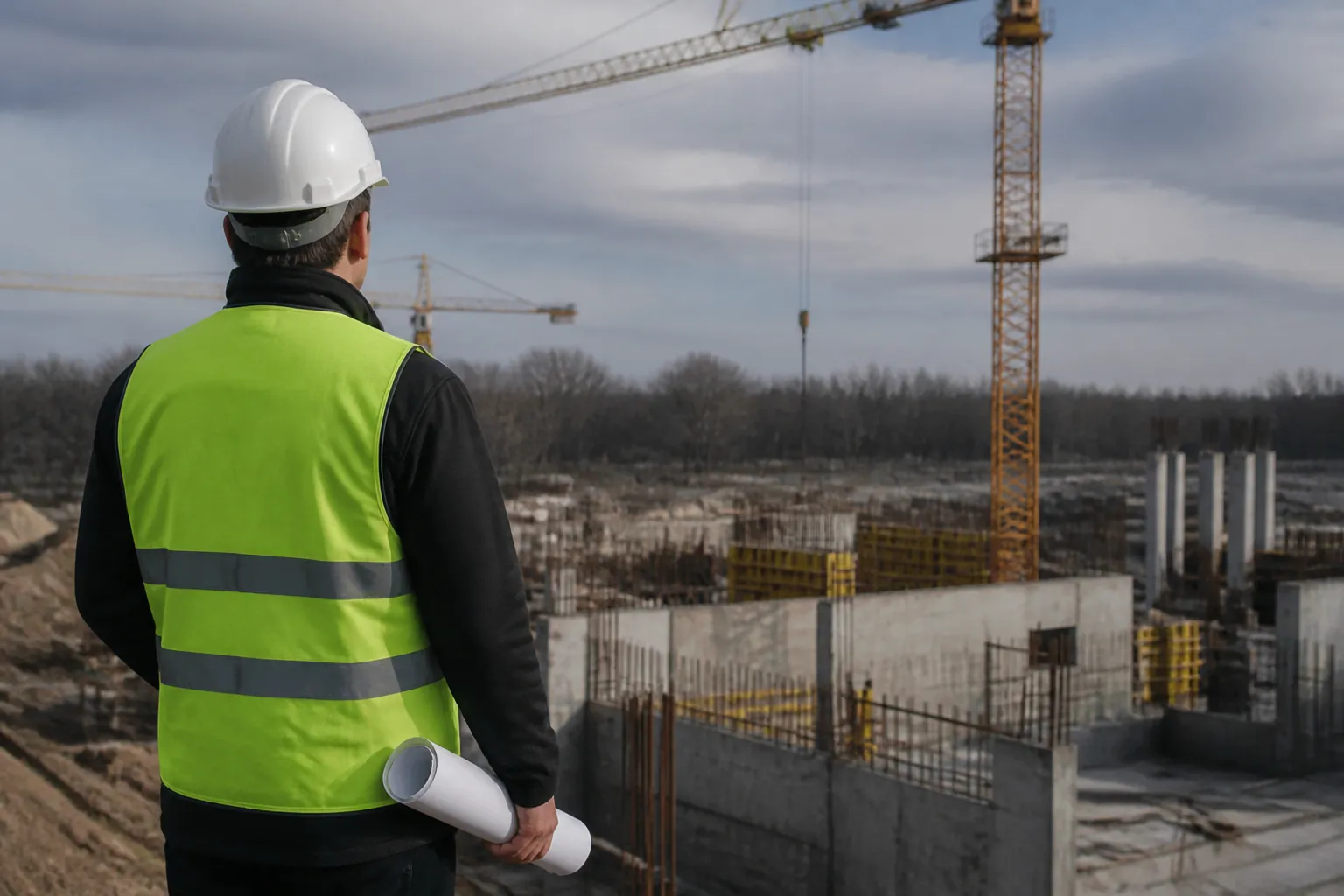
If I ran a Romanian contractor this winter, I would credit-check the state the way a bank checks a borrower. I would read its EU payment requests before its tender notices. Brussels gave me the reason on 16 November.
The European Commission partially approved Romania's fifth payment request under the Recovery and Resilience Facility (RRF). That is the EU's post-pandemic grant and loan programme. The request is worth 2.67 billion euro. The Commission accepted 69 of the 75 milestones and targets behind it. It suspended its assessment of the other six, Brussels Times reported the same day.
What Brussels held back, and why it reaches the site
None of the six missing items is a building. Four are legal or administrative changes. They cover state land for renewable energy, a market for renewable hydrogen and a single register of state land. The fourth is a test of how new rules affect small firms. One is a portfolio guarantee scheme for company finance. One is faster repair times on the electricity transmission grid.
That matters because the RRF does not pay invoices. It pays the state for reaching milestones and targets agreed in advance. The state pays its contractors from the national budget. It recovers the money when Brussels releases a tranche. A missed reform in Bucharest can therefore delay cash for a hospital or water site anywhere in the country.
Why a land register reaches a water main
Here is why the link is so direct. RRF money lands in the treasury as one payment. It is not ring-fenced to the projects that earned it. When part of a tranche is held back, the budget has to fill the hole from somewhere else. The site that hit its target waits in the same queue as the reform that missed.
The procedure adds time. The Economic and Financial Committee, made up of member-state officials, has four weeks to give its opinion. Romania then has two months to answer the Commission's reasons. Only after that does Brussels confirm or cut the suspended amount.
For a contractor, that turns a reform dispute into a receivable with no fixed date. The firm did nothing wrong. Its invoice simply joins a queue that the budget must fund first.
The contractor is already the lender
The queue was long before this decision. In September the Federation of Construction Employers (FPSC) said construction makes up 9.45 billion euro of Romania's plan. It put physically completed, certified work at about 6 billion euro. Contractors had received about 3.1 billion euro of that, the federation told TRUmedia on 15 September.
Part of that gap is normal billing lag. Part is overdue. On 6 November FPSC president Cristian Erbașu put overdue sums on RRF contracts at a little over 1 billion euro. A fact-check by Justificat rated the claim nearly true. It noted the figure is an industry estimate with no matching finance ministry number.
The mechanism is simple. A builder that keeps working while unpaid is lending to its client at zero interest. The longer the queue, the more the contractor's balance sheet funds the state's programme. That matters because its own banks then see higher receivables and lower cash. They give it less room for the performance bonds it needs to bid.
The sixth request is the bigger test
The fifth request was the easier one. Romania filed its sixth and final request at the end of September, worth 4.35 billion euro, according to Financiarul. It carries 104 milestones and targets. On the government's own count, 32 of them risk penalties or full loss.
Investment minister Alexandru-Mihai Ghigiu estimated that about 3.4 billion euro across the two requests would be suspended at first. The Commission's decision on the sixth request is expected around 20 November. Every RRF payment must be made by 31 December. A late suspension leaves almost no time to cure it inside the programme.
That happens because the facility closes for good. Works were due by the end of August. Money tied to results Brussels rejects cannot be collected later from the RRF. Financiarul notes it has to come from the national budget instead.
What the contractors are asking for
The industry's requests show where the pain sits. On 21 October the contractors' association ARACO wrote to the prime minister. It asked every ministry to publish a payment schedule and pay invoices older than 60 days first.
It also proposed offsetting contractors' claims against their overdue taxes. The reason is simple. An offset moves no cash, so it costs the budget nothing today. It stops a solvent builder being chased for tax by the same state that owes it money.
ARACO also asked for the 2027 tender calendar in advance and for price adjustment clauses that work. Both requests look past the current programme. Firms want to know whether to keep crews and plant in Romania or move them elsewhere.
My read: the arrears grow before they shrink
I expect overdue sums to rise through the first quarter of 2027 before they fall. The reason is the calendar. Suspended money comes back, if at all, after a two-month reply window that runs into spring. Meanwhile the budget must also finish RRF projects that missed the August deadline.
The firms that suffer first will be mid-sized Romanian builders with one public client and thin bank lines. Large groups with Western parents can carry receivables for longer. They will also be the strongest bidders when the next programme opens.
The figure that settles it is the amount suspended on the sixth request. If Brussels holds back well under the government's own estimate, the budget gap narrows and payments can catch up. If it holds back more, expect slower sites and more insolvencies in the first half of 2027.
The data angle here is payment behaviour, which rarely shows up in a league table. An order book says what a contractor won. Receivables and cash say whether its clients are paying. Our upcoming CEE Contractor League Table and Financial Health Monitor will track both, and you can join its waitlist on the reports page.
Share it with your peers
Help your network stay ahead of CEE capital projects.
Strategic Insights
📊 Analytics & Strategic Insight
Romania's recovery money now works like a credit line that contractors underwrite
The decision most in this industry are avoiding:
👉 The payment risk sits in the reform chapter. Bid teams read the technical milestones of the projects they price. Few read the reform milestones that release the same tranche, yet those now decide when the invoice is paid.
👉 A suspension hurts contractors more than a clean cut. A cut tells the budget exactly what it must fund. A suspension leaves the amount open for months, so ministries ration payments across every project while they wait.
👉 The end of the facility removes the usual safety valve. In cohesion programmes a late project can slide into the next funding period. The recovery facility has no next period, so unfinished works fall straight onto the national budget.
Here's the full context:
→ 15 September 2026: FPSC says certified RRF construction work is worth about 6 billion euro, against about 3.1 billion euro paid.
→ 30 September 2026: Romania files its sixth and final RRF payment request, worth 4.35 billion euro.
→ 21 October 2026: ARACO asks the prime minister to pay invoices older than 60 days first and to allow tax offsets.
→ 6 November 2026: Romania sends its clarifications to Brussels. FPSC puts overdue RRF sums above 1 billion euro.
→ Most recent: On 16 November the Commission approves most of the fifth request and suspends six items. A decision on the sixth request is due around 20 November.
What this means for infrastructure operators, contractors and investors:
✅ Finance directors should age receivables by funding source. An invoice backed by recovery money now carries a different risk from one backed by cohesion or national money. Treat it as a separate credit line in the cash forecast.
✅ Bid teams should price payment delay into Romanian public tenders. Treat late payment as the base case. Price the working capital and the guarantee fees it uses up, or ask for an advance payment.
✅ Lenders and surety providers should review single-client Romanian builders. Watch firms whose order books rest on recovery-funded work for one ministry or municipality. Their cash will tighten before their order book does.
3 moves you can make this week:
1⃣ List every open invoice on a recovery-funded contract. Mark which body owes it and how long it has been overdue. That list is the base for any offset or payment-schedule claim.
2⃣ Send formal notices on overdue amounts now. Check your contract's payment and interest clauses and the national late-payment rules. A dated notice helps protect your claim to interest and any right to slow the work.
3⃣ Read the Commission's decision on the sixth request when it lands. Map the suspended items to the ministries you work for. Those ministries are likely to pay slowest in the opening months of next year.
The analyst's read:
This decision proves the reform chapter can hold back money that construction has already earned. It does not yet prove a large loss, because suspended money can still be cured. The figure that settles it is the amount suspended on the sixth request, due within days.
CEE Capital Projects reports
📋 Coming next
CEE Contractor League Table and Financial Health Monitor, plus the CEE Grid and Energy Construction Pipeline. Join the waitlist to hear first when each one opens.
→ Join the waitlist
🚆 CEE Rail Build-Out 2027-2030
Rail tender pipeline to 2030, contractor capacity and bid risk across 17 markets, built on 7,994 TED lots since 2020. PDF report plus Excel database, one row per lot, with single-country editions.
→ See the report and free sample
Related analyses
- Energy & Power
Latvia's Grid Operator Now Borrows at 4.8%, and Its Build Plan Has to Carry It
Latvia's transmission operator AST is repaying its 0.5% green bond early, after raising replacement money at 4.768%. With most of its ten-year grid plan funded from its own balance sheet, the price of that money now shapes which lines and substations move first.
Read analysis → - Energy & Power
Croatia's Next 400 kV Lines Hang on One Data Centre's Grid Contract
Pantheon AI offers to build and pay for four 400 kV lines to connect its Topusko campus, after the state held HOPS to a minimal grid plan. Croatia's next big transmission build may come from a private customer, while generators in the queue are offered curtailment instead.
Read analysis → - Energy & Power
Balfour Beatty's 9 Percent Grid Margin Shows Where Contractor Profit Sits. CEE Price-Only Substation Tenders Keep It With the Client
Balfour Beatty expects a support services margin of around 9 percent, well over twice its UK construction margin, as power transmission work ramps up under National Grid's framework. In Poland, substation tenders awarded on price alone mean CEE contractors moving into grids should not expect the same premium.
Read analysis →
Facing a decision on a CEE capital project?
Describe the situation in a few sentences. Within 72 hours you get an experienced read: the risks we see, what we'd check, and whether we can help — no calls, no obligation.