We Help International Investors and Project Owners Deliver Major CEE Projects Without Expensive Surprises
Independent project intelligence and advisory across energy, transport, real estate and industrial construction.
Rail Baltica Can Order Its Rails in July but Not the Sleepers Until September. On a €15.3 Billion Railway, the Contract Was Never the Hard Part
Rail Baltica has 267 km of mainline construction-ready across the Baltics, and its consolidated track-materials framework carries a €1.13 billion ceiling. The July milestone commits no money, though — the real test is whether three governments can convert framework availability into funded, synchronised call-off orders.
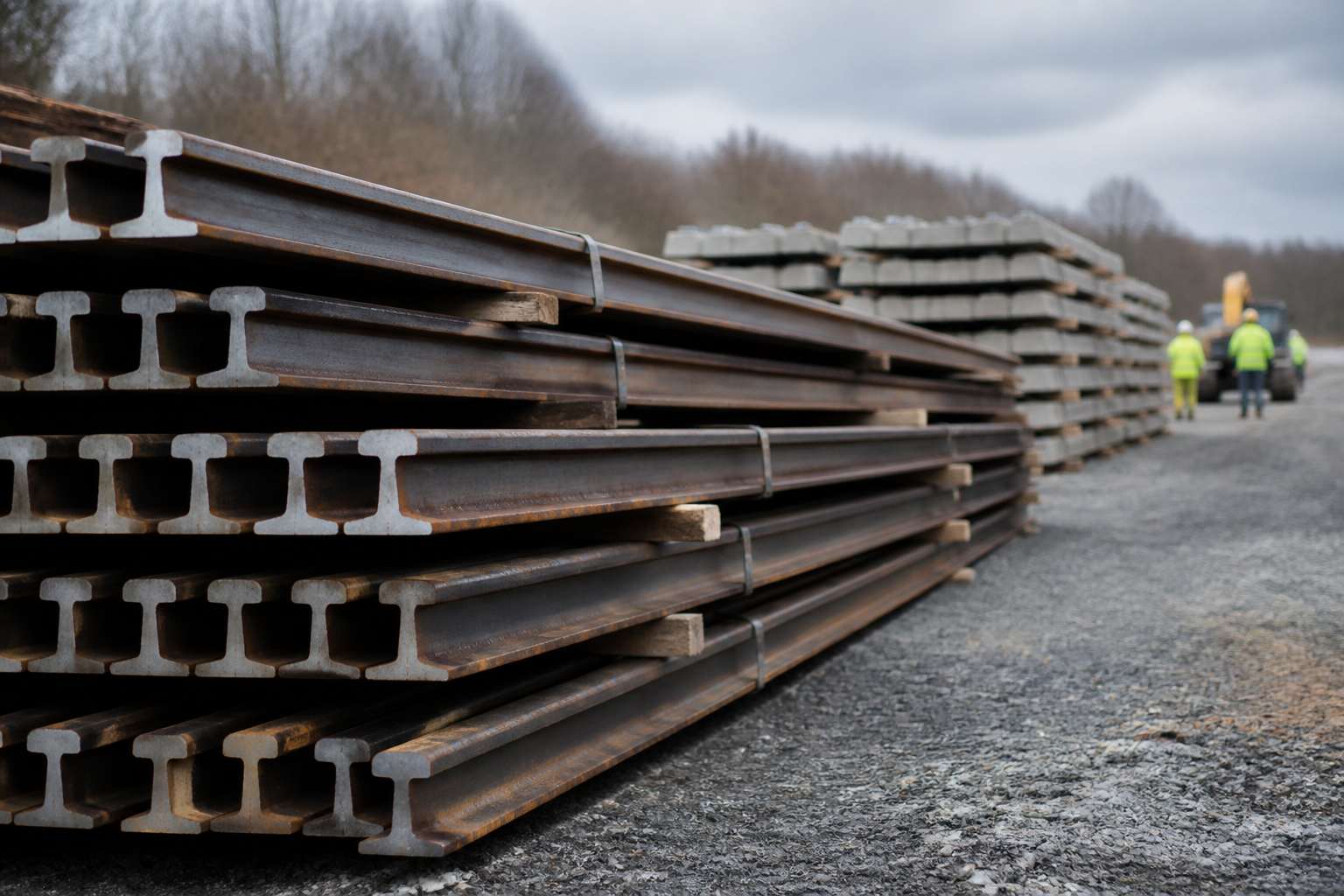
Rail Baltica now has 267 kilometres of mainline sitting construction-ready across Estonia, Latvia and Lithuania, 43% of its first phase. In July it reached the moment it could finally start ordering the rails to lay on them. It still cannot order the sleepers and ballast those rails need until September. On a €15.3 billion railway, that two-month gap is a sharper test of the project than any contract signing.
The €1.13 billion framework that commits nothing yet
Rail Baltica's central coordinator, RB Rail AS, has spent the past year closing framework agreements for the core track superstructure — rails, reinforced-concrete sleepers, ballast, turnouts, expansion joints and cable ducts — across the three Baltic states as one consolidated buy. The maximum estimated value of that consolidated superstructure procurement is €1.13 billion, a figure the project confirmed as rails became available to order from July 2026, with sleepers and ballast to follow from September and the first turnouts by year-end (Rail Baltica / RB Rail AS, reported 17 July 2026). Cable ducts are already orderable.
A framework commits no money. It fixes price, quality, performance and delivery terms, and nothing else. Each national implementing body, in Estonia, Latvia and Lithuania, must still place its own funded call-off orders, timed to actual construction progress and to whatever Connecting Europe Facility (CEF) cash has arrived. July triggered no spend. It bought the right to spend.
Why the contract was never the hard part
The real shift is where the risk now sits. For a decade the Rail Baltica story was about awarding contracts and surviving the appeals: the Białystok–Ełk package in Poland, won by a Budimex–PORR consortium, was annulled in early 2026, the kind of tender-litigation risk that has dogged the corridor. For the superstructure, that phase is largely over. The problem now is synchronisation, converting framework availability into funded, sequenced orders that match the rate at which embankments, bridges and culverts become ready for track.
Get it wrong in either direction and it costs. Order rails too early and you pay to store, monitor and protect kilometres of steel that cannot yet be installed. Order too late and completed civil works sit idle, waiting for superstructure, and a finished embankment earns nothing. Sleepers and ballast have to arrive at the pace track crews can lay them, drawn from certified factories and quarries, moved across borders and staged in yards. The management challenge has moved from the procurement office to the logistics chain.
Lithuania already ran the experiment
Lithuania has shown what disciplined sequencing looks like. LTG Infra procured 42 kilometres of rail, 29,500 reinforced-concrete sleepers and 86,200 tonnes of ballast to feed its first stretch, and began laying track in October 2025 on the 8.8-kilometre Šveicarija–Žeimiai section in the Jonava district, the corridor's first rails in the ground. The upper-track contract for that section was worth €13.9 million excluding VAT. Small numbers against a €15.3 billion programme, but they are the only real-world benchmark the project has for how fast material is consumed once track-laying starts. Lithuania now reports 114 kilometres of mainline under construction; Estonia 107 kilometres plus the Ülemiste terminal in Tallinn; Latvia a 30-kilometre priority southern section alongside Riga Central Station and the airport link.
The 2030 question hanging over every order
All of it runs on money that arrives in tranches. The CEF can cover up to 85% of eligible costs, and roughly €5.6 billion has been committed so far across Rail Baltica and its Polish continuation, about €3.8 billion of it for the Baltic States. The rest falls to national budgets. That is why the framework was deliberately built to commit nothing until each body is funded: it guards against buying too much too soon. It also leaves the timetable hostage to the next grant decision. European Court of Auditors work published in January 2026 warned that Phase I will not be finished by 2030 and could cost at least €24 billion, well above the €15.3 billion single-track figure the project carries for the first phase.
What to watch next
For contractors, suppliers and the funds tracking CEE's largest rail build, the read-across is concrete. The next hard evidence of momentum will not be another framework signing or a ribbon-cutting; it will be the value and timing of the first real call-off orders, and whether three governments can place them in step. Watch September, when rails, sleepers and ballast can finally be combined into a complete track package, and watch the call-off data rather than the framework ceilings. On a megaproject, the signature is the announcement. The synchronised, funded order is the delivery.
Share it with your peers
Help your network stay ahead of CEE capital projects.
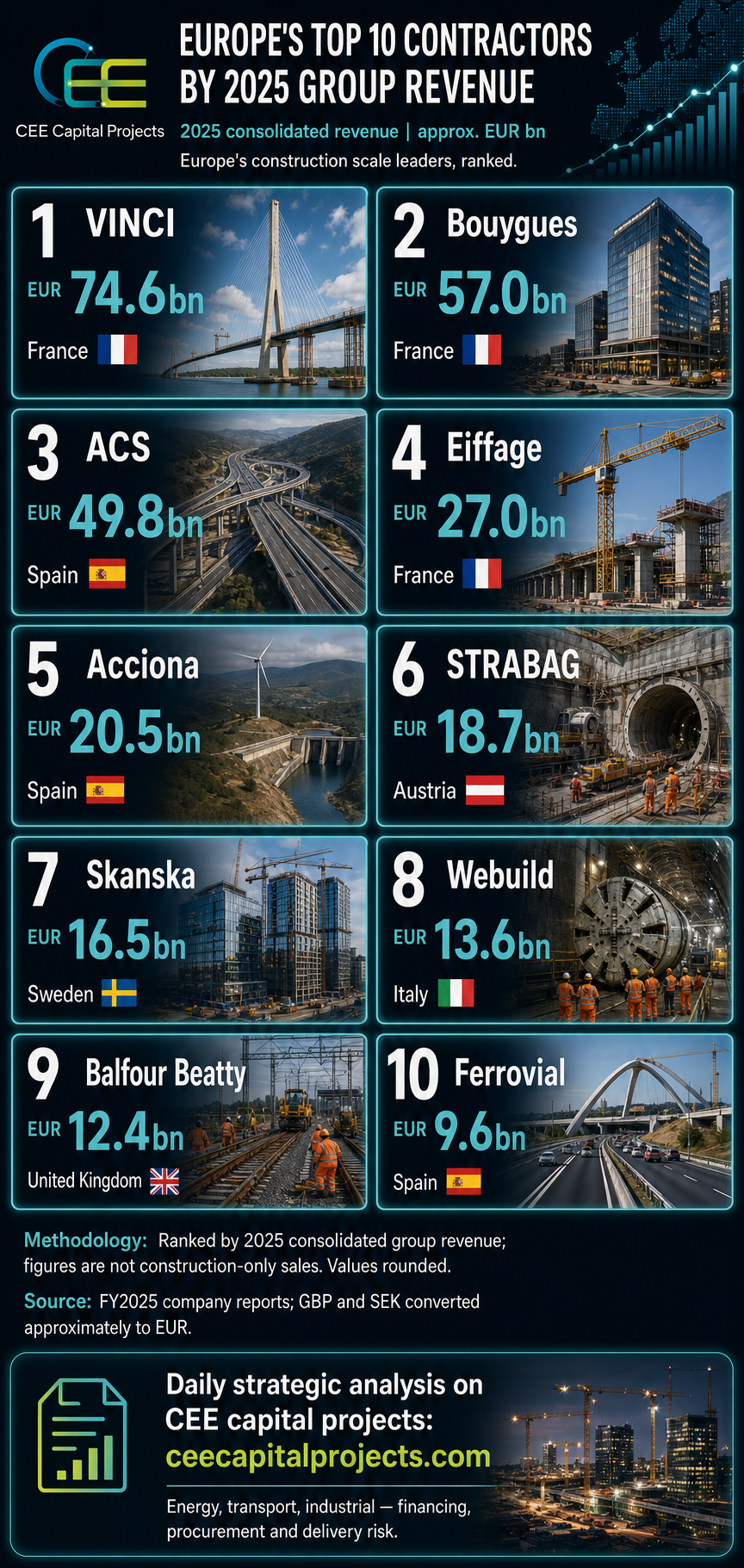
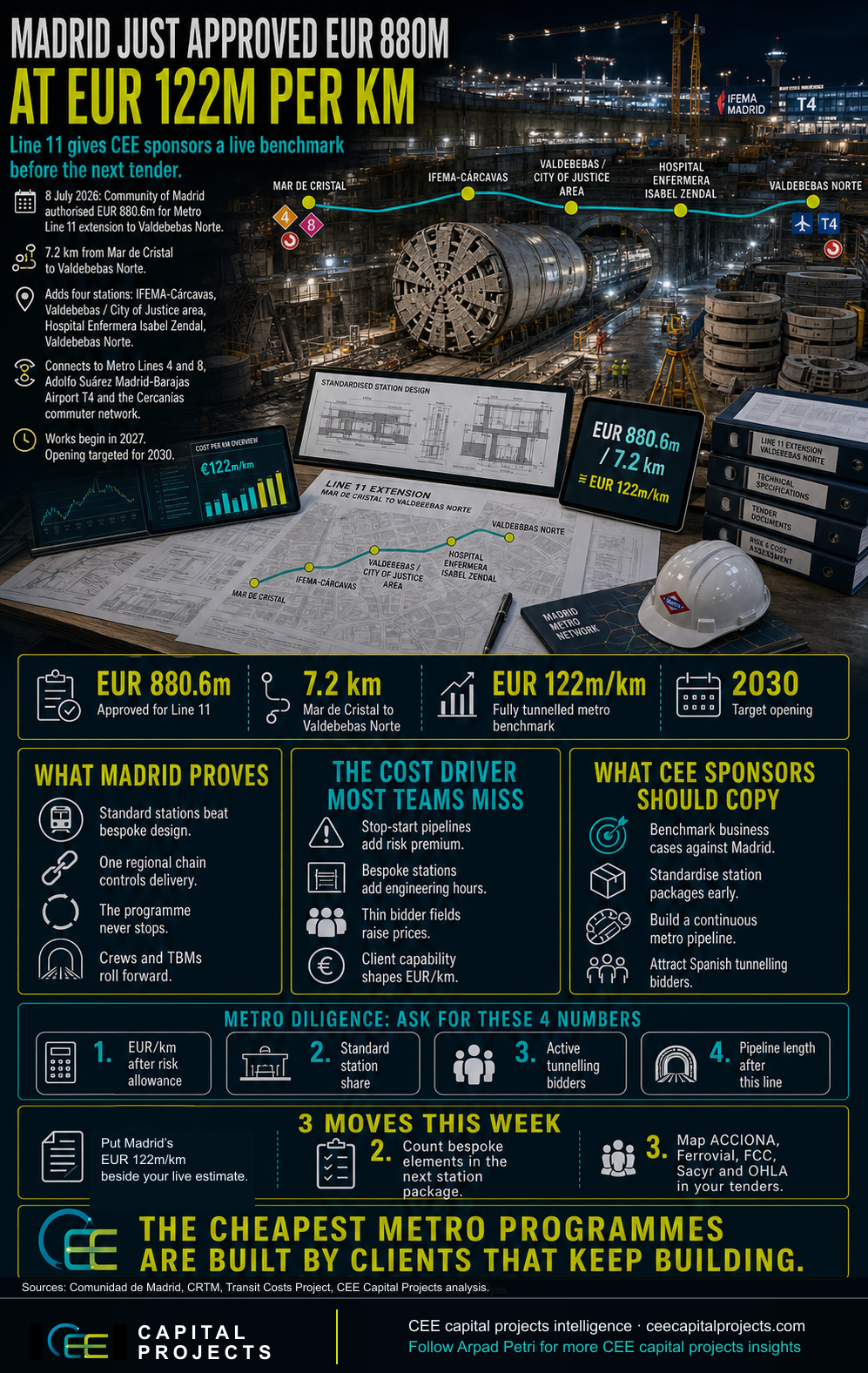
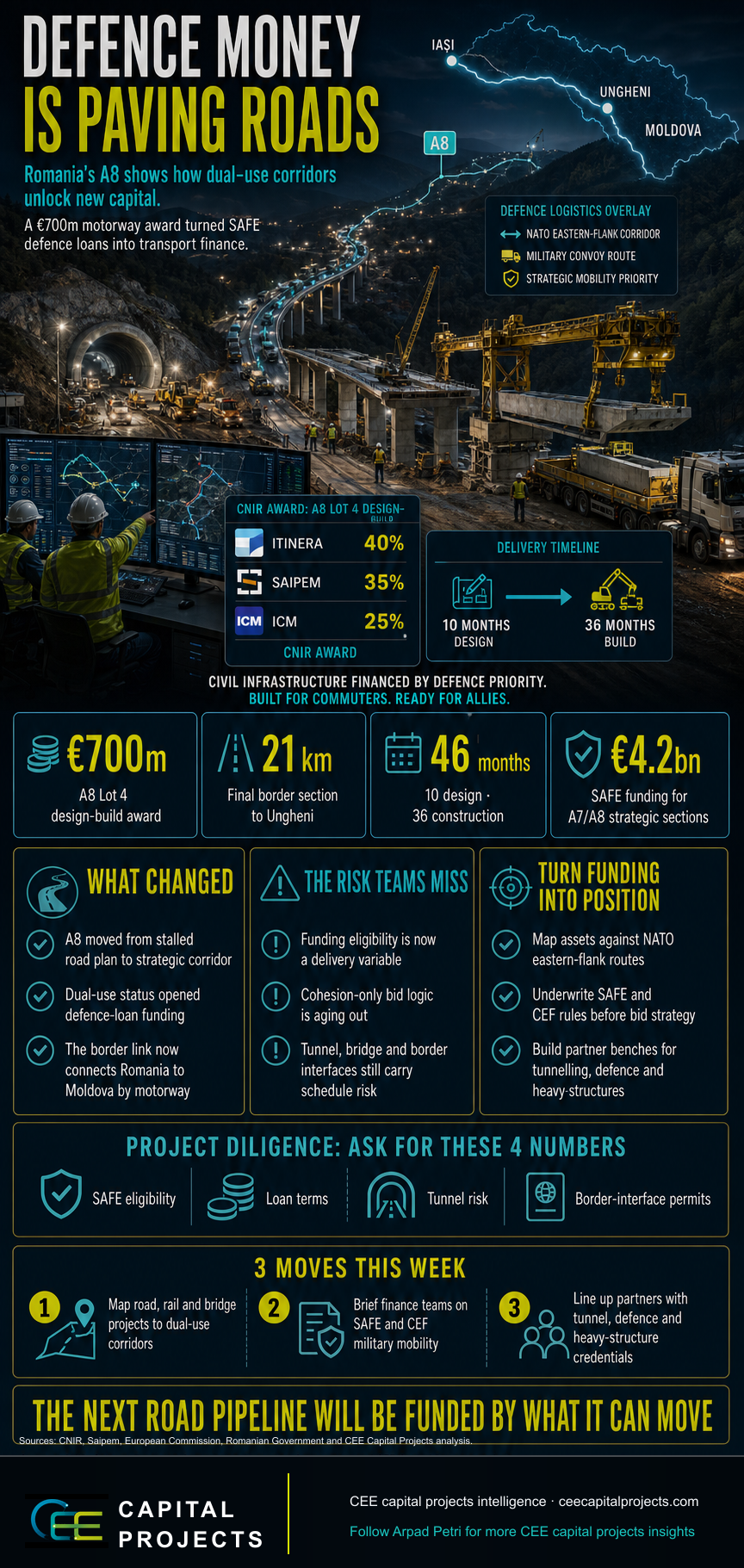
Explore our infograph library — strategic visuals for CEE capital projects leaders.
Project benchmarks, financing structures, tender dynamics and delivery risk — at a glance. Free access for investors, owners, contractors and strategy teams tracking CEE capital projects.
Browse the libraryStrategic Insights
📊 Analytics & Strategic Insight
On a Megaproject, the Signed Framework Is the Easy Win — the Funded, Synchronised Call-Off Is Where Delivery Lives or Dies
The decision most in this industry are avoiding:
👉 Treating a framework ceiling as progress. A €1.13 billion consolidated procurement with nothing yet committed tells you almost nothing about whether track gets laid. The number that matters is call-off value and cadence, not the headline framework figure everyone quotes.
👉 Ignoring the failure you cannot see. Civil works outrunning superstructure is the expensive mistake. A finished embankment with no rails photographs like progress and behaves like a stranded cost, financed and idle.
👉 Assuming a joint buy is purely a saving. Consolidating three sovereign buyers into one framework lowers unit price but ties delivery to the slowest, least-funded national body. The corridor moves at the pace of whichever country's cash and worksites lag.
Here's the full context:
→ 2017: Rail Baltica's first-phase cost was pitched at roughly €5.8 billion.
→ 2024: The estimate reached €23.8 billion full scope, with the single-track Phase I put at €15.3 billion (International Railway Journal).
→ October–December 2025: Lithuania's LTG Infra began laying the corridor's first track on an 8.8 km section; the consolidated sleeper framework was signed in December.
→ January 2026: The European Court of Auditors warned Phase I would miss 2030 and cost at least €24 billion.
→ Most recent: In July 2026 rails became orderable under the €1.13 billion consolidated superstructure framework, with sleepers and ballast to follow from September (RB Rail AS).
What this means for infrastructure operators, contractors and investors:
✅ Suppliers should price the carry, not just the unit. Where a client can call off early, the winning bid is the one that costs in storage, condition monitoring and the financing of material that waits, because someone pays for steel that sits.
✅ Contractors should anchor programmes to funded call-off dates. A framework signature is not a start date. Tie mobilisation, crews and plant to the confirmed, financed order, or carry the idle-cost risk yourself.
✅ Lenders and funds should read the grant calendar as the schedule. On a CEF-dependent build, the tranche timetable, not the construction-ready kilometres, sets the real pace. Model the funding cadence before the engineering.
3 moves you can make this week:
1️⃣ Separate framework value from committed spend. On any project you track, pull the call-off orders actually placed against each framework; that gap is your true progress signal.
2️⃣ Stress-test your own sequencing. Map where civil works could finish ahead of the materials or systems that follow, and price the cost of the wait in both directions.
3️⃣ Put the funding milestones on the delivery Gantt. Add the next grant or budget decisions to the construction programme so material orders are timed to money, not to optimism.
Related analyses
- Transport & Infrastructure
V-Híd Just Lost Hungary's HUF 338 Billion Déli Körvasút at 42 Per Cent Complete. The Grant Clock Is the Real Story
Hungary halted construction of the Budapest Southern Circle Railway on 9 October 2026 and barred V-Híd from every ongoing rail investment. The HUF 367 billion of EU money behind the job survives only if a lawful re-tender lands inside two years.
Read analysis → - Transport & Infrastructure
Afcons Wins Croatia's EUR 899m Dugo Selo-Novska Rail Contract: Four Bids, No European Prime
Croatia signed its largest ever railway contract on 1 October 2026, handing 83 km of double-tracking to India's Afcons Infrastructure at EUR 677.06m excluding VAT. Four bids were priced for the work and not one of them came from a European prime contractor.
Read analysis → - Transport & Infrastructure
STRABAG Closes BAWI Construction Buy in Romania as Rail Qualification Becomes the Scarce Asset
STRABAG has closed its purchase of BAWI Construction, a Bucharest rail specialist with 240 employees and about EUR 60 million of 2025 output. The number that matters is the qualification it buys, as Romania opens a EUR 5.99 billion rail programme with the EU recovery window shut.
Read analysis →
Get a second opinion before it gets expensive.
Contractor selection, tender strategy, a project drifting off track — send us the situation and we'll come back with a clear plan.