We Help International Investors and Project Owners Deliver Major CEE Projects Without Expensive Surprises
Independent project intelligence and advisory across energy, transport, real estate and industrial construction.
PORR Registered a Hungarian Rail Company 18 Days Before V-Hid Was Barred. It Wants the Plant and the Crews Without the Legal Person
PORR Bau GmbH founded a Hungarian railway construction company on 21 September 2026, eighteen days before the transport ministry barred V-Hid Zrt. from its ongoing rail procurements. PORR now says it will take the machinery, the equipment and the staff, and that it will not buy the company.
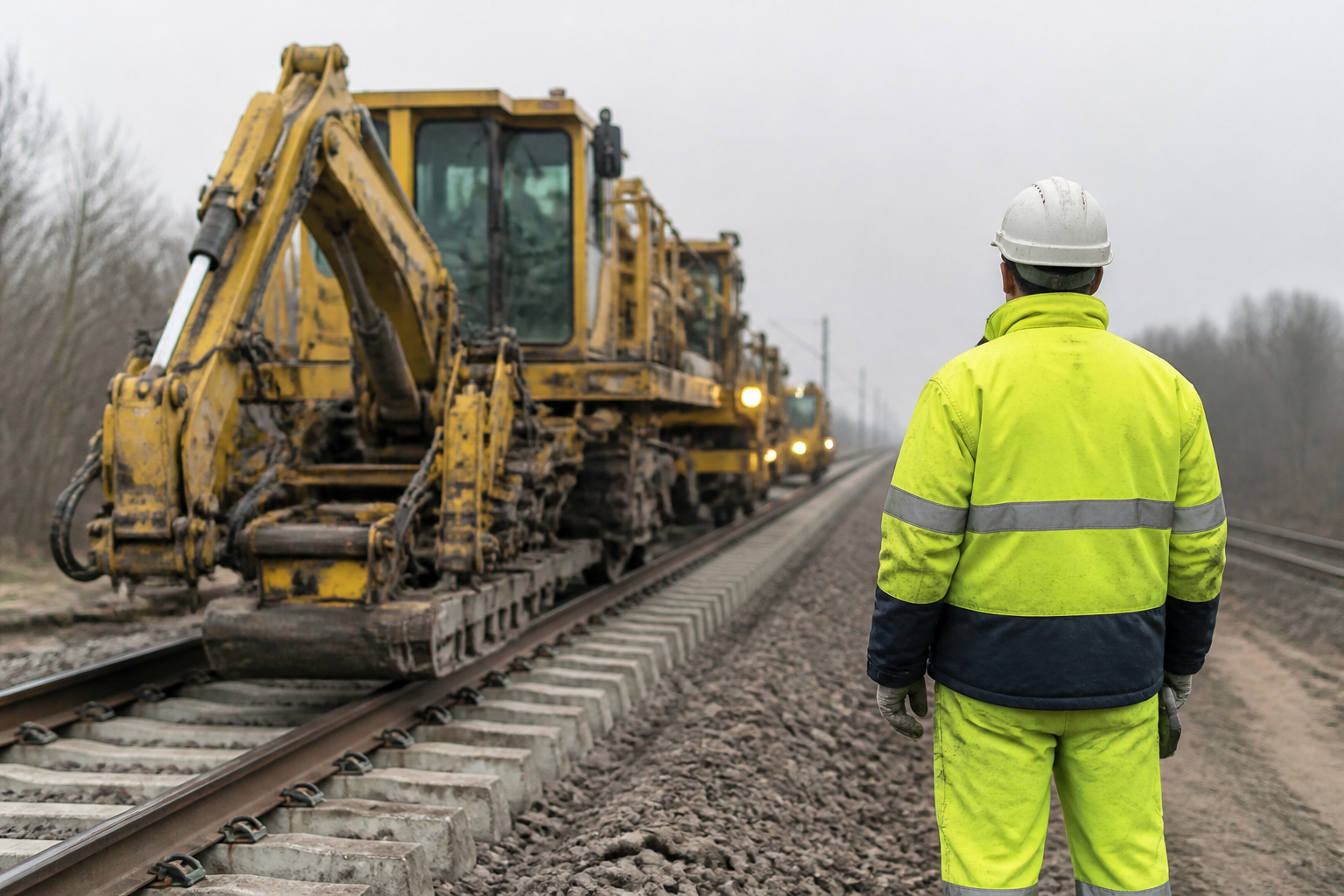
I would ask any board looking at a barred contractor one question first. What actually transfers, and what stays behind with the legal person? PORR answered that in public this month, and the calendar behind the answer carries the story.
PORR Bau GmbH founded PORR Kft. in Hungary on 21 September 2026, with railway construction as its main registered activity. Economx reported the registration on 20 October 2026. Vilaggazdasag gave the same 21 September date on 15 October 2026. It placed the new entity at the registered seat of PORR Kft. Eighteen days later, on 9 October 2026, the transport and investment ministry terminated the Deli Korvasut contract of V-Hid Zrt. It also excluded the company from its other ongoing rail procurements.
What PORR says it will take
Telex put the question to PORR after reports of a share sale. Portfolio carried the answer on 19 October 2026. PORR will not acquire the ownership stake in V-Hid. It could instead take over the machinery, the equipment, the employees and the running projects. It would only finish those works if the affected clients ask for it, and only after consulting the Hungarian government. Economx confirmed the same position on 20 October 2026.
Why the legal person carries the risk
An exclusion is a procurement decision, so it attaches to the company rather than to its equipment. The ministry cited a strong suspicion of unlawful collusion in the Deli Korvasut award. Atlatszo reported on 10 October 2026 that the decision stops short of a general ban on all future tenders. It also recorded an advance of HUF 101.4bn, of which HUF 57.1bn had not been set against completed work. A share purchase would carry that claim, the warranty book and any later finding onto the buyer's own balance sheet.
Two hundred and ninety three people turned over HUF 168 billion
V-Hid Zrt. reported net revenue of HUF 168.1bn for 2025, down from HUF 188.1bn. Construction and installation work accounted for HUF 165.5bn of that. Average statistical headcount was 293, against 268 the year before. HVG published the figures from the annual accounts on 19 June 2026.
That works out at roughly HUF 574m of revenue for every person on the payroll. The PORR half-year report of 27 August 2026 shows production output of EUR 3,167m. The average staff count was 20,801, about EUR 152,000 of output per head in six months. At current rates V-Hid turned over several times as much per employee. The delivery capacity therefore sat in the plant fleet and the subcontract chain. The 293 names on the payroll were the coordination layer. Hiring that layer is useful. It does not lay track by itself.
Capability can be bought, contract rights cannot
Hungary has said it will re-tender the Deli Korvasut works. Vilaggazdasag reported on 15 October 2026 that Swietelsky Vasuttechnika is open to every Hungarian rail tender it qualifies for. The same report has STRABAG deciding only after it reads the specific documents. PORR can buy the plant and hire the engineers, and it still has to beat both in a competition. A novation needs the employer to agree in writing. A re-let needs a winning bid.
PORR has no Hungarian production base to fall back on
PORR has traded in Hungary since 2004, yet Hungary does not appear in the reported segment detail of the group. Its first quarter release of 27 May 2026 shows CEE production output of EUR 97m. Group output in the same quarter was EUR 1,300m, and the segment names Czechia, Slovakia and Romania. CEE order intake in the quarter fell 37.7 per cent to EUR 122m. Group order intake then fell 14.4 per cent across the first half to EUR 3,466m. The backlog held at EUR 9,839m. A falling intake line explains the appetite for a ready made rail capability in the market next door.
The calendar is the real pressure
Vilaggazdasag reported that the proposed new completion date is 2030, subject to European Commission approval. The European Court of Auditors has flagged HUF 360bn of EU support as at risk. A re-tender, a mobilisation and a part built site all have to fit inside that window. Every week spent settling who holds the plant is a week nobody spends on the works.
For contractors the lesson is structural. Where the main liability of a counterparty is regulatory, the deal shape moves from shares towards assets and people. The price has to move with it. For public sponsors the lesson is harder. Removing a contractor removes the firm and keeps the works. The client then owns the sequencing risk, the part built interfaces and the re-tender calendar. For investors the test is whether PORR books Hungarian rail order intake in its third quarter statement. Plant and crews without a signed contract are capacity on standby, and standby capacity costs money every month it waits.
📊 Analytics & Strategic Insight
What a barred contractor actually owns, and what the exclusion takes with it
The decision most in this industry are avoiding:
👉 An order book is a permission the client can withdraw. The Deli Korvasut contract held by V-Hid ended with the termination. None of that work was ever a transferable asset. Contractor valuations still treat backlog as something that survives a change of control.
👉 The plant fleet is the only part of a contractor with clean title. Tampers, cranes, rail plant and depots can be bought and moved without anyone else agreeing. References, prequalification and signed contracts all need a third party to say yes.
👉 Refusing the company is the expensive option and still the right one. An asset and hiring deal forfeits the references and the contract continuity of the target. Buyers keep choosing share deals to keep those, then inherit claims they never priced.
Here's the full context:
→ 2004: PORR begins trading in Hungary. The country never appears as a named market in the reported CEE segment.
→ 2025: Net revenue at V-Hid Zrt. is HUF 168.1bn with an average statistical headcount of 293. HVG reported the accounts on 19 June 2026.
→ 21 September 2026: PORR Bau GmbH founds PORR Kft. in Hungary, with railway construction entered as its main activity.
→ 9 October 2026: The ministry terminates the Deli Korvasut contract, citing suspected unlawful collusion. It also excludes V-Hid from its other ongoing rail procurements.
→ Most recent: On 19 and 20 October 2026 PORR states that it will not buy the company. It may instead take the machinery, the equipment, the staff and the running works. Clients would have to ask.
What this means for infrastructure operators, contractors and investors:
✅ Price the regulatory liability before the backlog. A procurement exclusion sits on the legal person and travels with the shares. Diligence on a target in a public works market now starts with the client relationship rather than the order book.
✅ Capability without a contract has a carrying cost. Plant in a yard and engineers on payroll burn cash while a re-tender runs. Any deal in this shape needs a funded standby period written into the plan.
✅ A sponsor that removes a contractor keeps the delivery risk. Termination settles the probity question and leaves the half built structure, the sequencing and the deadline with the client.
3 moves you can make this week:
1️⃣ List what in your own business would survive a change of control. Separate plant with clean title, hired staff, prequalification references and signed client contracts. Mark which of the four needs somebody else to sign before it moves.
2️⃣ Test the novation clause in every live public contract. Read what the employer must consent to and how long it has to answer. Write that delay into your contingency.
3️⃣ Model a funded standby for any capability purchase. Cost twelve months of plant, depot and core staff with no revenue attached. Make that number the floor on what you will pay.
Share it with your peers
Help your network stay ahead of CEE capital projects.
Explore our infograph library — strategic visuals for CEE capital projects leaders.
Project benchmarks, financing structures, tender dynamics and delivery risk — at a glance. Free access for investors, owners, contractors and strategy teams tracking CEE capital projects.
Browse the libraryRelated analyses
- Transport & Infrastructure
ViAlliance35 Wins the Czech D35 Motorway Concession, and the 2.9 Billion Euro Headline Is a Payment Stream
The Czech government has approved the ViAlliance35 concession contract for 35.4 km of the D35 motorway between Opatovec and Mohelnice. The headline of about 2.9 billion euro is the discounted value of 22 years of availability payments, which is a different product from a construction budget.
Read analysis → - Transport & Infrastructure
Poland's PLN 1.3bn A2 Widening: 89 km of Third Lane, and the Pre-2012 Design That Made It Cheap
GDDKiA has signed the fourth and final contract to widen 92 km of the A2 between Łódź and Warsaw, closing a programme worth about PLN 1.3bn. The cost is low because land and structures were sized for a third lane before the motorway opened in June 2012.
Read analysis → - Transport & Infrastructure
CTP Signs Pepco to a 55,619 Sqm Direct Lease at CTPark Bucharest West, and the Space Was Already Occupied
CTP has signed Pepco to a direct long term lease on 55,619 sqm at CTPark Bucharest West, replacing an arrangement the retailer held through a logistics provider. The deal adds no occupied space and changes who stands behind the rent.
Read analysis →
Get a second opinion before it gets expensive.
Contractor selection, tender strategy, a project drifting off track — send us the situation and we'll come back with a clear plan.