We Help International Investors and Project Owners Deliver Major CEE Projects Without Expensive Surprises
Independent project intelligence and advisory across energy, transport, real estate and industrial construction.
METLEN and Karatzis Built Greece's Largest Battery for EUR 170m in Six Months. Only EUR 33m of It Was Sponsor Money
Alpha Bank lent EUR 56m to Greece's largest battery, beside EUR 81m of EU recovery money. Sponsor cash was EUR 33m of the EUR 170m total, and that funding window closes this year.
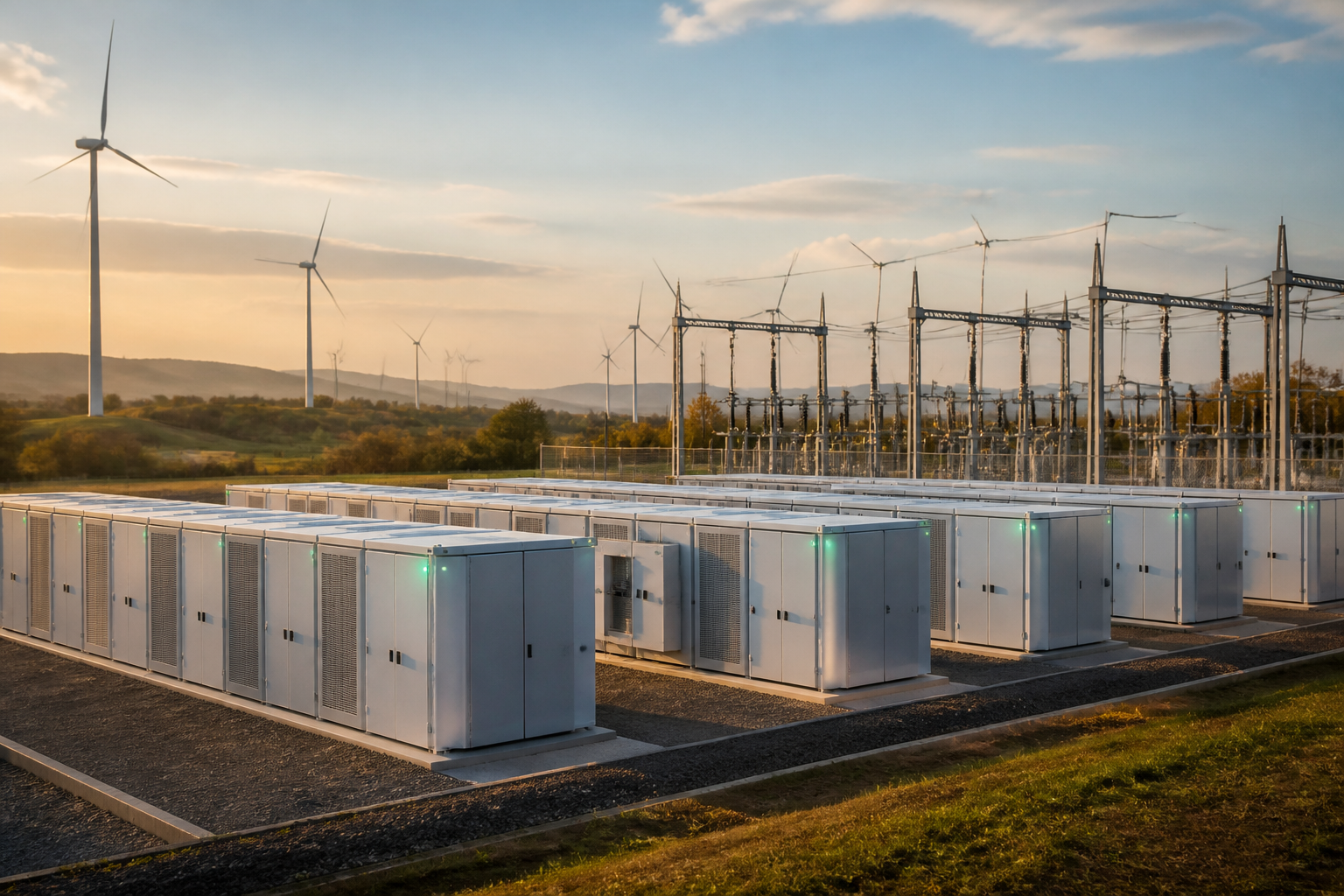
Most of the write-ups filed this as a renewables milestone. I read it as a financing template with an expiry date. Alpha Bank's figures of 15 October 2026 put the build at EUR 170m. Of that, EUR 81m came from the Recovery and Resilience Facility. Sponsor money was EUR 33m.
Prime Minister Kyriakos Mitsotakis opened the plant at Nees Karyes in the Larissa region on 15 October 2026. It is rated 330 MW with 790 MWh of storage. Balkan Green Energy News reported that it was completed in six months with more than 880 people involved. The owner is KARMET Energeiaki, a joint venture. Karatzis Group holds 51 per cent and METLEN 49 per cent. METLEN built the plant and keeps the operation and maintenance.
The capital stack is the real news here
Alpha Bank acted as exclusive arranger and lender for EUR 56m. The Recovery and Resilience Facility, through the Greece 2.0 plan, carried EUR 81m. The project's investors covered the remaining EUR 33m. Public money therefore funded 48 per cent of a merchant asset. Sponsor cash funded 19 per cent. One commercial bank took 33 per cent, and it took that position behind a public loan.
Few European flexibility assets have been built on so thin an equity ticket. At EUR 170m across 330 MW the build cost is about EUR 515,000 per MW. Across 790 MWh it is about EUR 215 per kWh. The duration is about 2.4 hours. Those three numbers are arithmetic on the reported figures rather than disclosed metrics.
Six months was a funding decision before it was an engineering one
The programme reads as an engineering result, and it is one. It is also a funding-window capability. The Recovery and Resilience Facility required all milestones and targets to be met by 31 August 2026. Member States had to file final payment requests by 30 September 2026. The Commission must complete payments by 31 December 2026.
An asset with a three-year build could not reach that money at all. One with a six-month build could. About 55 MW a month went in at Nees Karyes. A contractor who can mobilise 880 people for a half-year burst is selling more than civils and cabling. It is selling access to a closing funding window.
Merchant revenue sitting behind a public loan
The revenue side carries no price guarantee. The Thessaly plant has no contract for difference and no operational support agreement. It earns from arbitrage, balancing and ancillary services in the Greek market. The smaller Faria Renewables unit at Galanovrysi opened in the same week on a different basis. That one is 49.9 MW and 134 MWh and sits on support from Greece's second storage auction.
So the state took credit risk here, at a low rate and over a long tenor. It left the price risk with the sponsors. That is a cheaper way for a government to buy flexibility. It is also harder to repeat once the fund is shut. The next sponsor in this market meets a lender asking for a larger equity cheque. The revenue stack behind it has not changed.
The cost curve moved in batteries' favour, then paused
Wood Mackenzie published its global levelised cost work on 8 October 2026. Four-hour storage now beats open-cycle gas turbines on cost in all 43 markets where both were modelled. The same work found battery turnkey capex rose about 2 per cent in 2026. That is the first annual rise in three years, driven by cell prices and lithium. Wood Mackenzie expects a 12 per cent fall by 2031. Europe carries the highest fossil generation costs of any region it models.
Read those findings together before signing anything. The economic case for storage against peaking gas is settled for now. The equipment price underneath that case stopped falling in the same year the subsidy window shut.
The read-across for CEE arrives immediately
Mr Mitsotakis said Greece wants 3 to 4 GW of storage operating or under implementation by 2028. He also said about EUR 200m of public money is still going into comparable work. Greek operating battery power is now close to 1 GW after this plant and the Faria unit.
The same sponsors are already exporting the model. METLEN and PPC formed a joint venture in March 2026 for battery projects. The target is up to 1.5 GW and 3 GWh in Romania, Bulgaria and Italy. None of those markets has a Recovery and Resilience loan window left to draw on. Each will have to price the same asset on bank debt, sponsor equity and whatever national scheme exists.
For contractors the lesson is about programme shape. Flexibility work now arrives in short, labour-heavy bursts tied to a funder's calendar. The firms built for that shape will take the margin. For sponsors and lenders the live question is the equity line. A merchant battery funded on 19 per cent sponsor cash is one asset. The same battery at 35 per cent in 2028 is another. For public sponsors the Greek case is worth copying while the detail is fresh. A cheap public loan behind a merchant revenue stack delivered 330 MW in six months. It promised nobody a price.
Share it with your peers
Help your network stay ahead of CEE capital projects.
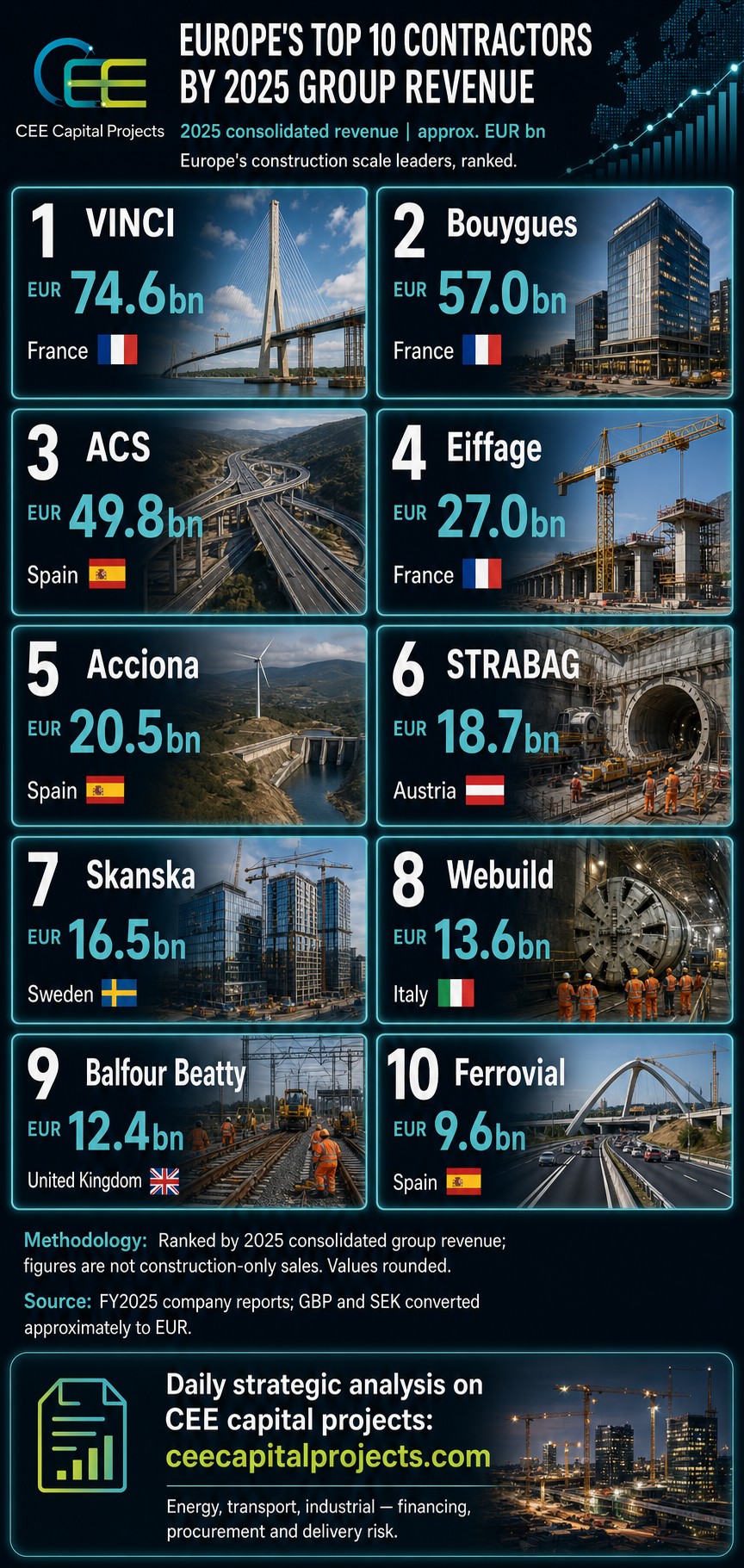
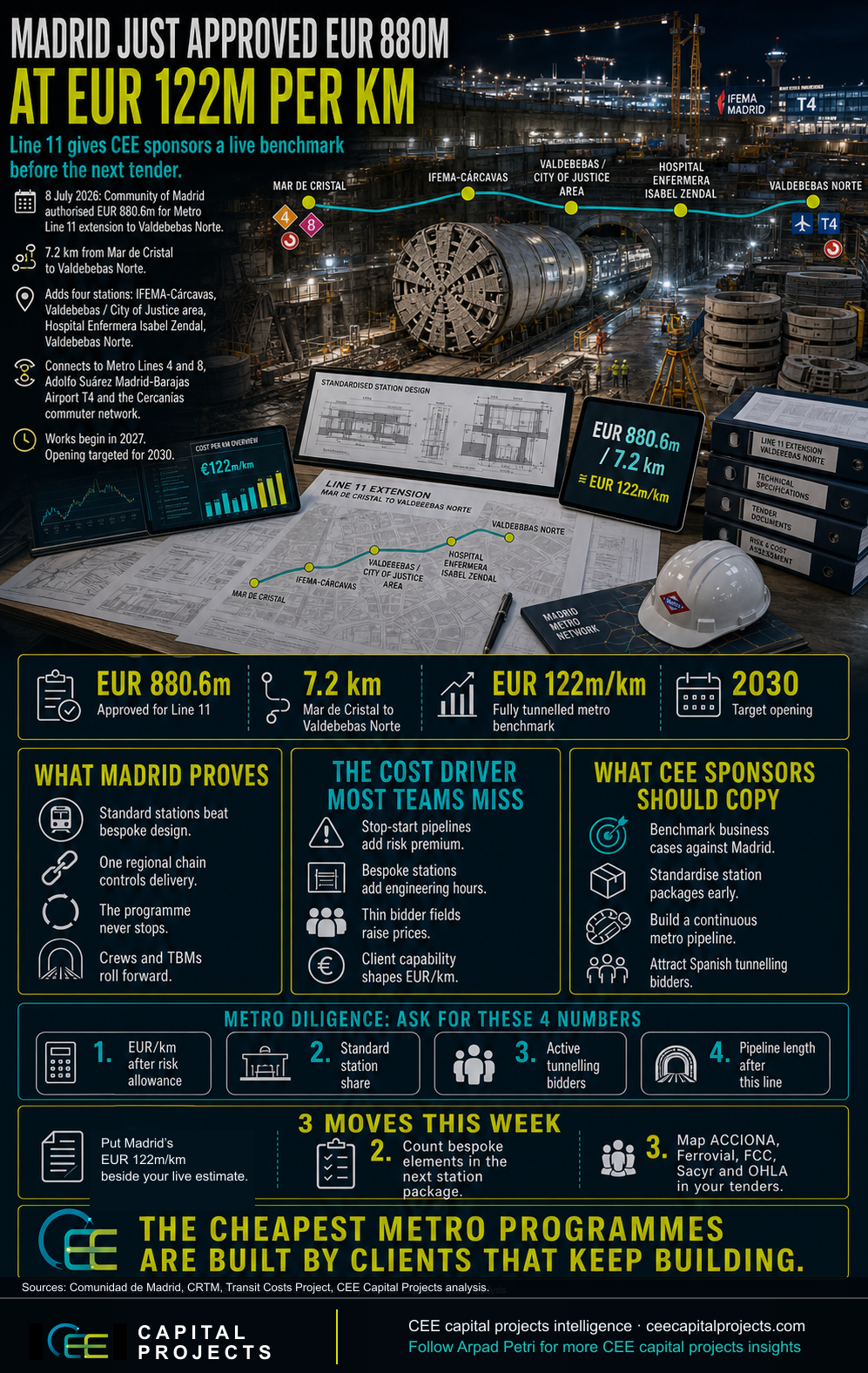
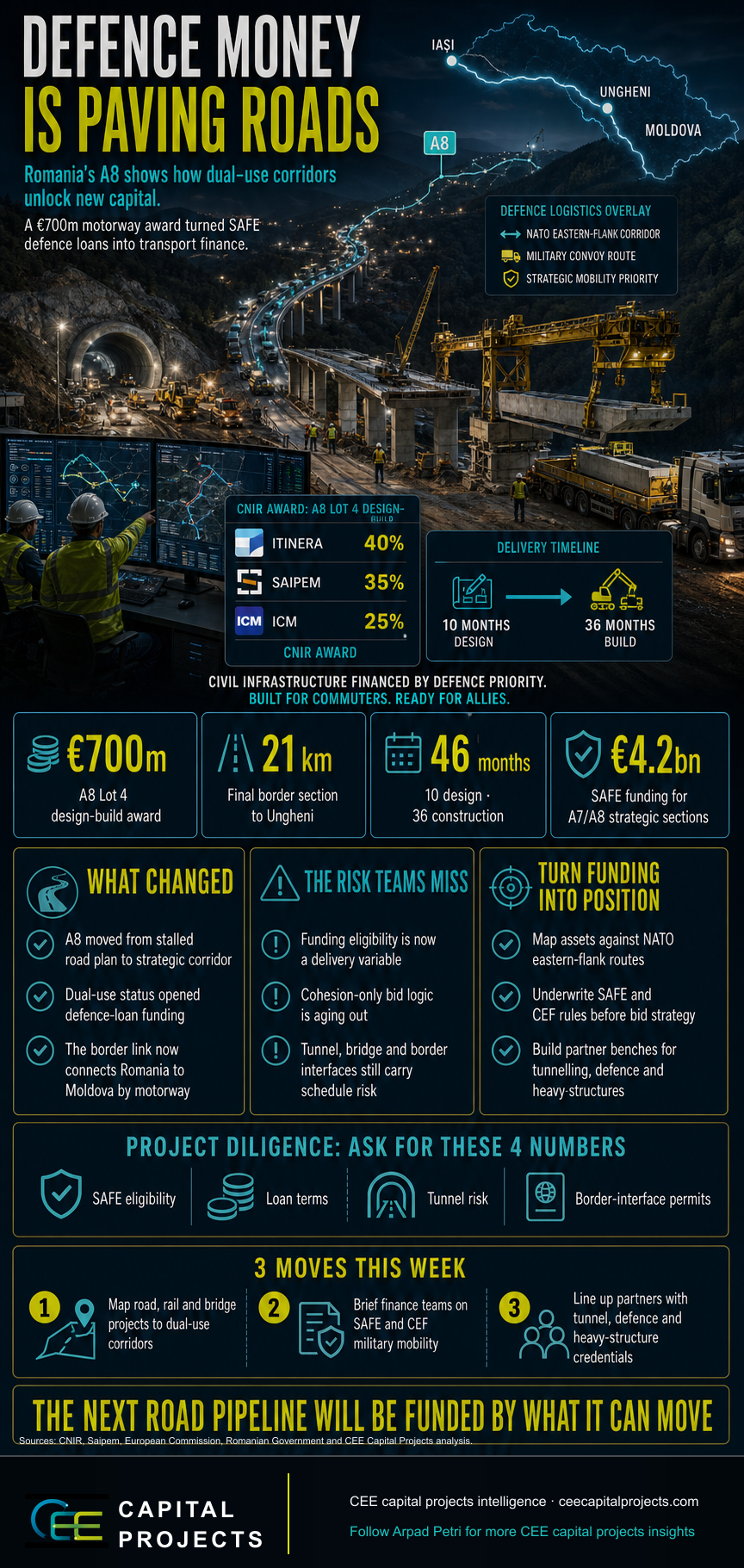
Explore our infograph library — strategic visuals for CEE capital projects leaders.
Project benchmarks, financing structures, tender dynamics and delivery risk — at a glance. Free access for investors, owners, contractors and strategy teams tracking CEE capital projects.
Browse the libraryStrategic Insights
📊 Analytics & Strategic Insight
The money was public, the price risk stayed private, and the deadline did the rest
The decision most in this industry are avoiding:
👉 Stop reading this as a battery story. It is a funding story. The scarce input was money with a deadline on it.
👉 Model your own equity cheque honestly. This plant was built on 19 per cent owner cash. Most teams plan on 30 to 40 per cent. That gap is the whole return.
👉 Speed is a commercial product now. Six months is what let this project reach a fund that was closing. Firms that only work in years were never in the running.
Here's the full context:
→ 2021: The EU set up the Recovery and Resilience Facility. Countries got grants and cheap loans with fixed end dates.
→ 2023 to 2025: Greece ran storage auctions. Winners got ten-year support deals. Several later projects chose to go without one.
→ March 2026: METLEN and PPC agreed a joint venture for up to 1.5 GW of batteries in Romania, Bulgaria and Italy.
→ 8 October 2026: Wood Mackenzie said four-hour batteries now cost less than gas peaking plants in all 43 markets it modelled.
→ Most recent: On 15 October 2026 Greece opened its largest battery, 330 MW and 790 MWh. It cost EUR 170m. EUR 81m came from the EU fund, EUR 56m from Alpha Bank and EUR 33m from the owners.
What this means for infrastructure operators, contractors and investors:
✅ Cheap public debt beats a price guarantee. A loan at 48 per cent of cost cut the owners' cheque to 19 per cent. Nobody promised them a price.
✅ The next one costs more to fund. Once the EU fund closes, banks set the terms. Expect a bigger equity cheque for the same asset.
✅ Short bursts of work pay better than long ones. 880 people for six months is a product. Build the crews and the plant for that shape.
3 moves you can make this week:
1️⃣ Rebuild one funding plan without the public loan. Take your next storage project. Swap the cheap public money for bank debt and equity. See what return is left.
2️⃣ Ask what your firm can finish in six months. Write down the largest job you could complete in half a year. That number is what a closing fund can buy from you.
3️⃣ Check which schemes still have money and a date. List the funds open in your market. Put the last day for each one next to it.
Related analyses
- Energy & Power
Constellation's $4.3bn Nuclear Uprate Deal With Google: 890 MW, No New Site, and a Finite Pool
Constellation will invest more than $4.3bn to lift 890 MW out of 11 existing reactors under a 20-year Google power purchase agreement, at roughly half the per-kilowatt cost of recent American new build. The point for Europe is that the national uprate pool runs to three to five gigawatts, ČEZ banked its Dukovany headroom by 2009, and the only route left to fresh capacity is a CZK 407bn new build.
Read analysis → - Energy & Power
NEK's EUR 350 Million Yadenitsa Dam Tender Turns Bulgaria's Chaira Storage Fix Into a Civils Job
Bulgaria's NEK has put EUR 350m on the market for the Yadenitsa dam and a six kilometre tunnel at the 864 MW Chaira pumped storage plant, with bids due 4 November 2026 and 60 months to build. The civil works are costed at more than three times the EUR 102m reconstruction of all four of the plant's machines.
Read analysis → - Real Estate & Construction
Atenor Sells 87 Perspectiv Homes to the Luxembourg State: The Presale Threshold Is Now a Public Instrument
Atenor and Tracol Immobilier have sold 87 residential units at Perspectiv in Esch-sur-Alzette to the Luxembourg State, months before main construction starts. The deal shows how a public off-plan buyer now supplies the presale certainty that development banks demand.
Read analysis →
Is your project leaking money through its subcontractors?
Most owners lose 3–8% in vendor packages without noticing. Tell us about your project — we'll tell you where we'd look first.