We Help International Investors and Project Owners Deliver Major CEE Projects Without Expensive Surprises
Independent project intelligence and advisory across energy, transport, real estate and industrial construction.
Constellation's $4.3bn Nuclear Uprate Deal With Google: 890 MW, No New Site, and a Finite Pool
Constellation will invest more than $4.3bn to lift 890 MW out of 11 existing reactors under a 20-year Google power purchase agreement, at roughly half the per-kilowatt cost of recent American new build. The point for Europe is that the national uprate pool runs to three to five gigawatts, ČEZ banked its Dukovany headroom by 2009, and the only route left to fresh capacity is a CZK 407bn new build.
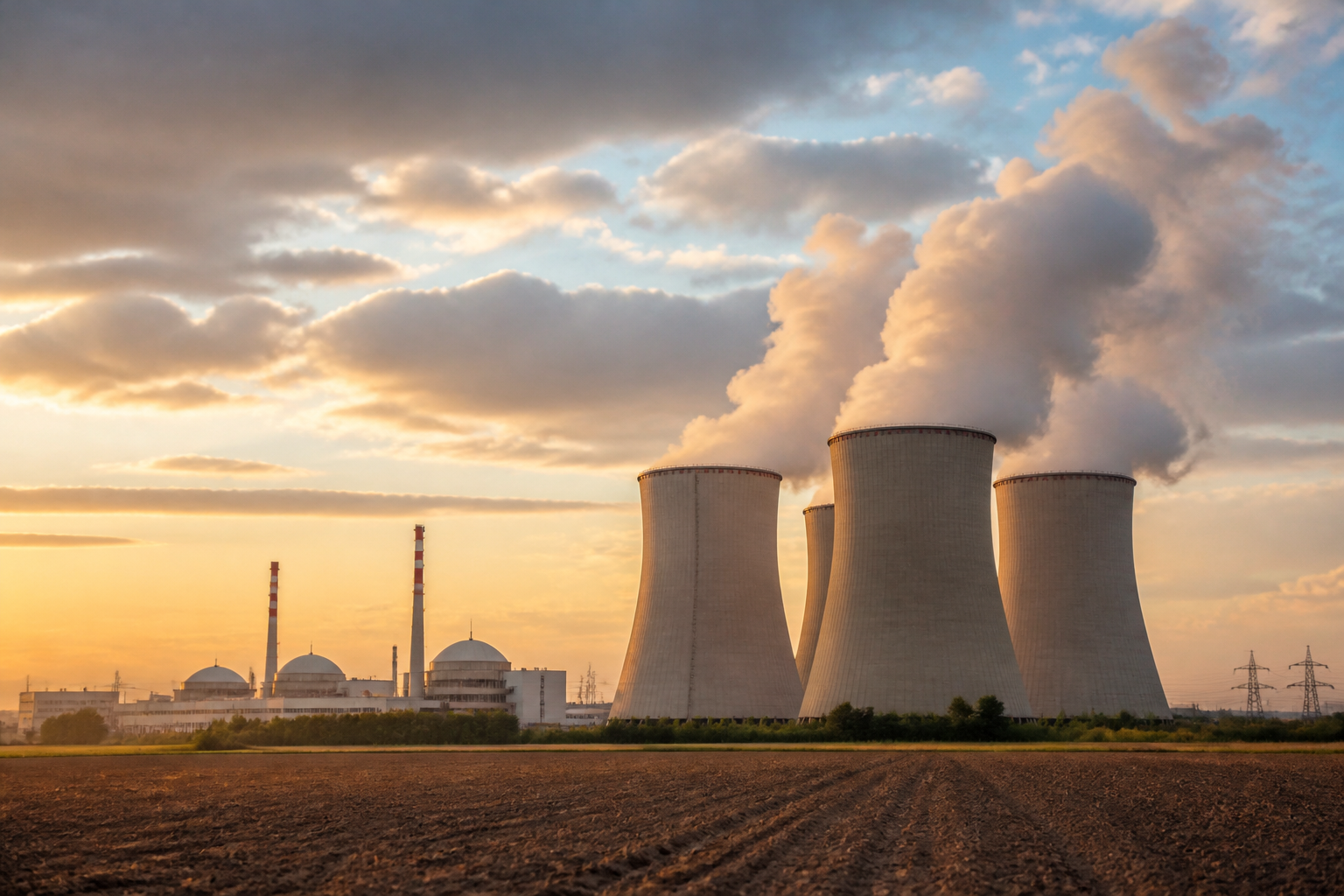
Two numbers sit in this deal and I read the wrong one first. The 890 megawatts is the headline. The number that matters is three to five gigawatts.
On 6 October 2026 Constellation Energy and Google announced a 20-year power purchase agreement for 890 MW of nuclear capacity. The capacity comes from uprates at 11 existing reactors inside the PJM market. Constellation will invest more than $4.3bn in turbines, steam generators and digital control systems across six sites. The first uprate is due by 2028. A separate 15-year agreement covers 2,700 MW of the existing fleet.
What $4.3bn buys when the licence already exists
The six sites are Braidwood, Byron, LaSalle and Quad Cities in Illinois, Limerick in Pennsylvania and Salem in New Jersey. Constellation owns 43 per cent of Salem, which PSEG Nuclear operates. Unit by unit allocations have not been published. Canary Media put the implied cost at just over $4,800 per kilowatt on 8 October 2026. The same piece set that against Vogtle units 3 and 4, where the per-kilowatt figure was more than double.
That price buys something a greenfield reactor cannot. There is no new site, no new reactor licence and no new connection at a fresh node. The work sits inside operating plants under refuelling outages. That makes it a scheduling problem rather than a consenting one. Constellation says the programme sustains about 4,400 jobs and creates about 7,200 construction jobs.
The scarce asset is headroom, and most of it is sold
Jefferies analyst Julien Dumoulin-Smith told Canary Media the national uprate pool runs to three to five gigawatts. He called it a unique asset class with only three to five gigawatts available. Constellation's 890 MW and Vistra's 433 MW together account for more than a gigawatt of that. Two deals have therefore taken roughly a quarter to a third of the whole American pool.
The demand side explains the hurry. PJM's capacity auction for 2028/2029 cleared against a $325 per MW-day cap. It still fell 6,831 MW short of the reliability requirement. Without the cap most of the market would have cleared at $554.72, with ComEd above $775. Only 524 MW of new power plants joined that auction. PA Environment Digest reported those figures on 14 July 2026, citing PJM and NRDC.
Europe spent this option twenty years ago
ČEZ ran the same play at Dukovany and finished it long ago. The four VVER-440 units were rated at 440 MWe and reached 500 MWe through a nine-year modernisation completed in 2009. Plant director Roman Havlín has said output since went from 500 to 512 MW per unit. World Nuclear News reported on 10 March 2025 that the four units can supply 2,048 MWe. That is almost 300 MWe above the level at first start.
ČEZ is still spending at Dukovany, and the money now goes into keeping what exists. NucNet reported on 19 January 2026 that the company planned CZK 4.4bn, about EUR 180m, on modernisation this year. The scope includes low-pressure turbogenerator parts reaching the end of their service life. That is replacement work rather than fresh headroom. Hungary took the same VVER-440 uprate route at Paks in the 2000s.
Why the European number is now a new build number
With the headroom banked, Czechia's next tranche of capacity comes from new reactors. The EPC contract with KHNP covers two APR-1000 units at Dukovany. It was signed on 4 June 2025 at CZK 407bn, about $18.6bn. World Nuclear News reported that construction of unit 5 is targeted to start in 2029. On 2.1 GW that is close to $8,900 per kilowatt by my arithmetic. The uprate route costs about half as much and arrives several years sooner.
What the offtaker actually bought
Google is funding capital works inside someone else's licensed asset and taking the output for 20 years. That is closer to a procurement structure than to a conventional power contract. European sponsors have the same instrument available and rarely use it. A data centre, a smelter or a freight operator can fund a debottlenecking project. The asset owner takes the capital and gives firm capacity in return.
Where this lands for delivery teams
Three groups should act on this. Contractors with outage-window experience in turbine halls and instrumentation retrofits hold a scarce skill, and should price it that way. Investors should treat brownfield debottlenecking as a finite asset class. The first question on any such target is how much headroom it has already spent.
Public sponsors should audit the capacity they already own before they tender a new asset. The cheapest megawatt usually sits inside a plant that is already licensed, connected and running. The American market has just put a number on that megawatt. It is about half the price of a new reactor. Europe sold most of its cheap megawatts two decades ago. Its capacity conversation now starts at CZK 407bn and 2029.
Share it with your peers
Help your network stay ahead of CEE capital projects.




Explore our infograph library — strategic visuals for CEE capital projects leaders.
Project benchmarks, financing structures, tender dynamics and delivery risk — at a glance. Free access for investors, owners, contractors and strategy teams tracking CEE capital projects.
Browse the libraryStrategic Insights
📊 Analytics & Strategic Insight
Capacity is being bought inside existing licences, and the cheap pool is nearly gone
The decision most in this industry are avoiding:
👉 The cheap megawatt is a wasting asset. The national uprate pool is three to five gigawatts and two buyers have already contracted more than one of them. Most investment committees still treat brownfield upside as permanently available. That is how a cheap option gets modelled at the wrong price.
👉 Your own plant competes with your capital programme. Every megawatt recovered from an existing licence is a megawatt the new build business case loses. Sponsors rarely put both options in the same board paper, so the comparison that decides billions never actually happens.
👉 Outage windows set the schedule, and money cannot move them. Work inside an operating nuclear plant happens during refuelling outages. The binding constraint is certified crew availability in a fixed window, booked years ahead. No amount of contingency buys a second window this year.
Here's the full context:
→ 1985 to 1987: Dukovany's four VVER-440 units enter service at 440 MWe each. That is the baseline for every later gain.
→ 2009: A nine-year modernisation lifts each Dukovany unit to 500 MWe. Output later reaches 512 MW per unit. That is almost 300 MWe of extra capacity with no new site.
→ 4 June 2025: Czechia signs the EPC contract with KHNP for two APR-1000 units at Dukovany. The price is CZK 407bn, about $18.6bn, with unit 5 construction targeted for 2029.
→ 14 July 2026: PJM's capacity auction for 2028/2029 clears against a $325 per MW-day cap. It falls 6,831 MW short of the reliability requirement. Only 524 MW of new power plants enter.
→ Most recent: On 6 October 2026 Constellation and Google contract 890 MW of uprate capacity. It covers 11 reactors at six sites for more than $4.3bn. The first megawatts are due by 2028.
What this means for infrastructure operators, contractors and investors:
✅ Brownfield debottlenecking is now a priced asset class. A public per-kilowatt number exists for recovered capacity, and it sits at roughly half the cost of recent new build. Any asset with unused design margin should be revalued against that benchmark.
✅ The customer can fund the works. A buyer who wants firm capacity more than a discount will pay for works it does not own. That widens the funding options on grids, ports, terminals and treatment plants.
✅ New build prices are the fallback, so test them early. Once the headroom is gone, the next increment costs what Dukovany 5 costs and starts when its first concrete starts. Sponsors who price that fallback late lose their bargaining power on the cheaper route.
3 moves you can make this week:
1️⃣ Inventory the headroom you own or finance. List every asset where design margin, replaced equipment or a licence condition allows more throughput. Put a megawatt or tonnage number and an indicative cost against each one this week.
2️⃣ Ask your largest offtaker to fund a debottlenecking project. Draft a one-page proposition offering firm capacity for a term in exchange for the capital cost. The Constellation structure gives you a live precedent to reference.
3️⃣ Book outage-window delivery capacity now. Contact the contractors who hold certified crews for turbine, boiler, pump and instrumentation retrofits. Confirm their earliest free window and reserve it before the pricing moves.
Related analyses
- Energy & Power
NEK's EUR 350 Million Yadenitsa Dam Tender Turns Bulgaria's Chaira Storage Fix Into a Civils Job
Bulgaria's NEK has put EUR 350m on the market for the Yadenitsa dam and a six kilometre tunnel at the 864 MW Chaira pumped storage plant, with bids due 4 November 2026 and 60 months to build. The civil works are costed at more than three times the EUR 102m reconstruction of all four of the plant's machines.
Read analysis → - Energy & Power
EIB and BNP Paribas Guarantee EUR 700m of Grid Equipment Bonds: Europe's Network Bottleneck Moves to the Balance Sheet
The EIB and BNP Paribas signed a EUR 700m counter-guarantee portfolio on 29 September 2026, covering advance payment and performance bonds for European manufacturers of electricity grid components. The instrument is small, and it points at the constraint that now sets delivery dates on Europe's grid build: bonding capacity rather than factory floor.
Read analysis → - Energy & Power
MVM Starts Piling at the 1,000 MW Tisza CCGT in Tiszaújváros: the Turbine Date Now Sets Hungary's Civils Window
Piling has begun at MVM's 1,000 MW Tisza combined cycle plant in Tiszaújváros, seventeen months after the turnkey contract with Çalık Enerji Swiss and Ansaldo Energia was signed. The more useful reading is the sequence: EUR 1.2 billion of SACE-covered debt and the equipment order were both fixed long before the ground was touched.
Read analysis →
Get a second opinion before it gets expensive.
Contractor selection, tender strategy, a project drifting off track — send us the situation and we'll come back with a clear plan.