We Help International Investors and Project Owners Deliver Major CEE Projects Without Expensive Surprises
Independent project intelligence and advisory across energy, transport, real estate and industrial construction.
Jacobs AECOM Wins EUR 550m MetroLink Delivery Partner Contract as Ireland Keeps the Dublin Metro Integration Risk
Transport Infrastructure Ireland has appointed Jacobs AECOM as Programme Delivery Partner for MetroLink at a notice value of EUR 550m over 144 months. The award reveals a delivery model in which no single contractor is obliged to hand over a working railway.
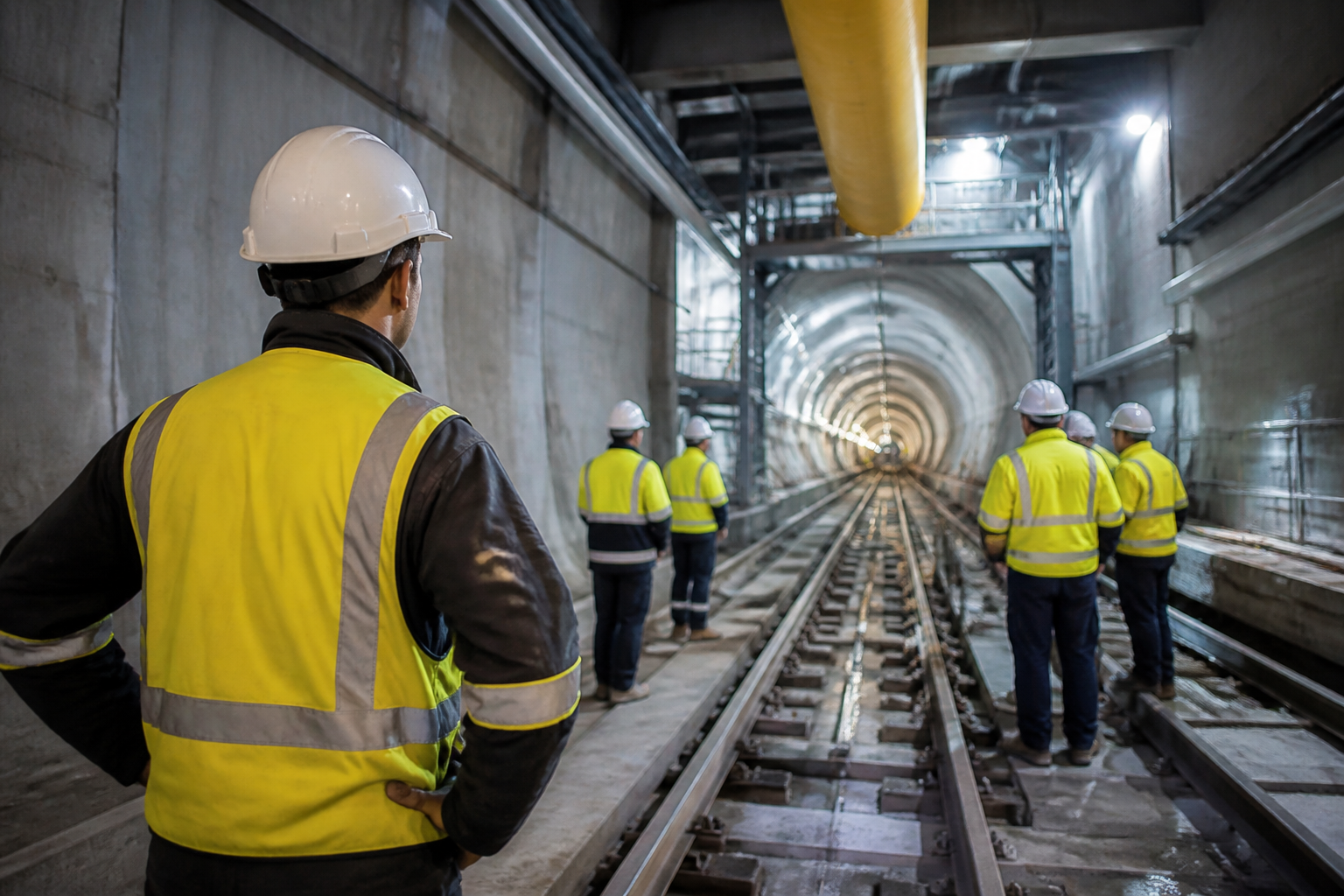
The coverage reads this as a consultancy win. I read it as Ireland naming who will carry the integration risk on its first metro. Transport Infrastructure Ireland appointed Jacobs AECOM as Programme Delivery Partner for MetroLink on 10 September 2026. The tender notice puts the contract at EUR 550m over 144 months, including options and renewals.
What Ireland has actually bought
Jacobs AECOM is a joint venture of Jacobs and AECOM, supported by Ramboll and Nicholas O'Dwyer. TII awarded the Programme Delivery Partner Support Services contract after what it called a highly competitive procurement. Work is assigned through task orders rather than as one lump sum. The partner supplies safety, project management, site supervision and contract administration across every contract TII procures for the scheme.
Lorcan O'Connor, chief executive of TII, called the appointment a critical transition for MetroLink. Michael Flynn, the programme's interim director, was more concrete. The partner is there to turn an operative Railway Order and live procurements into physical works.
Three prime contracts, and nobody obliged to hand over a railway
MetroLink is being procured as three large contracts alongside the delivery partner. M401 covers the southern section from Charlemont to Northwood. It includes bored tunnels, portals, shafts and excavations up to 35 metres deep for ten stations. TII's notice values it at EUR 4.565bn excluding VAT.
M402 covers the northern section from Northwood to Estuary. It carries the M50 and Broadmeadow River viaducts, surface sections, five stations and preparation of the Dardistown depot site. TII's notice values it at EUR 3.347bn excluding VAT. Both civils competitions opened on 3 February 2026.
M500 is different in kind. It is a design, build, finance, operate and maintain contract with a term of about 32 years. It covers rolling stock, GoA4 signalling, the depot, trackwork, power and systems. It also covers the fit-out of all sixteen stations and 25 years of operation. TII published it at EUR 7.3bn excluding VAT on a net present value basis. Procurement opened on 1 May 2026. The agency expects each of these competitions to run 18 to 24 months.
Those three figures rest on different bases and should never be added. The civils numbers are maximum notice values that include inflation and risk, and TII expects tenders below them. The M500 figure is a net present value and is not contractually binding.
Read the split and the delivery model becomes clear. The civils contractors build the holes, the structures and the viaducts. The private partner supplies the trains and systems, fits out the stations and runs the service for 25 years. No single party is contracted to hand over a working metro. One contract builds the station box and another fits it out. That joint belongs to the sponsor. So does the delay when the two do not meet.
Client-side management is capital expenditure
EUR 550m over twelve years is roughly EUR 46m a year of client-side cost, on this publication's own arithmetic. It appears in no contractor's tender. The Irish Times reported departmental figures in April 2026. MetroLink spending had already passed EUR 360m before construction began. A programme estimate built by adding contract values will understate the outturn.
The cost picture is still wide. TII's published estimate of EUR 9.5bn dates from 2021. It sat at the midpoint of a EUR 7.16bn to EUR 12.25bn range. In July 2026 The Irish Times reported senior government figures expecting an outturn as high as EUR 19bn. The National Development Plan has added EUR 2bn from the Infrastructure, Climate and Nature Fund. That sits inside a EUR 24.3bn transport allocation for 2026 to 2030.
What the award sequence tells bidders
The order of events is information. An Coimisiun Pleanala granted the Railway Order in October 2025 and it became operative on 12 January 2026. That followed the withdrawal of a judicial review by residents of Dartmouth Square West after mediation. Procurement for the civils opened three weeks later. The first contract actually awarded is the one that manages the others.
On TII's stated ranges the February competitions conclude between August 2027 and February 2028. The PPP would follow between November 2027 and May 2028. That timing is this publication's arithmetic on the agency's own figures. Contractors bidding M401 and M402 should price the client organisation they will meet. A partner with 144 months of task orders will hold the records and the programme. Sponsors elsewhere can take the simpler lesson. A programme split between civils and systems keeps the integration risk at home. The cost of holding it deserves its own line before the first tender goes out.
📊 Analytics & Strategic Insight
The first contract awarded tells you who owns the risk
The decision most in this industry are avoiding:
👉 Somebody has to be the integrator. Split a railway into civil works and systems and no contractor owes you a working line. The owner holds that job by default.
👉 Client-side management is capital and is rarely budgeted as capital. An estimate built from contract values leaves out the organisation that runs them.
👉 A twelve-year support contract outlives the people who signed it. The delivery partner becomes the memory of the programme, and memory is influence.
Here's the full context:
→ 2021: TII put MetroLink at EUR 9.5bn, the midpoint of a EUR 7.16bn to EUR 12.25bn range.
→ October 2025: An Coimisiun Pleanala granted the Railway Order for the 19 km line from Swords to Charlemont.
→ January 2026: The order became operative on 12 January, after a judicial review was withdrawn following mediation.
→ February and May 2026: TII opened the M401 and M402 civils competitions. The M500 operating contract followed in May.
→ Most recent: On 10 September 2026 TII appointed Jacobs AECOM as Programme Delivery Partner, at EUR 550m over 144 months.
What this means for infrastructure operators, contractors and investors:
✅ Read the contract map before the cost estimate. The number of prime contracts shows where the joints are and who pays when one side slips.
✅ Expect a strong client team on the Irish metro packages. Bidders will face a partner staffed from the Elizabeth line, Metrolinx and Cross River Rail.
✅ Treat an unfinished procurement as an unpriced programme. Two civils competitions and a 32 year PPP are still open, so the outturn stays a range.
3 moves you can make this week:
1️⃣ Map your own interfaces. List every point where one contract's output becomes another contract's input. Name the party that carries the delay at each one.
2️⃣ Price your client-side team as capital. Put programme management, supervision and contract administration into the capital estimate. Then show them as a percentage.
3️⃣ Check your award sequence. If the management contract is let before the works, ask why. Decide whether that is deliberate risk retention or a gap in your own team.
Share it with your peers
Help your network stay ahead of CEE capital projects.




Explore our infograph library — strategic visuals for CEE capital projects leaders.
Project benchmarks, financing structures, tender dynamics and delivery risk — at a glance. Free access for investors, owners, contractors and strategy teams tracking CEE capital projects.
Browse the libraryRelated analyses
- Transport & Infrastructure
V-Híd Just Lost Hungary's HUF 338 Billion Déli Körvasút at 42 Per Cent Complete. The Grant Clock Is the Real Story
Hungary halted construction of the Budapest Southern Circle Railway on 9 October 2026 and barred V-Híd from every ongoing rail investment. The HUF 367 billion of EU money behind the job survives only if a lawful re-tender lands inside two years.
Read analysis → - Transport & Infrastructure
Afcons Wins Croatia's EUR 899m Dugo Selo-Novska Rail Contract: Four Bids, No European Prime
Croatia signed its largest ever railway contract on 1 October 2026, handing 83 km of double-tracking to India's Afcons Infrastructure at EUR 677.06m excluding VAT. Four bids were priced for the work and not one of them came from a European prime contractor.
Read analysis → - Transport & Infrastructure
STRABAG Closes BAWI Construction Buy in Romania as Rail Qualification Becomes the Scarce Asset
STRABAG has closed its purchase of BAWI Construction, a Bucharest rail specialist with 240 employees and about EUR 60 million of 2025 output. The number that matters is the qualification it buys, as Romania opens a EUR 5.99 billion rail programme with the EU recovery window shut.
Read analysis →
Facing a decision on a CEE capital project?
Describe the situation in a few sentences. Within 72 hours you get an experienced read: the risks we see, what we'd check, and whether we can help — no calls, no obligation.