We Help International Investors and Project Owners Deliver Major CEE Projects Without Expensive Surprises
Independent project intelligence and advisory across energy, transport, real estate and industrial construction.
Greece Has Ranked Merchant Batteries for 4.7 GW of Grid Offers. The First to Energise Will Keep the Spread
Greece ranked 831 merchant battery applications on 13 November for just 4.7 GW of grid-connection offers, about five times its subsidised fleet. An 18-month readiness clock pushes the round into one build window, and every new megawatt narrows the spread the others were financed on.
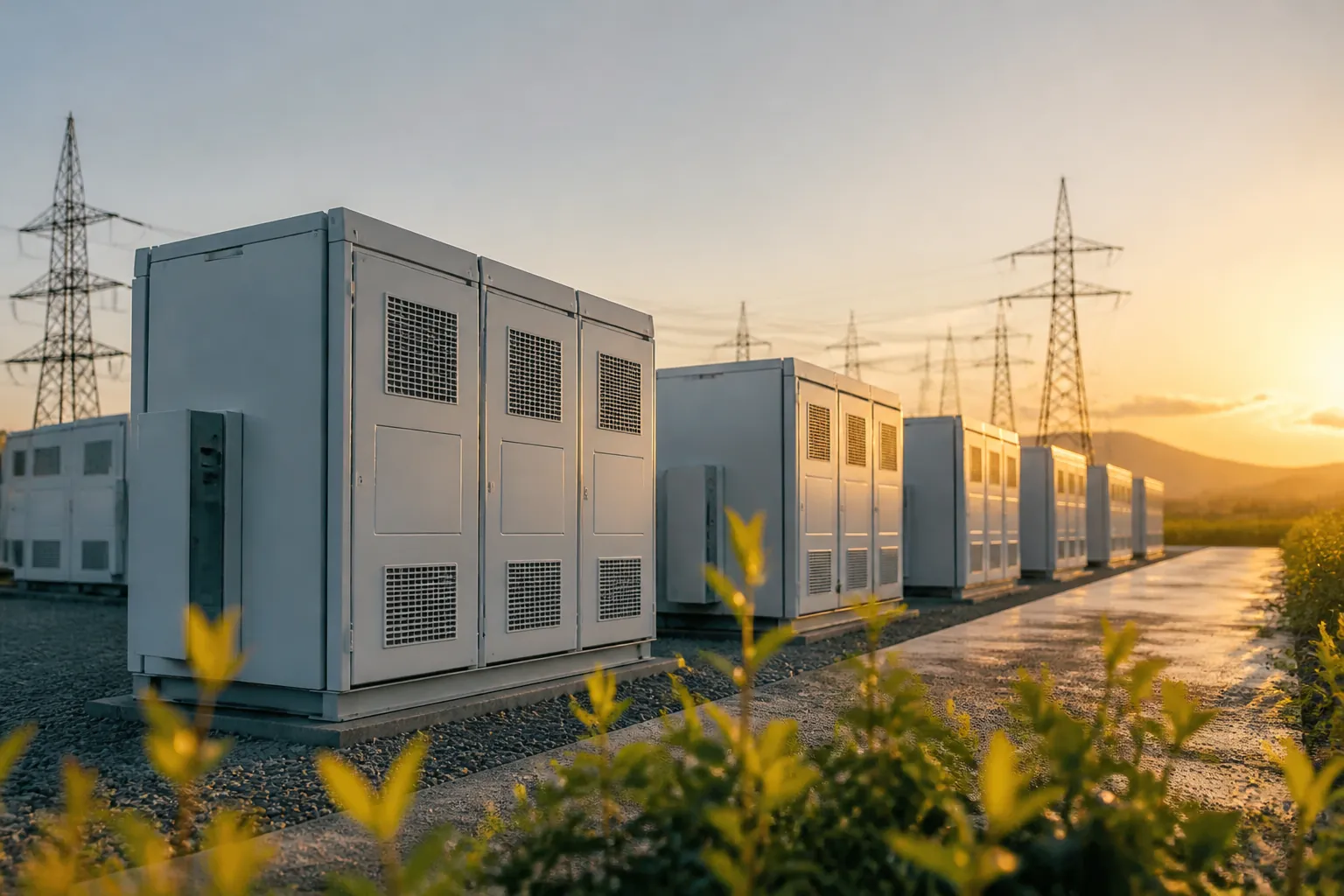
I keep seeing the same ending in merchant battery markets. A queue fills, a regulator rations it, and the spread everyone modelled shrinks before half the fleet is built. Greece has just reached the rationing stage.
On 13 November, Greece's energy ministry published its ranking for merchant battery storage. It received 831 applications seeking 12,319 megawatts (MW) of capacity, according to Balkan Green Energy News. Only 4.7 gigawatts (GW) will receive grid-connection offers. Greece now has a ranked list of winners, and every one of them is betting on the same price gap.
The scale is the story. Greece's first batteries, about 900 MW backed by state auctions, only entered operation this year. The merchant round adds roughly five times that fleet, with no subsidy behind it. These projects will earn whatever the market pays them.
What the ranking hands out
A place on the list is a right to receive connection terms. Those come from the grid operators: ADMIE (IPTO) for transmission and DEDDIE (HEDNO) for distribution. A ranking is neither a signed connection agreement nor a financed project. Serbia Energy News made that point on 14 November.
The rules make the offer a clock as well as a right. The 2025 ministerial decision that created the scheme sets the deadline. An owner must declare readiness within 18 months of accepting final connection terms. Late projects forfeit their bond and lose the connection until they comply, as a Mondaq legal briefing set out.
That matters because the connection is the scarce input. Cells, inverters and engineering can be bought. A grid slot near a strong substation cannot. The ranking turns the scarcest asset in Greek power into a deadline.
Why the first megawatts earn the most
A merchant battery earns its money from the gap between cheap and expensive hours. It charges when solar floods the grid at midday. It sells into the evening peak. Its revenue is that spread, minus losses, multiplied by the cycles it runs.
Greece has a wide gap today. The country curtailed about 2 terawatt-hours (TWh) of renewable output in 2025, according to ESS News. That was more than double the previous year. Curtailment means solar and wind farms were told to switch off because the grid could not use their power.
Evening prices moved the other way this month. Peaks topped 600 euros per megawatt-hour (MWh) in several Central and Eastern European markets. Balkan Green Energy News called it the highest level since the 2022 crisis.
Here is why the first batteries earn the most. Every battery that charges at noon lifts the midday price a little. Every battery that discharges in the evening lowers the peak a little. Each new megawatt narrows the spread that every other megawatt was financed on. Grant Thornton Greece named this cannibalisation the largest long-term risk to Greek storage.
Everyone builds in the same window
The readiness clock puts most of the fleet into one construction window. The scheme sets a minimum storage duration of two hours. It uses a reference cost of 200 euros per kilowatt-hour (kWh). On those floors, the round means at least 9.4 gigawatt-hours (GWh) of storage. That is roughly 1.9 billion euros of capital, by our own arithmetic.
That capital chases the same supply chain at the same time. Transformers, substation works and commissioning crews are in demand across Europe. When hundreds of owners order together, lead times stretch and prices firm. The reason is simple. Suppliers fill their slots in order, and late buyers wait.
The ownership rules widen the crowd. The scheme caps any one owner at 500 MW of batteries until 2029. That spreads the round across many developers, and hundreds of distribution-level projects sit on the list. PPC is the largest named holder, with five projects totalling 470 MW.
That matters because a small developer has one bank, one supplier and one shot at the deadline. A large utility can move equipment between sites. A single-project owner cannot. A missed delivery slot can cost a small owner both its bond and its connection.
What lenders will actually price
Greek banks have few local merchant battery references. ESS News reported in March that lenders were reluctant to back merchant projects without subsidy-style revenue support. The METLEN and Karatzis battery that closed in October still carried state recovery funds in its capital stack.
Merchant debt is sized on a downside case for the spread. Today's wide gap barely enters it. That happens because a lender is repaid first and gains nothing from upside. It therefore models the spread after the rest of the fleet arrives.
The spread that pays the debt is the spread after everyone else has connected. Expect lenders to push owners towards tolling deals or floor contracts with utilities. Those turn part of the merchant risk into a fixed fee, at the cost of some upside.
My read: well under half will energise on time
I expect well under half of the 4.7 GW to be energised within 18 months of the first offers. The binding constraints are financing and delivery slots. Demand for flexibility is already there.
Here is why. Projects near strong substations, with equity in hand and equipment reserved, will catch the widest spreads. Their early revenue strengthens their lending case. Late movers face a narrower gap and a forfeiture clock at once.
The figure that settles it is how many megawatts accept their offers and post performance bonds in the first round. If that runs close to 4.7 GW, I am wrong and the market is deeper than lenders think. If it falls well short, much of the queue was an option. The substitutes will then inherit the grid slots.
For contractors, suppliers and lenders, the money is in the first wave. The second wave will be built for a thinner spread, and priced accordingly.
Share it with your peers
Help your network stay ahead of CEE capital projects.
Strategic Insights
📊 Analytics & Strategic Insight
Greece has rationed its grid. The battery spread is what gets rationed next
The decision most in this industry are avoiding:
👉 The ranked list is partly an option book. Some applicants filed to hold a place rather than to build. The bond and the readiness clock will show which ones meant it. Treat the substitute list as live pipeline, because forfeited slots pass down it.
👉 Fixing curtailment also competes with batteries. More interconnection and flexible demand narrow the same midday gap that storage earns from. Every grid upgrade that helps solar export at noon trims the merchant battery case a little.
👉 The hidden delivery risk sits in the small projects. They are numerous and financed one by one. The fleet total looks large, but it is built by many balance sheets that each need a bank and a supplier at the same moment.
Here's the full context:
→ March 2025: A ministerial decision creates the special grid-connection scheme for standalone batteries, with a 4.7 GW merchant programme (ESS News, 18 March 2025; Mondaq).
→ October 2025: The application window for connection priority closes (ESS News).
→ March 2026: More than 12 GW of merchant battery applications wait for ranking while curtailment escalates (ESS News, 19 March 2026).
→ 10 November 2026: Day-ahead prices in several Central and Eastern European markets top 400 euros per MWh, with evening peaks above 600 euros (Balkan Green Energy News).
→ Most recent: On 13 November 2026, the ministry ranks 831 applications for 4.7 GW of grid-connection offers (Balkan Green Energy News).
What this means for infrastructure operators, contractors and investors:
✅ EPC bid teams should sell delivery certainty first. Owners racing a forfeiture clock will pay for a firm commissioning date. Delay damages tied to the readiness deadline are the product to offer.
✅ Lenders and their technical advisers should model the whole fleet. A revenue case built on today's spreads ignores every battery on the list. The downside case should assume the full round connects.
✅ Utilities should offer tolling to small owners. A utility can buy a battery's flexibility for a fixed fee. That gives the owner a bankable floor and gives the utility a hedge against evening peaks.
3 moves you can make this week:
1️⃣ Map the ranked list against substations. Group the projects by the substation they need. Clusters show where connection works and transformer orders will bunch together.
2️⃣ Re-run one merchant battery model with the full round connected. Hold the cost and cut the spread to a post-fleet case. Then check whether the debt still covers.
3️⃣ Call your transformer and inverter suppliers. Ask how many Greek orders they already hold for next year. Reserve a slot now if your project needs one.
The analyst's read:
This proves that Greece has far more battery capital wanting to connect than grid capacity to offer it. It does not prove that the projects can be financed on merchant terms. The figure that settles it is how many megawatts accept their offers and post bonds in the first round, and whether tolling deals appear alongside them.
Related analyses
- Energy & Power
Latvia's Grid Operator Now Borrows at 4.8%, and Its Build Plan Has to Carry It
Latvia's transmission operator AST is repaying its 0.5% green bond early, after raising replacement money at 4.768%. With most of its ten-year grid plan funded from its own balance sheet, the price of that money now shapes which lines and substations move first.
Read analysis → - Energy & Power
Croatia's Next 400 kV Lines Hang on One Data Centre's Grid Contract
Pantheon AI offers to build and pay for four 400 kV lines to connect its Topusko campus, after the state held HOPS to a minimal grid plan. Croatia's next big transmission build may come from a private customer, while generators in the queue are offered curtailment instead.
Read analysis → - Energy & Power
Balfour Beatty's 9 Percent Grid Margin Shows Where Contractor Profit Sits. CEE Price-Only Substation Tenders Keep It With the Client
Balfour Beatty expects a support services margin of around 9 percent, well over twice its UK construction margin, as power transmission work ramps up under National Grid's framework. In Poland, substation tenders awarded on price alone mean CEE contractors moving into grids should not expect the same premium.
Read analysis →
Facing a decision on a CEE capital project?
Describe the situation in a few sentences. Within 72 hours you get an experienced read: the risks we see, what we'd check, and whether we can help — no calls, no obligation.