We Help International Investors and Project Owners Deliver Major CEE Projects Without Expensive Surprises
Independent project intelligence and advisory across energy, transport, real estate and industrial construction.
Great British Railways Handed a 40% Rail Freight Target for 2040 as UK Volumes Hit a Two-Decade Low
On 8 September 2026 the UK government set Great British Railways a target to grow rail freight by at least 40% by 2040, with 75% growth by 2050 behind it. Office of Rail and Road data shows the base falling to 16.06 billion net tonne kilometres and the lowest freight train count since at least 2003-04.
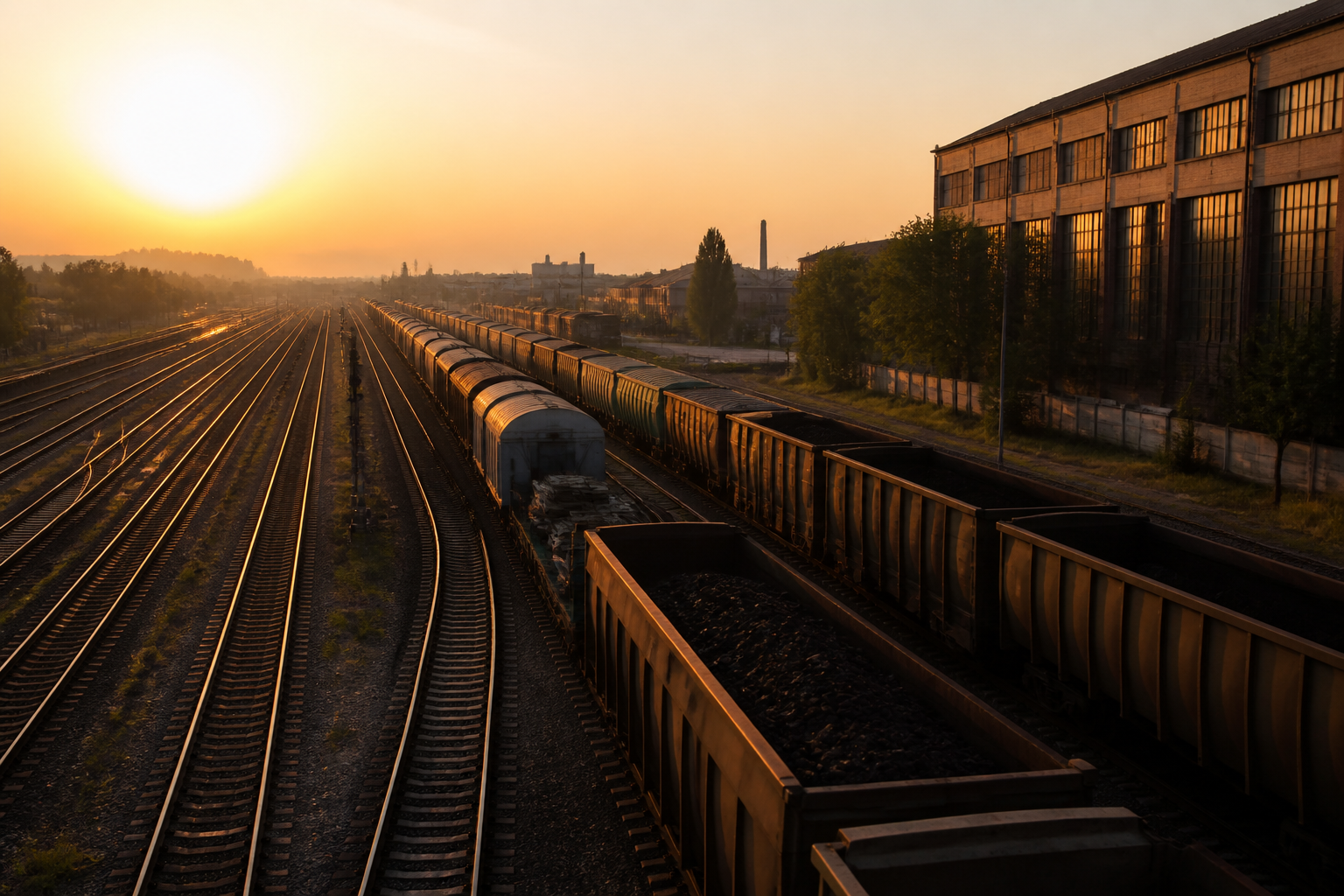
The coverage reads this as a green transport story. I read it as a capacity story with no capital attached. The target sets growth on a base that has been falling for a decade.
What 40% means in tonne kilometres
On 8 September 2026 the Department for Transport set Great British Railways a target to increase rail freight by at least 40% by 2040. The government calls it the first milestone toward at least 75% growth by 2050. Office of Rail and Road figures for the 12 months to the end of March 2026 put freight moved at 16.06 billion net tonne kilometres, down 3% on the year.
Apply the target to that base and the answer is about 22.5 billion net tonne kilometres by 2040. ORR data puts the peak a decade ago at roughly 22.7 billion. The 2040 target is therefore a recovery to where the network already was, stretched over fourteen years. The 2050 ambition would take the figure near 28 billion, higher than anything Britain has moved since privatisation.
The train count says the same thing more bluntly. ORR recorded 186,131 freight trains in the year to March 2026, the lowest since at least 2003-04. That year the network ran more than 400,000. Net tonnes fell 5% to 69.5 million and train kilometres fell 7%.
The construction number is the one to test
Network Rail estimates the new target could lift rail movements of construction materials by 45%. That is the figure this readership should check first. ORR recorded construction traffic falling 7% to 5.08 billion net tonne kilometres in the year to March 2026.
ORR gave two reasons. Urban high-rise development was subdued, partly because of delays in processing building applications under the new tall buildings regulations, which hit concrete movements. The reset of the HS2 programme paused transfers of material to its construction sites. Both causes sit outside the railway.
A 45% uplift on 5.08 billion means roughly 7.4 billion net tonne kilometres of aggregates, cement and concrete. The government puts a single freight train at enough material to build around 30 homes. The volume therefore turns on planning consents and on one megaproject's schedule.
The bill gives duties. The settlement gives money.
The Railways Bill began its committee stage in the House of Lords on the same day. It gives Great British Railways strategic oversight of network access and two duties to support freight growth. A dedicated board member will carry responsibility for freight.
These are governance instruments. Access rights and a board seat do not lengthen loops, clear gauge or build terminals. ORR accepted Network Rail's GBP 43.1bn plan for Control Period 7, which runs from April 2024 to March 2029. The 2040 target sits across CP8, CP9 and part of CP10. No new capital settlement came with the announcement. For any project director the practical question is which control period pays for the enabling works.
The supply side is repricing at the same time
Three weeks before the target, on 17 August 2026, Deutsche Bahn began the process of selling DB Cargo UK as it refocuses on central Europe. DB Cargo UK holds a little over 22% of British freight train kilometres. A parent exiting the number two operator is a statement about returns.
The rest of the market is consolidating around GB Railfreight, which lifted its share of train kilometres from 30.3% to 31.4%. Freightliner Intermodal holds a little over 22%, Heavy Haul Rail 12.6% and Direct Rail Services 8.2%. The commodity mix is rotating underneath. Intermodal maritime held flat at 6.39 billion net tonne kilometres. Intermodal non-maritime grew 10%, industrial minerals 3% and metals 2%. Coal fell 27%, petroleum 33% and international traffic 19%.
Where the risk lands
Rail freight already carries goods worth almost GBP 34 billion a year, and the government says the target would add about GBP 15 billion. Private capital creates most of that value. Terminal owners, wagon lessors, port operators and shippers fund the assets. The state supplies paths, gauge and loops.
Sponsors and investors should sequence accordingly. Paths first, then gauge clearance and loop lengthening, then terminals, then wagons. Anyone committing terminal capex before a path guarantee is taking network risk on a public timetable. Three things are worth watching: the CP8 funding settlement, whether the new access duties produce firm long-term freight paths, and who buys DB Cargo UK. A target is a signal. A funded path is an asset.
Share it with your peers
Help your network stay ahead of CEE capital projects.




Explore our infograph library — strategic visuals for CEE capital projects leaders.
Project benchmarks, financing structures, tender dynamics and delivery risk — at a glance. Free access for investors, owners, contractors and strategy teams tracking CEE capital projects.
Browse the libraryStrategic Insights
📊 Analytics & Strategic Insight
A demand target with no path budget moves the delivery risk onto private capex
The decision most in this industry are avoiding:
👉 The target is not an order book. A growth number set by policy binds nobody to buy a train path, a wagon or a terminal slot. Price it at zero in your model until an access right is written down.
👉 The 45% construction uplift is a planning forecast wearing a rail badge. ORR named tall-building application delays and the HS2 reset as the causes of the 7% fall. Both are fixed outside the railway, by consenting authorities and by one programme's schedule.
👉 The ownership of the second-largest operator is unresolved. Deutsche Bahn is selling a business holding more than a fifth of British freight train kilometres. Capacity plans built on that operator's current fleet and depots carry an open question.
Here's the full context:
→ 2003-04: more than 400,000 freight trains ran on the British network, the high-water mark in the ORR series.
→ Around 2015-16: freight moved peaked at roughly 22.7 billion net tonne kilometres, the level the 2040 target now aims to recover.
→ 2024: ORR accepted Network Rail's GBP 43.1bn Control Period 7 plan for April 2024 to March 2029, with resilience and freight named as focus areas.
→ July 2026: ORR reported 16.06 billion net tonne kilometres and 186,131 freight trains for the year to March 2026, with construction traffic down 7% to 5.08 billion.
→ Most recent: on 8 September 2026 the Department for Transport set a 40% growth target for 2040 and gave Great British Railways two statutory freight duties as the Railways Bill entered Lords committee.
What this means for infrastructure operators, contractors and investors:
✅ Terminal and wagon capex now needs a path guarantee before financial close. Lenders will ask who carries the volume risk if paths are not allocated. Without a written access commitment, that risk sits with the sponsor.
✅ Aggregate and cement supply chains should model rail as a priced option. Build the road case and the rail case side by side, with handling and last-mile costs included, and keep both live until paths are confirmed.
✅ The CP8 settlement is the real target document. The 2040 number is delivered or missed in the funding periods after March 2029. Read the settlement, and read what it funds for gauge, loops and terminal connections.
3 moves you can make this week:
1️⃣ Ask for the firm freight paths on your corridor. Get the path count for the next two timetable changes in writing, with the loop and gauge constraints named. That converts an ambition into a delivery input.
2️⃣ Rebuild your bulk logistics case with a rail and road split. Put terminal handling, wagon availability and turnaround into the unit cost. Test it against a 45% volume uplift and against no uplift at all.
3️⃣ Put three watch items on your risk register with named owners. The CP8 funding settlement, the DB Cargo UK sale process, and the access duties in the Railways Bill as they come out of committee.
Related analyses
- Transport & Infrastructure
V-Híd Just Lost Hungary's HUF 338 Billion Déli Körvasút at 42 Per Cent Complete. The Grant Clock Is the Real Story
Hungary halted construction of the Budapest Southern Circle Railway on 9 October 2026 and barred V-Híd from every ongoing rail investment. The HUF 367 billion of EU money behind the job survives only if a lawful re-tender lands inside two years.
Read analysis → - Transport & Infrastructure
Afcons Wins Croatia's EUR 899m Dugo Selo-Novska Rail Contract: Four Bids, No European Prime
Croatia signed its largest ever railway contract on 1 October 2026, handing 83 km of double-tracking to India's Afcons Infrastructure at EUR 677.06m excluding VAT. Four bids were priced for the work and not one of them came from a European prime contractor.
Read analysis → - Transport & Infrastructure
STRABAG Closes BAWI Construction Buy in Romania as Rail Qualification Becomes the Scarce Asset
STRABAG has closed its purchase of BAWI Construction, a Bucharest rail specialist with 240 employees and about EUR 60 million of 2025 output. The number that matters is the qualification it buys, as Romania opens a EUR 5.99 billion rail programme with the EU recovery window shut.
Read analysis →
Is your project leaking money through its subcontractors?
Most owners lose 3–8% in vendor packages without noticing. Tell us about your project — we'll tell you where we'd look first.