We Help International Investors and Project Owners Deliver Major CEE Projects Without Expensive Surprises
Independent project intelligence and advisory across energy, transport, real estate and industrial construction.
EIB Weighs HUF 27 Billion for Záhony While Ukraine Moves the Gauge Break East
The European Investment Bank is appraising a HUF 27bn (EUR 74m) loan for Hungary's Záhony and Eperjeske rail freight terminals, part of a HUF 55.6bn programme under the EU Solidarity Lanes. The commercial question is whether the transhipment work will still be on the Hungarian side of the border when the new equipment is switched on.
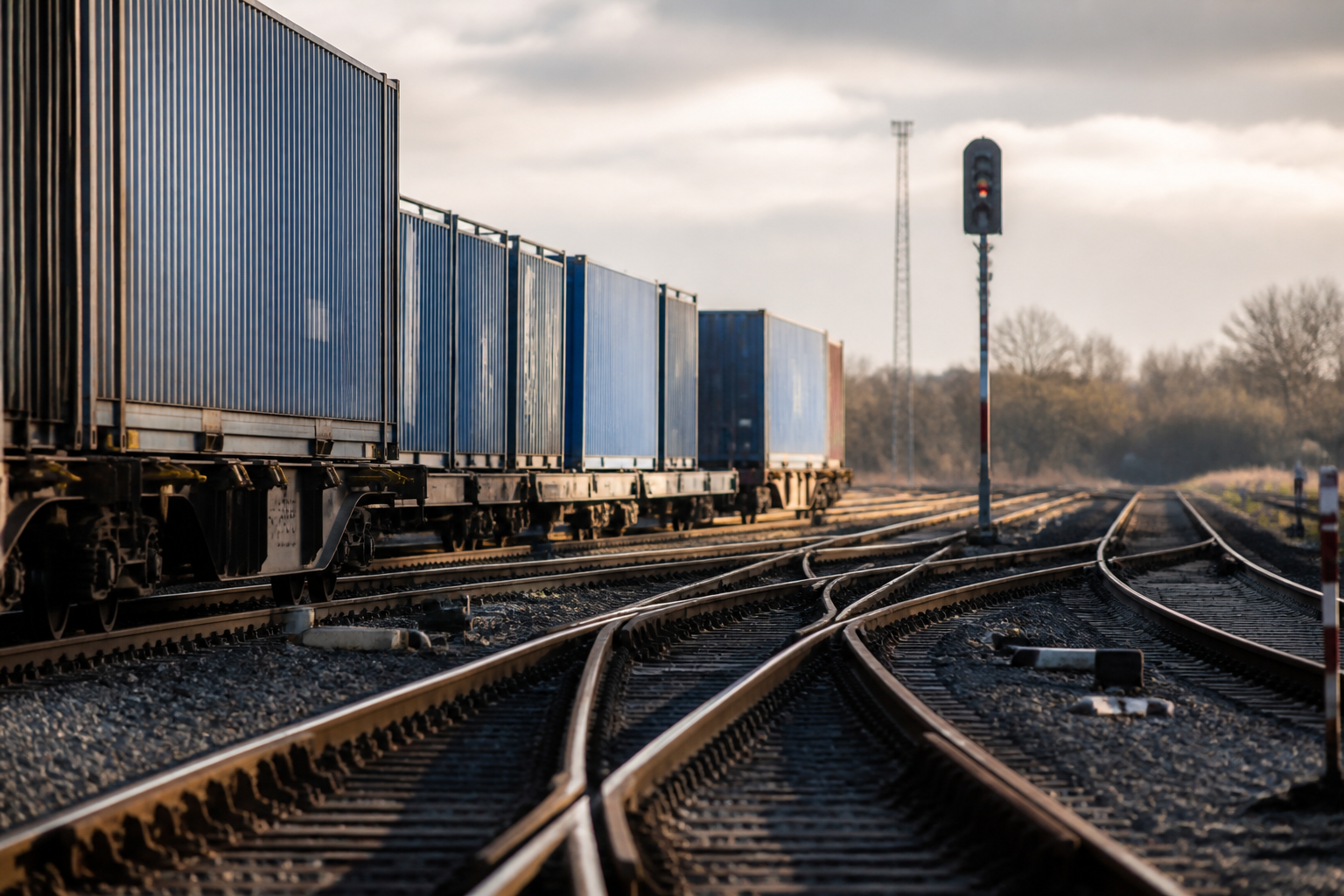
I will say this plainly. This loan is being appraised against the wrong risk. The engineering at Záhony is routine. The real question is whether the traffic still needs Záhony when the equipment arrives.
On 17 August 2026 the European Investment Bank refreshed the public entry for project 20230800, HU-UA Railway Border Crossing - Solidarity Lanes. The bank is weighing HUF 27,000 million, about EUR 74 million. Total project cost is put at HUF 55,596 million, about EUR 153 million. The status is "under appraisal". Railway PRO carried the story on 21 August and the Hungarian outlet iho.hu followed on 23 August.
What the money would buy
The scope is modernisation and capacity increase of rail freight and transhipment infrastructure on the Hungarian side of two crossings. Záhony faces Chop in Ukraine. Eperjeske faces Batovo. Both 1,520 mm broad gauge and 1,435 mm standard gauge assets are in scope, along with the transhipment equipment itself.
No new cross-border line is being built. The EIB describes the work as rehabilitation of railway infrastructure and installation of transhipment equipment. Contracts must be tendered under the EU procurement directives. That points to track and yard renewal, cranes and handling plant, terminal systems and the civil works around them. It is a mid-size package, well inside the reach of Hungarian rail contractors and European terminal equipment suppliers.
The promoter list repays a close reading. It names MÁV Pályaműködtetési Zrt, Záhony-Port Zrt and the Ministry of Transport and Investment. It also names NAV, the national tax and customs authority. Three infrastructure bodies and one border agency.
The asset is Hungarian. The demand is not.
Záhony exists because two gauges meet there. That break is being dismantled from the Ukrainian side, with European money.
Ukraine opened its first standard-gauge line on 5 September 2025, a 22 km section from Uzhhorod to Chop, delivered with EU support. Direct services to Budapest, Vienna and Bratislava began a week later. Ukrainian Railways plans to electrify that section during 2026. It also plans to start building European-gauge track towards Lviv, with completion targeted in two to three years. Chernivtsi and Kovel sit behind Lviv in the same programme.
Every kilometre of 1,435 mm track laid eastward removes a reason to lift a load at Záhony. The EIB sits on both sides of that trade. It runs advisory work on Ukrainian rail infrastructure. It also committed EUR 50 million in 2025 to upgrade Ukrainian rail border crossing points with Poland, Slovakia, Hungary and Romania.
The drift is already in the numbers
The Hungarian Association of Logistics Service Centres (MLSZKSZ) set out the position in Világgazdaság on 6 July 2026. Annual throughput in the Záhony district ran at 18 to 20 million tonnes in the 1980s. By the 2000s it had fallen to 3 to 3.5 million tonnes.
In the first five months of 2026 an average of 55 grain wagons a day arrived from Ukraine. That is close to 20,000 wagons a year, or 1.3 to 1.4 million tonnes. The volume reads well. The revenue does not. A large share of that traffic now crosses in standard-gauge wagons, so the lifting has already happened in Ukraine.
Across six of the district's main logistics and transhipment companies, revenue fell by more than HUF 6.8 billion over three years. Combined results worsened by more than HUF 4.4 billion. Headcount dropped from 523 to 460. MLSZKSZ secretary-general Bíró Koppány Ajtony puts it directly. The economic value sits in the handling, the storage and the preparation. Goods that merely pass through leave little behind.
Read the promoter list, not the press release
NAV's presence is the tell. Customs clearance, security screening, veterinary and phytosanitary inspection all stay on the Hungarian side. They stay there whatever gauge the wagon runs on. Those functions attach to the EU external frontier rather than to the rail interface.
That reframes the credit. Underwritten as a transhipment capacity investment, this asset is exposed to a decline its own lender is helping to accelerate. Underwritten as a border processing and corridor throughput investment, with transhipment as optional upside, it looks durable. The EIB's own objectives hint at the second reading. They list border security and faster crossing procedures alongside freight capacity, and they cite regional development in Észak-Alföld, a less developed region.
The long-run risk to that reading is Ukrainian accession to the European Union, which would eventually thin the customs function too. On current timetables that sits beyond the likely tenor of the loan.
What to do with this
Hungarian contractors should treat the appraisal timeline as their planning signal. The project has sat in the EIB pipeline since December 2023. Approval, signature and then EU-compliant tendering all still lie ahead. Terminal equipment suppliers should expect a handling plant specification sized for far lower volumes than the 1980s design case.
Lenders and sponsors elsewhere face the same question at Medyka in Poland, Čierna nad Tisou in Slovakia and Halmeu in Romania. Ask each promoter for a utilisation case built on a completed standard-gauge corridor to Lviv. If the business case only clears on today's gauge break, the asset is wasting. If it clears on customs throughput, corridor capacity and value-added services, it will still earn in 2040.
Share it with your peers
Help your network stay ahead of CEE capital projects.
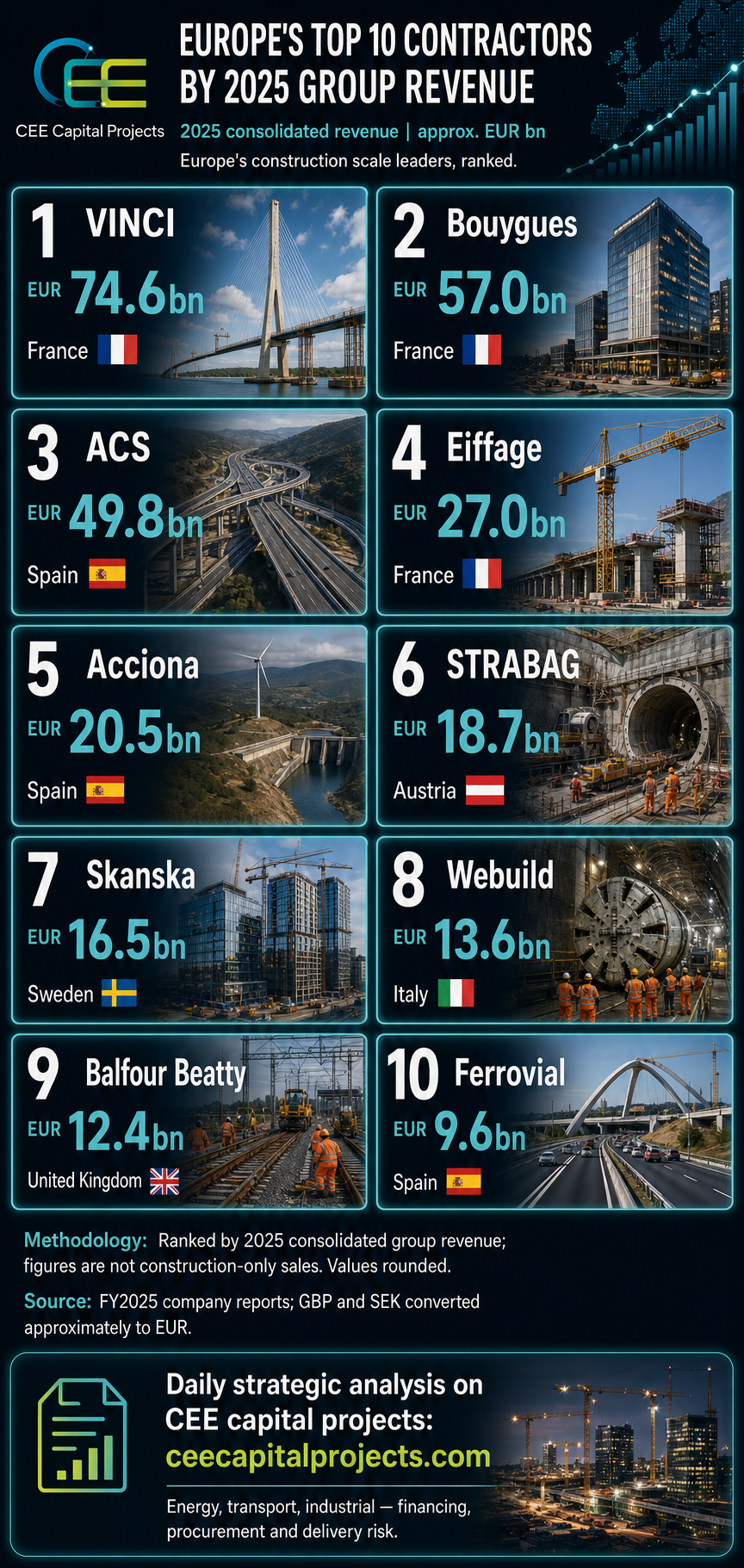
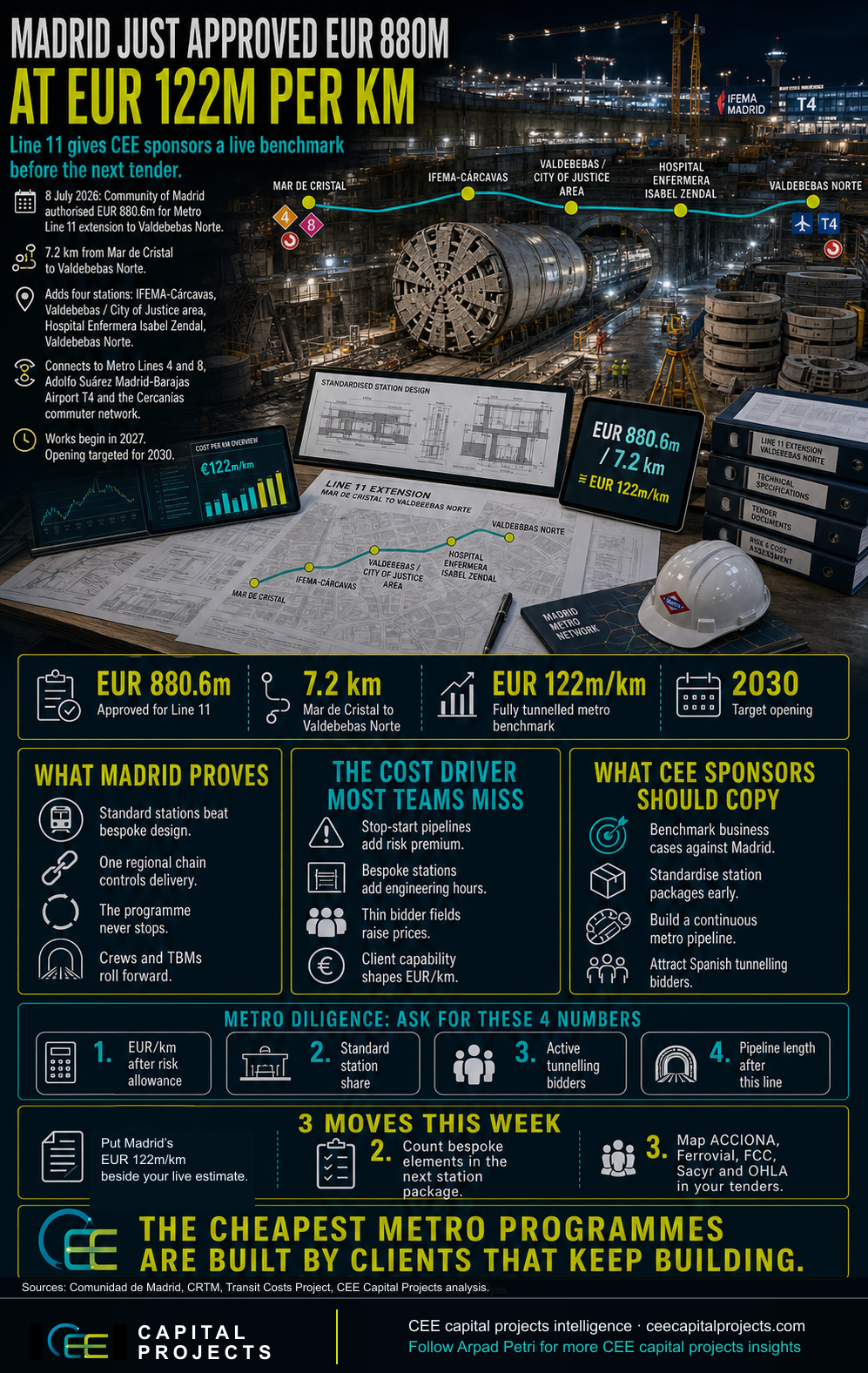
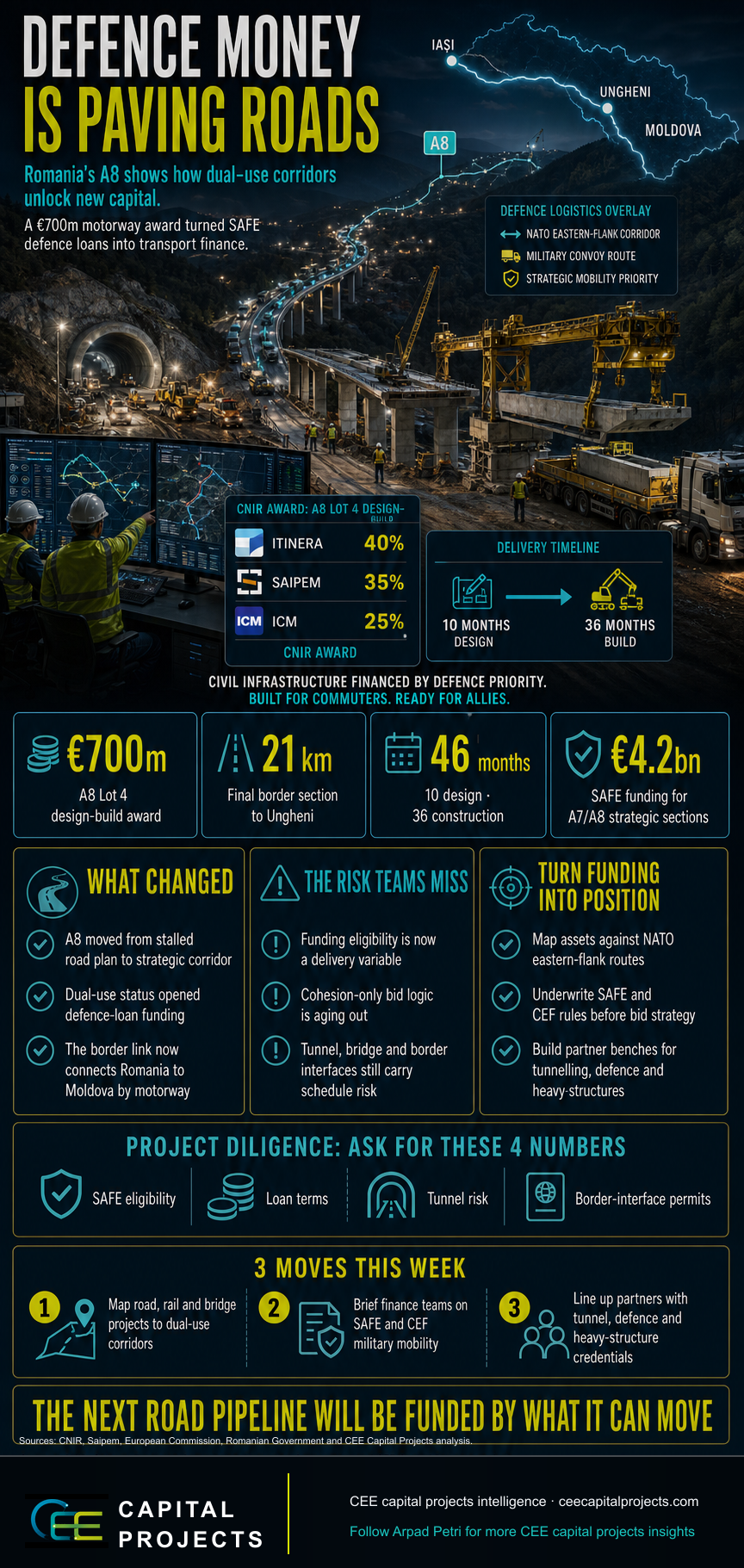
Explore our infograph library — strategic visuals for CEE capital projects leaders.
Project benchmarks, financing structures, tender dynamics and delivery risk — at a glance. Free access for investors, owners, contractors and strategy teams tracking CEE capital projects.
Browse the libraryStrategic Insights
📊 Analytics & Strategic Insight
The gauge break is a business model, and Europe is paying to dismantle it
The decision most in this industry are avoiding:
👉 The same lender is funding both sides of the trade. EIB money would make Hungarian transhipment faster while EU-backed standard gauge advances into Ukraine and removes the need for it. Nobody in the appraisal chain is being asked to reconcile the two positions.
👉 Border assets earn from process, not from lifting. Cranes are the visible investment and customs is the durable one. The promoter list already says this, because a tax and customs authority sits alongside the infrastructure managers.
👉 A cohesion justification can outlive a commercial one. Észak-Alföld is classified as a less developed region, so the loan stays defensible on regional development grounds long after the freight case thins. That is comfortable for the lender and dangerous for the operator.
Here's the full context:
→ 1980s: the Záhony transhipment district handles 18 to 20 million tonnes a year as the Soviet-era gateway between two gauges.
→ 2000s: throughput falls to 3 to 3.5 million tonnes as east-west trade patterns change.
→ 2022: Black Sea ports close, Ukrainian grain moves to rail, and the EU builds the Solidarity Lanes around the land borders.
→ September 2025: Ukraine opens its first standard-gauge line, 22 km from Uzhhorod to Chop, with EU support, and direct services to Budapest, Vienna and Bratislava follow within a week.
→ Most recent: on 17 August 2026 the EIB refreshes project 20230800 at HUF 27,000 million of a HUF 55,596 million total, still under appraisal, with Ukrainian standard gauge now heading for Lviv.
What this means for infrastructure operators, contractors and investors:
✅ Utilisation risk has moved across the border. The Hungarian promoters control the cost and the schedule. Ukrainian Railways and the European Commission control the volume, through decisions about where the gauge break sits.
✅ A mid-size rail and terminal package is coming to market. Rehabilitation works and handling equipment, tendered under the EU directives, suit Hungarian rail builders and European terminal suppliers rather than the megaproject consortia.
✅ Every EU-side border terminal needs a post-gauge-break case. Medyka, Čierna nad Tisou and Halmeu all rest on the same assumption. The asset that survives is the one that earns from inspection, storage and processing.
3 moves you can make this week:
1️⃣ Pull the EIB pipeline entry and read the promoter list. Project 20230800 is public. The mix of promoters tells you which revenue the bank actually believes in, which is rarely the one in the headline.
2️⃣ Rebuild your border-terminal model on a completed Lviv corridor. Run the case with standard gauge reaching Lviv inside three years and see what is left. If the answer is nothing, you have a wasting asset and a financing problem.
3️⃣ Price the processing revenue separately from the handling revenue. Customs, inspection, storage and value-added work follow the frontier. Lifting follows the gauge. Model them as two different businesses with two different lifespans.
Related analyses
- Transport & Infrastructure
V-Híd Just Lost Hungary's HUF 338 Billion Déli Körvasút at 42 Per Cent Complete. The Grant Clock Is the Real Story
Hungary halted construction of the Budapest Southern Circle Railway on 9 October 2026 and barred V-Híd from every ongoing rail investment. The HUF 367 billion of EU money behind the job survives only if a lawful re-tender lands inside two years.
Read analysis → - Transport & Infrastructure
Afcons Wins Croatia's EUR 899m Dugo Selo-Novska Rail Contract: Four Bids, No European Prime
Croatia signed its largest ever railway contract on 1 October 2026, handing 83 km of double-tracking to India's Afcons Infrastructure at EUR 677.06m excluding VAT. Four bids were priced for the work and not one of them came from a European prime contractor.
Read analysis → - Transport & Infrastructure
STRABAG Closes BAWI Construction Buy in Romania as Rail Qualification Becomes the Scarce Asset
STRABAG has closed its purchase of BAWI Construction, a Bucharest rail specialist with 240 employees and about EUR 60 million of 2025 output. The number that matters is the qualification it buys, as Romania opens a EUR 5.99 billion rail programme with the EU recovery window shut.
Read analysis →
Building in Central Europe?
Tell us what you're building. We'll tell you what can go wrong — and how to prevent it.