Durkan Quits UK Contracting After 50 Years as an £18.6m Building Safety Charge Wipes Out a £6.2m Operating Profit
Durkan has withdrawn from main contracting after more than 50 years, citing heightened risk and declining returns. An £18.6m exceptional charge for legacy fire remediation turned a £6.2m operating profit into an £11.2m net loss.
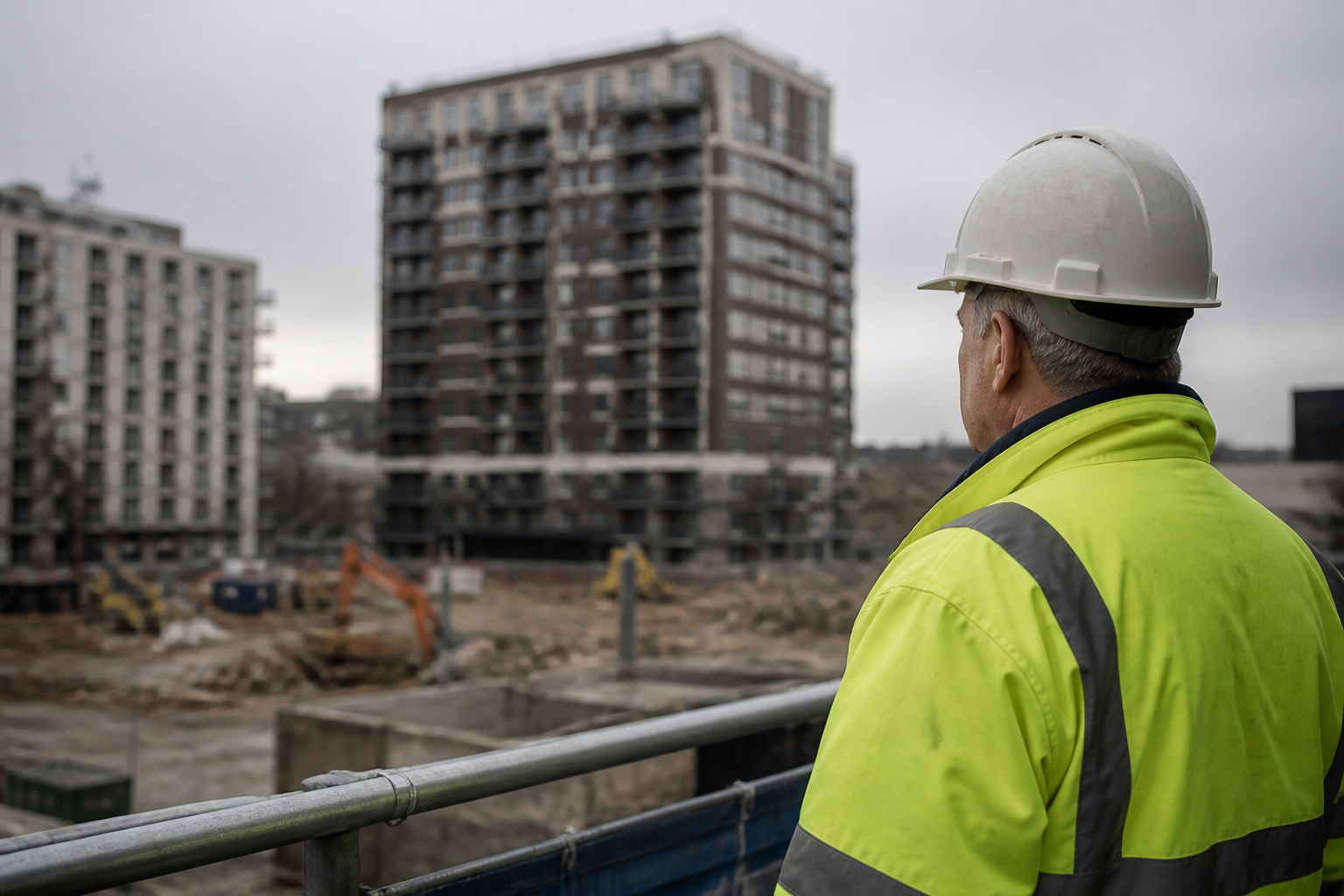
If this were my business, I would price one number before I priced another tender. I would ask what every building I finished in the last twenty years could still cost me. Durkan has now put that answer on the record.
Durkan Holdings Limited has filed accounts for the year to 30 November 2025. Construction Enquirer reported them on 27 August 2026. Operating profit rose to £6.2m. An exceptional charge of £18.6m then landed. It covers legacy fire remediation claims under the Building Safety Act. The result was a net loss of £11.2m. On the same day the group confirmed it is leaving contracting altogether.
A solvent exit, and that is the point
Durkan is not short of money. Net assets stood at £33.9m at 30 November 2025. The cash balance was £36.5m. No administrator was appointed and no creditor forced the decision.
The company said the withdrawal follows more than 50 years in contracting and reflects an increasing legislative and regulatory burden. It named the consequence directly: "heightened risk and declining returns."
Contracting was the largest revenue line in the group last year at £86.7m. The regeneration arm turned over £28.7m and the homes business £30m. Group turnover had already fallen to about £146m from £192m as the contracting operation was scaled back. What is left is a homes and regeneration business, after a final contracting job in Greenwich.
Group chief executive Ronan Murphy said the costs relate to projects delivered years ago. Some go back decades. He tied them to the longer defects period under the Building Safety Act. He also cited delay and uncertainty in how the regime is applied.
That is the mechanic worth understanding. An income statement covers twelve months. The liability behind it now reaches back decades.
The Ardmore file shows where the money actually lands
A second London builder has just published the other version of the same story. Ardmore Construction Group entered administration on 11 June 2026 owing creditors £29m. The move followed a £14.99m adjudication award to Crest Nicholson. That claim concerned alleged fire safety defects at the 569-home Admiralty Quarter scheme in Portsmouth.
Administrators from BTG reported to creditors in August. Construction Enquirer set out the figures on 21 August 2026. Subcontractors are owed £5.1m. Other trade and expense creditors are owed £3.7m. HMRC is owed just over £5m. The creditor schedule lists 226 claims.
The contingent number is the large one. The company faces 23 potential developer claims. They are linked to work by sister company Ardmore Construction Limited, which failed in August 2025. No judgments have been made. Administrators put total exposure at anywhere between nil and £300m.
Assets of £23.1m sat in debtors, retentions and work in progress. Specialist insolvency quantity surveyor Kinetica estimates recoveries of between £546,500 and £1.57m. Unsecured creditors, subcontractors included, are currently expected to receive nothing.
Set the two figures side by side. Trade exposure of £5.1m against a defect tail the administrators size at up to £300m. The supply chain had already pulled its credit. The liability had not moved anywhere.
The remediation queue nobody wants to price
Government figures published on 27 August 2026 show more than 2,000 identified unsafe cladding blocks still waiting for work to start. Some 46 per cent of identified buildings have yet to begin remediation.
That is a large volume of work with a small pool of willing bidders. Insolvency Service data for the twelve months to June 2026 records 3,805 construction company insolvencies in England and Wales. That is the highest count of any industry. The rolling total sits about 5 per cent below the previous year. It is roughly 18 per cent above the 2019 figure of 3,221.
Two exit routes are now running in parallel. One is administration. The other is a board deciding the return no longer covers the tail. That board walks out with the balance sheet intact.
Why European sponsors should read this closely
This is a pricing signal rather than a British curiosity. Any jurisdiction that lengthens the period during which a finished building can be reopened creates the same effect. Contractors carry an open-ended provision against work already invoiced. Insurers and surety providers reprice. Capacity leaves the residential and higher-risk segments first.
For clients across Europe the practical consequence arrives at the tender box. Fewer firms will bid consented residential schemes. Bonding capacity, indemnity cover and the strength of the signing entity will matter more than headline price. Many public sponsors treat a performance bond as clean risk transfer. They should test what it now costs and what it excludes.
Developers and funders should assume they will carry more completion risk themselves. Well-capitalised clients have already started restructuring delivery around contractor failure rather than waiting for the market to fix it. The question for any board with a live residential programme is simple. If the builder walks away by choice rather than by insolvency, who finishes the building, and at what price.
Share it with your peers
Help your network stay ahead of CEE capital projects.
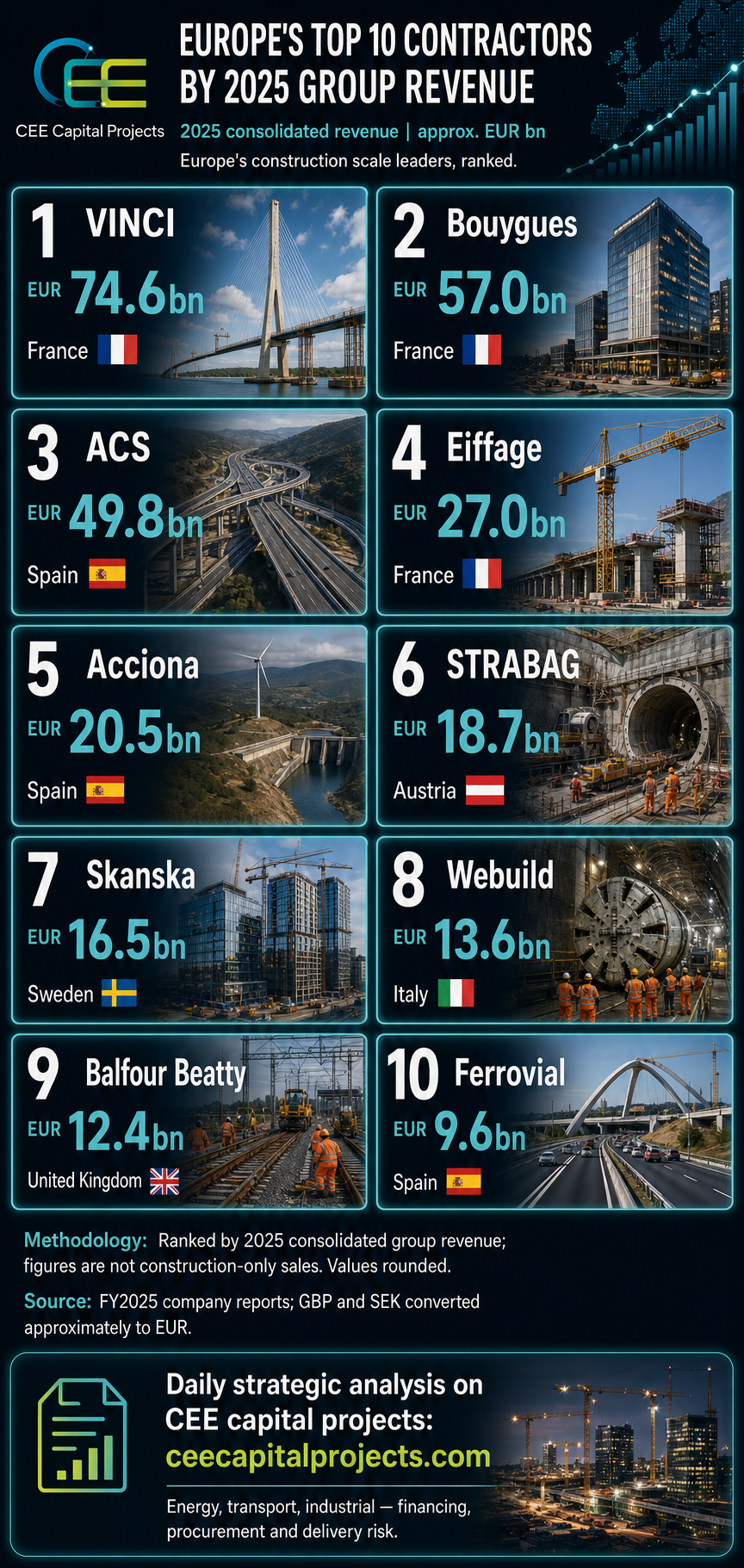
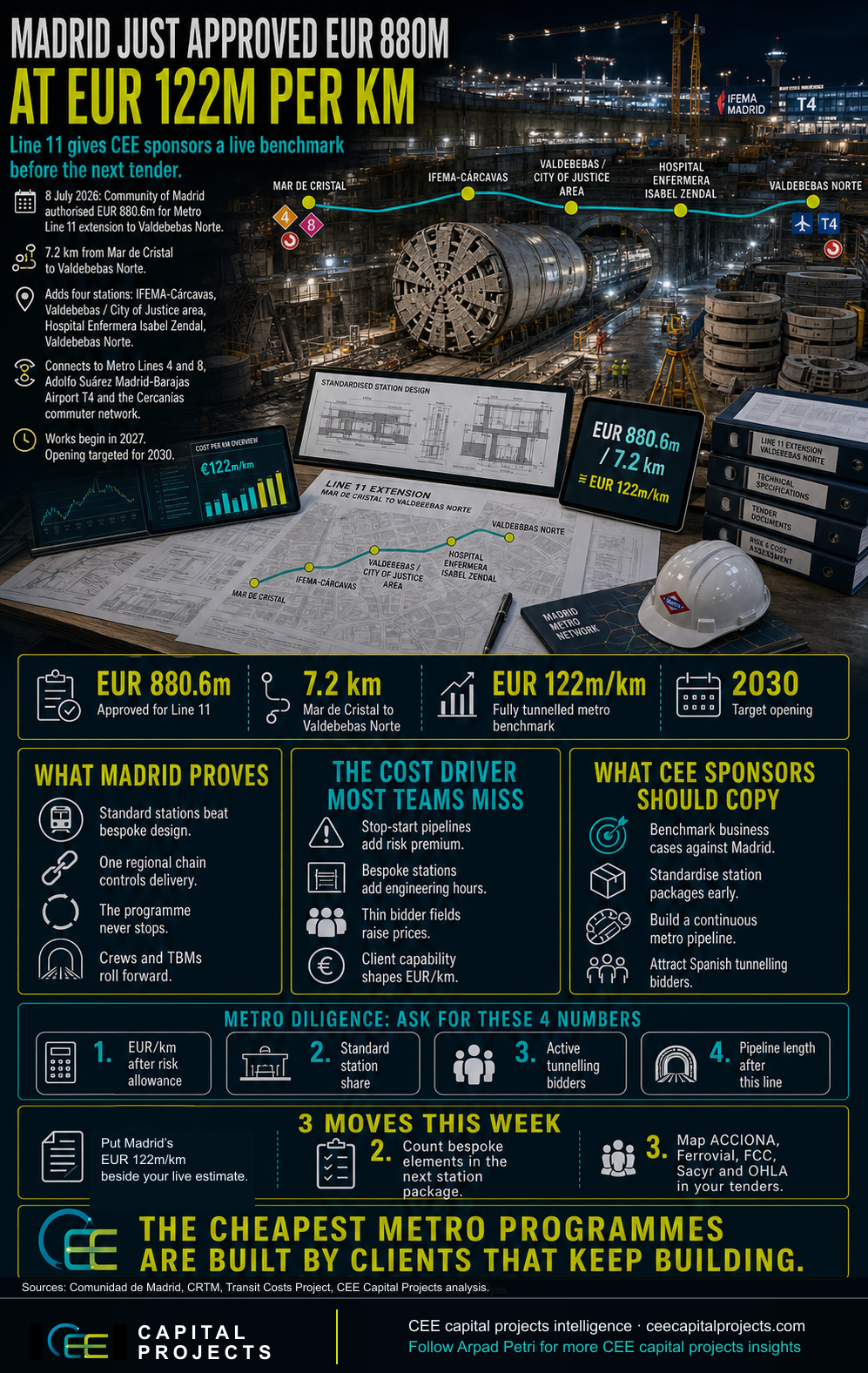
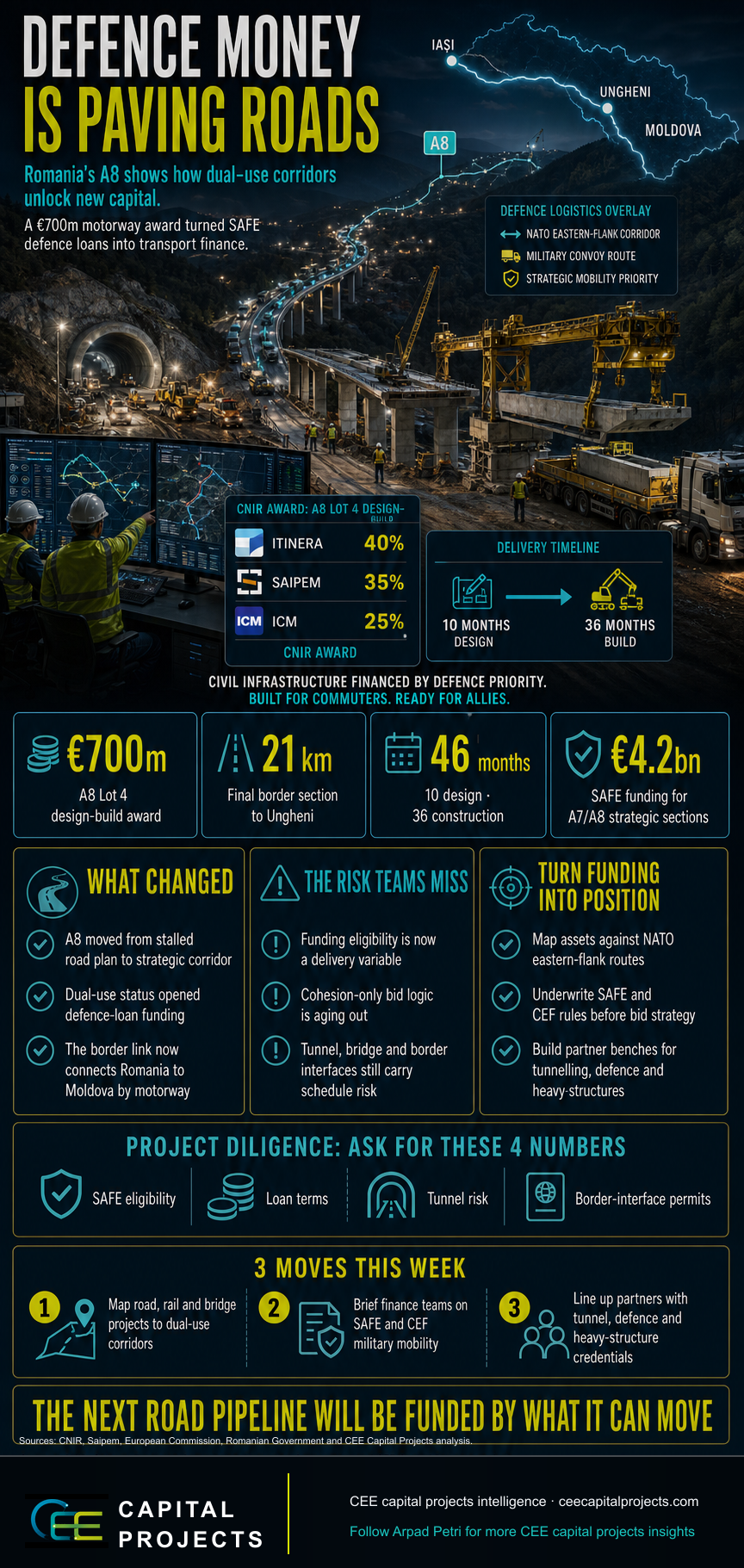
Explore our infograph library — strategic visuals for CEE capital projects leaders.
Project benchmarks, financing structures, tender dynamics and delivery risk — at a glance. Free access for investors, owners, contractors and strategy teams tracking CEE capital projects.
Browse the libraryStrategic Insights
📊 Analytics & Strategic Insight
Legacy liability is now a capital decision, and it is shrinking the bidder list
The decision most in this industry are avoiding:
👉 The voluntary exit is the honest signal. A solvent withdrawal means a board priced the tail. It then found the tail bigger than the margin. An administration means nobody priced it at all. Durkan left with £33.9m of net assets and £36.5m of cash. Read that as data rather than distress.
👉 Turnover ranking is a poor test of contractor safety. It is still the test most clients use. What matters is how many finished buildings sit inside the extended defects window. Their façade scope matters. So does the legal entity that signed for them. A big builder with thirty years of towers can carry more risk than a small one.
👉 A bond prices risk, it does not remove it. Sureties have lost money on repeated contractor failures. That cost returns as higher premiums and tighter cover. Clients who call a bond clean risk transfer pay for it twice. Once in the tender price. Again when a bidder declines to bid.
Here's the full context:
→ 2017: The Grenfell Tower fire sets the direction of UK building safety rules for a decade.
→ 2022: The Building Safety Act extends the window for claims on old defects. It reaches back decades.
→ August 2025: Ardmore Construction Limited enters administration. Other companies in the group are exposed to Building Liability Orders.
→ 11 June 2026: Ardmore Construction Group enters administration owing creditors £29m. A £14.99m award to Crest Nicholson came first.
→ Most recent: On 27 August 2026 Durkan confirms it is leaving contracting. An £18.6m remediation charge turned a £6.2m operating profit into an £11.2m loss.
What this means for infrastructure operators, contractors and investors:
✅ The bidder list on risky buildings keeps shrinking. More than 2,000 unsafe blocks still await a start on site. Fewer firms can price that work each quarter. Pricing power moves to the builders who stay. Delivery risk moves to the sponsors who need them.
✅ Bonding and insurance capacity is the real prequalification gate. Financial standing checks look backwards at filed accounts. What counts is whether a surety will stand behind the firm this quarter. Ask that question during prequalification. Do not wait until preferred bidder.
✅ Clients and funders will carry more completion risk. Recoveries in the Ardmore administration are put at £546,500 to £1.57m. Book assets were £23.1m. That gap is what sponsors end up funding. It arrives as delay, re-procurement and a second start on site.
3 moves you can make this week:
1️⃣ Build the liability tail register. List every building you finished inside the extended defects window. Note the date and the façade scope. Note the entity that signed and the insurance held then. If that list beats your equity, you have a capital problem.
2️⃣ Get your surety position in writing. Ask your broker for current capacity and current price. Ask what has been excluded in the past year. Do the same for professional indemnity. Both move faster than your annual accounts.
3️⃣ Price the step-in on your two hardest packages. Pick the two that would be slowest to replace on live sites. Cost a fresh start, checks on finished work, the warranty gap and the weeks lost. That is your real counterparty exposure.
Related analyses
- Real Estate & Construction
3DCP Group Cleared Denmark's Social Housing Cost Cap at EUR 1,880 per Square Metre. Europe's Price Ceilings Are Now the Design Brief
A 36-apartment student village in Holstebro came in below Denmark's statutory maximum budget for subsidised housing, printed on site by a three-person crew. The lesson for European sponsors is that the cost ceiling now decides which schemes ever reach site.
Read analysis → - Real Estate & Construction
X-FAB Fab4Micro Erfurt: EUR 127.4m for 3,500 m2 of Cleanroom, and What It Tells German Contractors
PORR is designing and building a 3,500 square metre cleanroom for X-FAB in Erfurt under a EUR 127.4m public grant, while German construction activity keeps contracting. The subsidy alone works out at roughly EUR 36,000 per square metre, and it shows where building work in Germany still pays.
Read analysis → - Real Estate & Construction
Rail Baltica Bialystok-Elk: 19 Months of Tender, Three Winners, and EUR 800m of EU Funding Running Out of Calendar
PKP PLK has selected a best offer three times on the EUR 1.4bn Rail Baltica section between Bialystok and Elk, and has still signed nothing. More than EUR 800m of Connecting Europe Facility grant must be spent and settled by the end of 2029, against a 38-month construction programme.
Read analysis →
Is your project leaking money through its subcontractors?
Most owners lose 3–8% in vendor packages without noticing. Tell us about your project — we'll tell you where we'd look first.