We Help International Investors and Project Owners Deliver Major CEE Projects Without Expensive Surprises
Independent project intelligence and advisory across energy, transport, real estate and industrial construction.
Bulgaria's 6.2 GW Battery Fleet: The Grant Deadline Built It, the Grid Decides What Gets Built Next
Bulgaria's grid operator ESO now publishes what its batteries do, and they supply more than 40% of evening demand. With the recovery-fund grants closed, the next battery must earn its spread, and construction money is moving to wires and substations.
The one thing I keep asking battery sponsors in Bulgaria is simple. Who pays for the next megawatt now that the grant has gone? This month the market got the data to answer it.
Bulgaria's transmission operator ESO has started publishing what the country's batteries put into and take out of the grid. oEnergetice reported the first results on 24 November. During the evening peak, batteries now supply more than 40% of Bulgarian electricity consumption. They charge at an average price around 70 euro per megawatt-hour (MWh) below the price at which they sell.
What ESO's new data shows
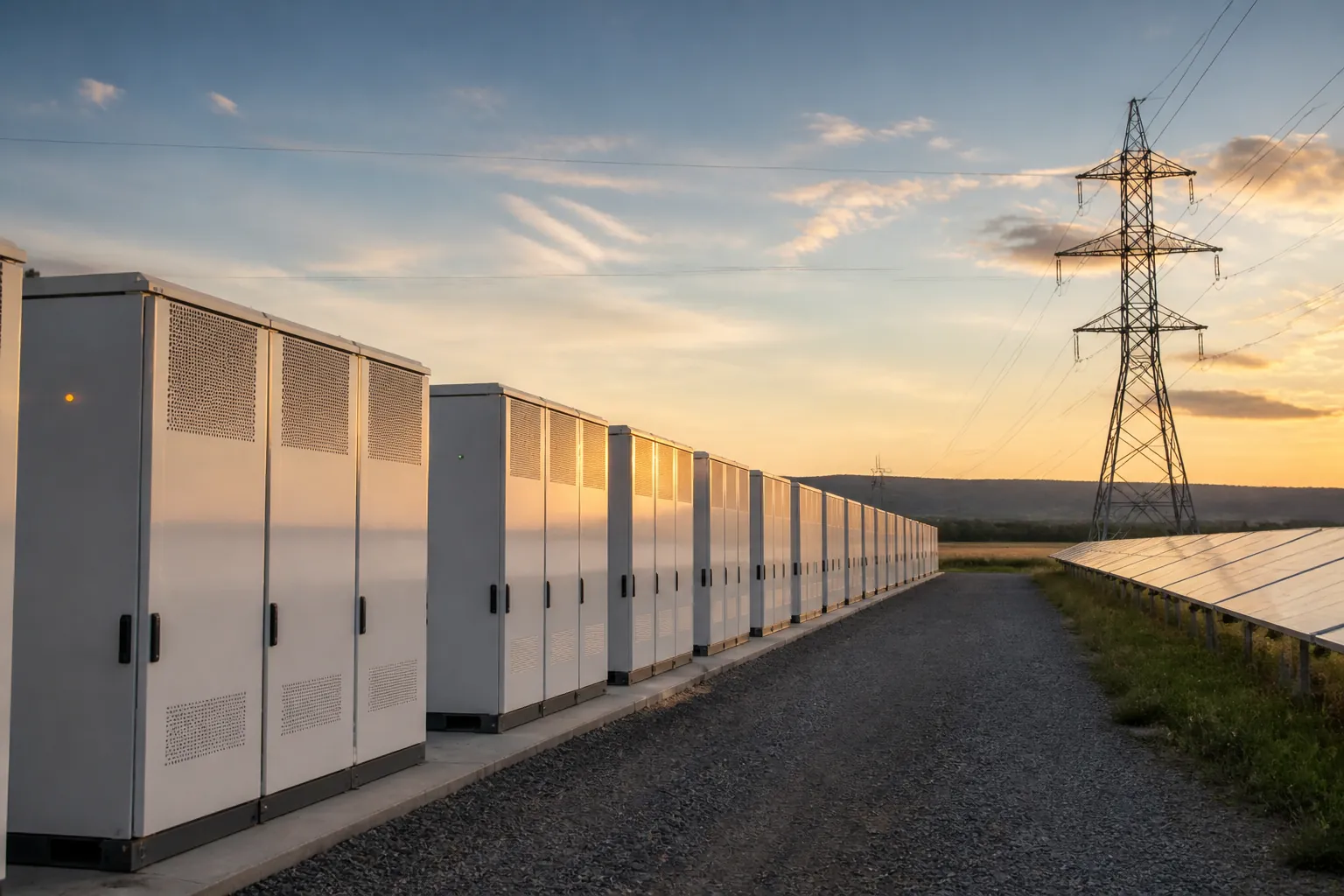
The fleet behind those numbers is very large for a small system. ESO counted 6.23 gigawatts (GW) of batteries in operation in late October. They can store more than 19 gigawatt-hours (GWh), so the average unit discharges for over three hours. Solar capacity stands at 7.3 GW. Battery power therefore equals about 85% of the solar fleet.
That matters because the published data changes how this fleet is financed. Until now, lenders priced Bulgarian batteries from consultant models. Now they can read actual charging and discharging, hour by hour. A spread you can observe is cheaper to lend against than a spread somebody forecast.
Why the fleet almost doubled in five months
At the end of May the fleet stood at 3.43 GW. By late October it had almost doubled. The reason is simple. The money came with a closing date.
Most of the early build ran through RESTORE, a grant scheme paid from the EU Recovery and Resilience Facility (RRF). The energy ministry selected 82 standalone storage projects for it. They shared 588 million euro (1.15 billion leva) for 9,713 MWh of usable storage. The grant covered up to half of construction cost.
RRF money has to be spent inside the facility's life, which ends in 2026. So every grant-backed developer raced to commission before the cut-off. The deadline, more than the market, set the construction schedule. The EBRD, which helped design the schemes, says they were completed in September. The fleet now stores roughly twice what the first RESTORE round paid for. Later grants and merchant capital built the rest.
Why the next megawatt earns less
A battery earns by buying power when it is cheap and selling it when it is dear. Every new battery does the same thing at the same hours. Here is why that hurts the next one. More charging lifts the cheap midday and night prices. More discharging pulls the evening peak down.
The spread is the whole income on the trading side. With batteries already covering a large share of the evening, the next unit pushes against a flatter peak. The spread in ESO's data is what a subsidised fleet earns today, and a merchant fleet should expect less.
Grant-backed owners can live with a thinner spread, because half their capital cost was paid. A merchant project carries the full cost. It needs a wider spread or a second income, such as balancing services bought by the grid operator.
Tenevo shows what a commercial battery looks like
On 2 November the EBRD and Raiffeisen Bank International each committed 30 million euro to Tenevo Solar Technologies. The 60 million euro package funds a 246 MW battery in south-eastern Bulgaria. It will store 512.5 MWh. It sits next to an existing 242 megawatt-peak (MWp) solar plant and an earlier battery on the same site.
That location is the point. A battery built at an operating solar site can use land, a substation and a grid connection that already exist. The mechanism is time. A new standalone connection in a crowded system can take years. A site extension can move in months.
Tenevo also shows who carries the risk now. The earlier Tenevo solar plant was financed on fully merchant terms, with first-loss cover from the EU's InvestEU programme. Lenders are again taking market price risk, and they will size debt on the spread they can see.
Where the construction money goes next
Bulgarian batteries now shift a large block of solar power into the evening. Much of that power has to leave the country to find a buyer. Balkan Green Energy News reported in early November that net exports have surged.
That happens because a small system cannot absorb its own solar and storage output at once. Exports depend on cross-border lines and on the internal lines that feed them. Once those lines fill up, prices inside Bulgaria converge, and the battery spread shrinks with them.
ESO is spending on exactly that layer. It says it has invested more than 182 million euro in the transmission network since the start of 2026. The work includes building or rebuilding more than 120 kilometres (km) of lines and upgrading substations. For contractors, Bulgarian grid work is moving from battery containers to wires, transformers and substations.
My read: battery orders slow, grid orders rise
I expect Bulgarian battery additions to slow sharply in 2027. The grant schemes are closed, and the spread will tighten as the fleet keeps trading the same hours. New merchant projects will cluster at existing solar sites, where a connection already exists.
I expect the construction value to move into ESO's network: substations, line upgrades and links to Greece and Romania. That matters because a state operator spends on a budget and regulatory cycle. Spreads do not set its pace, so these contracts arrive slower and larger. Suppliers of transformers and switchgear gain more than battery integrators.
The figure that settles this call is ESO's next count of operating batteries. If the fleet adds less than one gigawatt in the six months after October, the subsidy wave is over. If it keeps this summer's pace, merchant capital has accepted thinner spreads, and I am wrong.
The data angle here is the gap between storage built and wires built. Our CEE Grid Procurement Pipeline 2027-2030 tracks transmission and substation awards in 19 markets, Bulgaria among them. The free sample shows how we log operator awards and bidders.
Share it with your peers
Help your network stay ahead of CEE capital projects.
Strategic Insights
📊 Analytics & Strategic Insight
Bulgaria's battery boom ran on a grant calendar, and the grid now sets the next build
The decision most in this industry are avoiding:
👉 Published dispatch data helps late entrants more than early owners. The first wave priced its projects when nobody could see the spread. Now every lender and rival can, so the information edge of the early movers is gone.
👉 Spare connection capacity at solar sites is the scarce asset now. Merchant batteries will chase sites that already hold a grid connection. The owner of that connection, rather than the battery integrator, will capture most of the margin.
👉 The grid operator's balancing rules are becoming the battery revenue setter. As trading spreads thin, balancing income fills the gap. Whoever designs those auctions at ESO now shapes which battery projects get financed.
Here's the full context:
→ April 2025: Bulgaria's energy ministry selects 82 RESTORE storage projects with 9,713 MWh of usable capacity, funded by the RRF.
→ End of May 2026: ESO counts 3.43 GW of batteries in operation.
→ September 2026: The RRF-backed renewable and storage grant schemes are completed, the EBRD says.
→ 2 November 2026: The EBRD and Raiffeisen Bank International commit a 60 million euro package to the 246 MW Tenevo battery.
→ Most recent: On 24 November oEnergetice reports ESO's first battery dispatch data, with batteries covering more than 40% of evening consumption.
What this means for infrastructure operators, contractors and investors:
✅ Battery integrators should plan for a smaller Bulgarian order book. The grant-driven peak is behind them. The bid team should move staff and supply contracts to Romania, Greece and Hungary, where storage is earlier in its cycle.
✅ Lenders' technical advisers should rebuild revenue cases on ESO's data. A model that ignores the fleet's own effect on the evening price overstates income. The observed pattern is now the base case to stress.
✅ Grid contractors should position for ESO's substation and line work. These contracts follow the operator's investment plan and public procurement rules. Prequalification and transformer supply decide who wins them.
3 moves you can make this week:
1⃣ Download ESO's battery generation and consumption series. Plot the evening share and the charge price month by month, and watch how fast the spread narrows.
2⃣ Map Bulgarian solar sites with spare connection headroom. Those are the realistic locations for the next merchant batteries, and the owners are the people to call.
3⃣ Read ESO's current ten-year network development plan. List the substations and cross-border lines due for tender, and check your prequalification for each.
The analyst's read:
ESO's data proves that today's subsidised fleet earns a wide evening spread. It does not prove that a merchant battery built next year will earn enough to repay its debt. The settling point is ESO's next count of operating batteries, read against the spread in its winter data.
CEE Capital Projects reports
⚡ CEE Grid Procurement Pipeline 2027-2030
Contract opportunities, suppliers and bid risk in electricity transmission and distribution across 19 markets, including Bulgaria. PDF report plus interactive Excel database, with grid awards since 2020 and an opportunity register to 2030.
→ See the report and free sample
📋 Coming next
CEE Contractor League Table and Financial Health Monitor: awards, order books and financial health across CEE contractors. Join the waitlist to hear when it is published.
→ Join the waitlist
🚆 CEE Rail Build-Out 2027-2030
Rail tender pipeline to 2030, awards since 2020, contractor capacity and bid risk across 17 markets. PDF report plus interactive Excel database, one row per tender lot.
→ See the report and free sample
Related analyses
- Energy & Power
Latvia's Grid Operator Now Borrows at 4.8%, and Its Build Plan Has to Carry It
Latvia's transmission operator AST is repaying its 0.5% green bond early, after raising replacement money at 4.768%. With most of its ten-year grid plan funded from its own balance sheet, the price of that money now shapes which lines and substations move first.
Read analysis → - Energy & Power
Croatia's Next 400 kV Lines Hang on One Data Centre's Grid Contract
Pantheon AI offers to build and pay for four 400 kV lines to connect its Topusko campus, after the state held HOPS to a minimal grid plan. Croatia's next big transmission build may come from a private customer, while generators in the queue are offered curtailment instead.
Read analysis → - Energy & Power
Balfour Beatty's 9 Percent Grid Margin Shows Where Contractor Profit Sits. CEE Price-Only Substation Tenders Keep It With the Client
Balfour Beatty expects a support services margin of around 9 percent, well over twice its UK construction margin, as power transmission work ramps up under National Grid's framework. In Poland, substation tenders awarded on price alone mean CEE contractors moving into grids should not expect the same premium.
Read analysis →
Facing a decision on a CEE capital project?
Describe the situation in a few sentences. Within 72 hours you get an experienced read: the risks we see, what we'd check, and whether we can help — no calls, no obligation.