We Help International Investors and Project Owners Deliver Major CEE Projects Without Expensive Surprises
Independent project intelligence and advisory across energy, transport, real estate and industrial construction.
Nuclearelectrica Cernavoda Restart: One Reactor Back, a 43% Profit Cut Built on Two
Nuclearelectrica's revised budget cut 2026 profit by 43% and assumed both Cernavoda reactors back on 1 November. Only one is returning, and a forward-sold nuclear plant on a low river becomes a forced buyer of power.
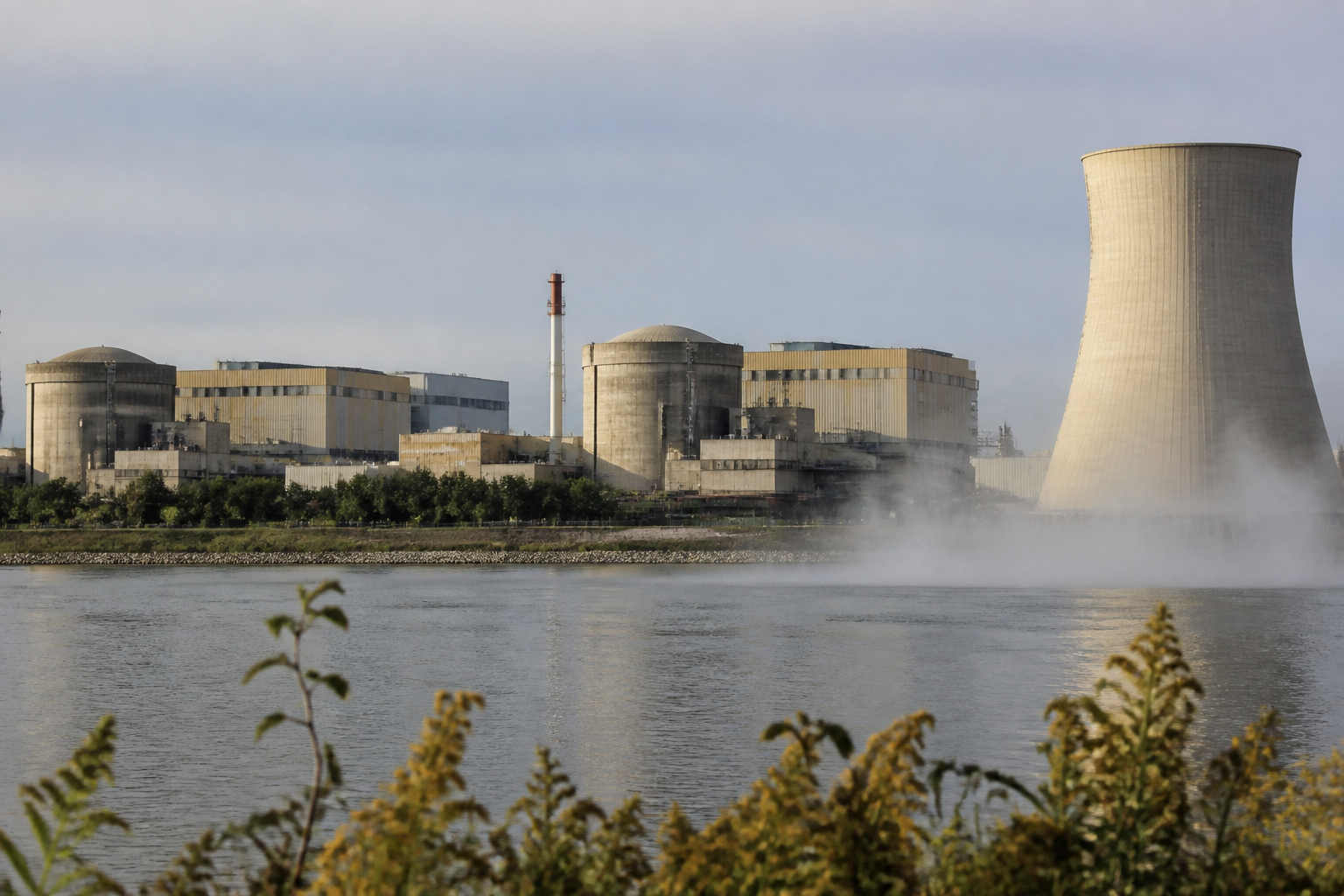
A budget built on a river forecast
I had read Nuclearelectrica's October budget cut as the floor. Then I checked the restart date underneath it. That single date now carries most of the forecast.
Nuclearelectrica (SNN) is Romania's listed nuclear operator. It runs the two Cernavoda reactors on the Danube. In mid-October it published a revised budget for this year, for a shareholder vote at the end of the month. Expected net profit falls by 43%. The new target is about 220 million euros (1.18 billion lei). Conversions here use the National Bank of Romania rate of mid-October.
The revised budget assumed both Cernavoda reactors would reconnect on 1 November. That did not happen. This week the company said Unit 1 would resynchronise to the grid on 6 November. Unit 2 has no date. Its restart depends on a sustained rise in the Danube, which supplies all of the plant's cooling water.
That matters because the budget is a hydrology forecast in financial form. Every week of slippage moves the profit line. The company cannot control the variable that moves it, and nor can its shareholders.
Why a stopped reactor becomes a buyer
Nuclearelectrica sells most of its output before it generates it. Forward contracts on the power exchange and bilateral deals fix price and volume months ahead. That is how a baseload generator normally manages price risk. It works well while the plant runs.
Here is why it fails in a drought. When a reactor stops, the delivery obligation does not stop with it. The seller still owes every megawatt-hour (MWh) it sold. To deliver, it must buy that power on the market. A hedged generator that loses its output becomes a forced buyer at the worst moment.
The budget shows the bill. Energy purchase costs rise by about 49 million euros (261 million lei). That is Curs de Guvernare's reading of the filing. Lower spending on fuel and water offsets only part of it. Planned deliveries to the grid for the year fall by about a quarter.
The timing makes it worse. That happens because the forward sales were priced before the drought. The replacement power is bought during it. Romania's front-month contract settled above 260 euros per MWh on 23 October, almost 29% up on the month. Net imports covered about 16% of Romanian demand in October, according to S&P Global. The scarce megawatt-hour is the one Nuclearelectrica has to buy.
One reactor back is half an answer
The return of Unit 1 adds about 700 megawatts (MW) of steady output. Together the two units usually supply about a fifth of Romania's electricity. One unit restores half of that, just as evening demand peaks rise into winter.
Unit 2 faces a harder test. The mechanism is a shared intake. Unit 1 draws large volumes of water from the same basin to cool its reactor. That pulls down the level the second unit needs to start. Running the first reactor makes it harder to restart the second.
The hydrology gap is wide. A restart needs a Danube flow of at least 4,900 cubic metres per second. That threshold comes from a late-October report by EUalive. The forecast flow was about 1,550 cubic metres per second. Low water near Cernavoda was expected to last until 25 November.
Romania has already extended its energy-sector state of alert into November. It lets the grid operator, Transelectrica, secure imports and cut exports if needed. Those tools protect the power system. They do nothing for Nuclearelectrica's sales book.
The capital plan sits on the same river
The outage has already moved money away from shareholders. The budgeted dividend falls by about 65%. Investment is almost untouched. Management has chosen to protect the build programme ahead of the payout. Investors who bought the stock for its yield now hold a construction story.
That matters because Nuclearelectrica is entering its heaviest spending decade. The Unit 1 refurbishment line in this year's budget is about 520 million euros (2.78 billion lei). The long refurbishment outage is planned from 2027.
During that refurbishment, Unit 2 will be the site's only earning reactor. A dry summer in those years would take the whole plant offline. With two units, drought risk is shared between them. With one, it is concentrated.
Two further units are planned early next decade on the same river branch. Their lenders will read this summer as a case study in cooling-water risk. The government has said the Danube branch at the plant needs works to prevent repeat closures. That fix sits outside the company's fence and outside its budget.
My read: the sales book changes before the river does
The arithmetic is already tight. First-half net profit was about 221 million euros (1.184 billion lei). That is slightly above the new full-year target. So the October budget already implied a small second-half loss, as Curs de Guvernare calculated. It still assumed both units running from November.
With Unit 2 still offline, I expect the second-half loss to be deeper than budgeted. I also expect Nuclearelectrica to sell a smaller share of its 2027 summer output ahead. The reason is simple. A generator that cannot guarantee summer cooling cannot safely promise summer delivery. Holding volume back costs some price certainty. It removes the forced buy-back.
The figure that settles the call is the Unit 2 resynchronisation date. A return before the end of November keeps the damage close to the October budget. A return after mid-December means a second downgrade. It would also force a harder look at how much 2027 output the company sells forward.
Share it with your peers
Help your network stay ahead of CEE capital projects.
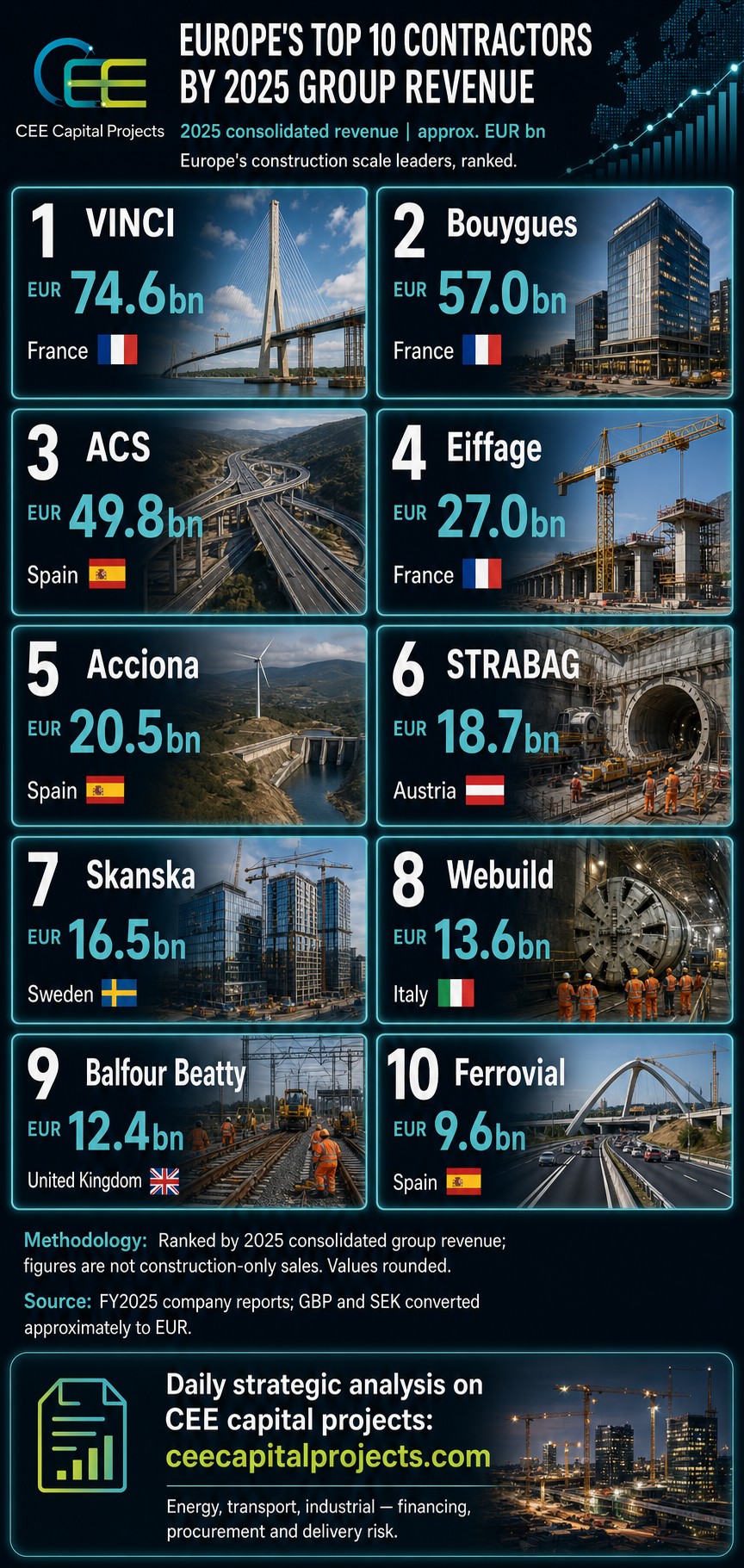
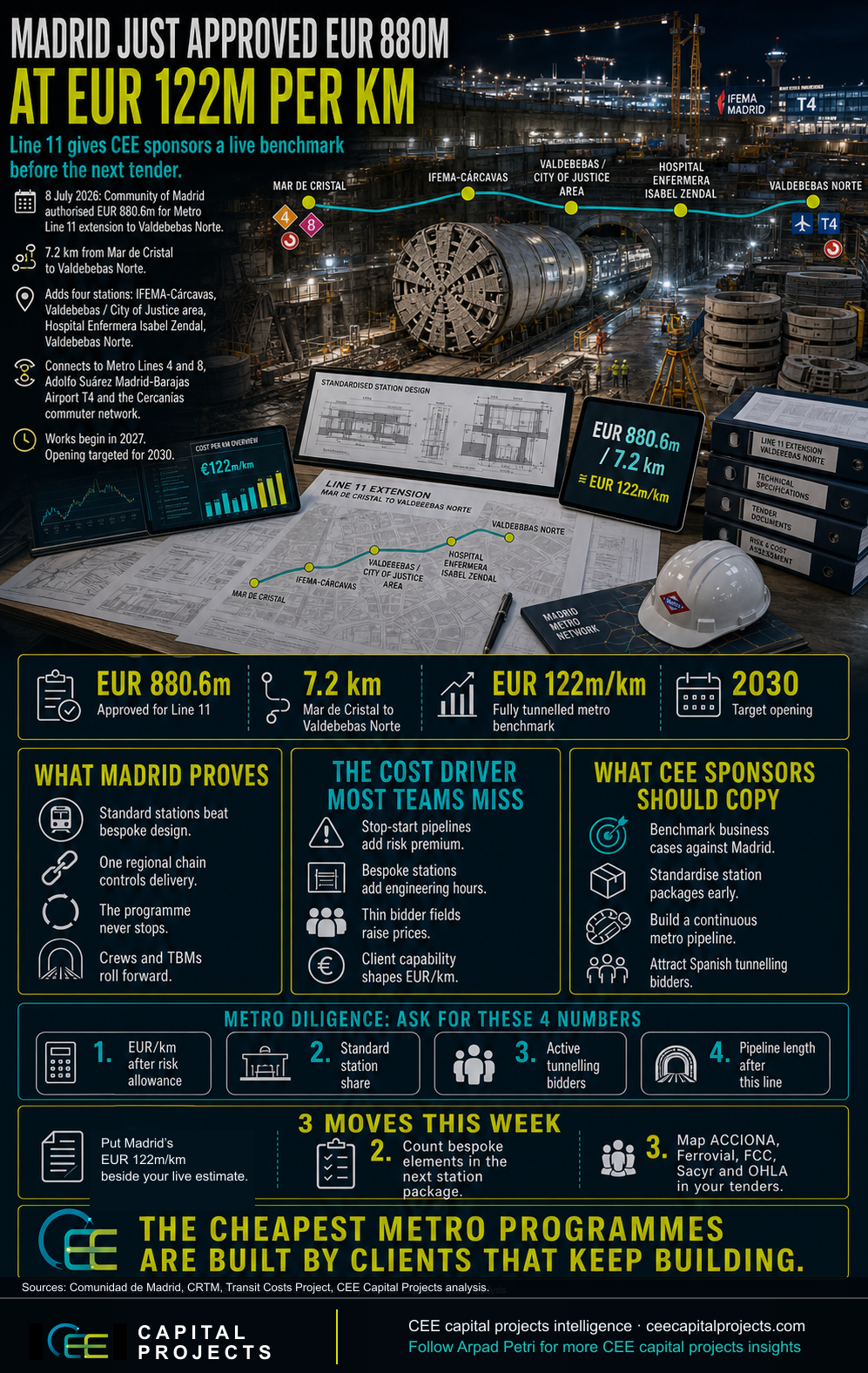
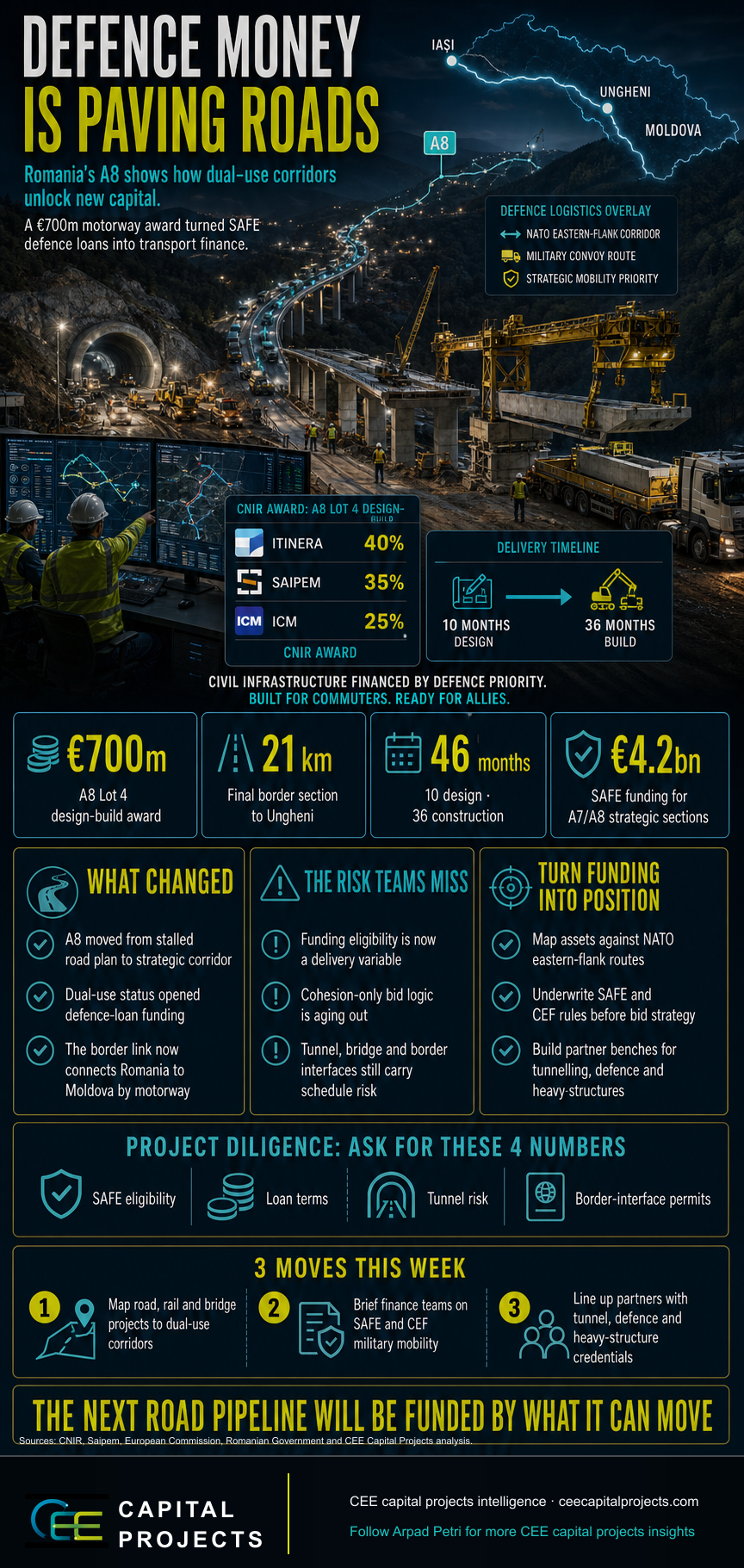
Explore our infograph library — strategic visuals for CEE capital projects leaders.
Project benchmarks, financing structures, tender dynamics and delivery risk — at a glance. Free access for investors, owners, contractors and strategy teams tracking CEE capital projects.
Browse the libraryStrategic Insights
📊 Analytics & Strategic Insight
Cernavoda's drought outage turns a hedged nuclear seller into a forced buyer
The decision most in this industry are avoiding:
👉 Availability is the wrong headline metric for a river-cooled plant. The market tracks restart dates. The exposure that decides the loss is how much output was sold before anyone knew the river would fail.
👉 A partial restart carries its own cost. Running one reactor through a low-water month uses up the cooling margin the other reactor needs. The partial return can lengthen the full outage.
👉 The refurbishment window is the real drought test. When one unit is in a long overhaul, the site has no internal backup. A dry summer then would hit harder than this one did.
Here's the full context:
→ 28 July 2026: Unit 1 is disconnected as Danube flow falls below cooling limits.
→ 13 August 2026: Unit 2 follows, and both Cernavoda reactors are offline.
→ 16 October 2026: The revised budget cuts 2026 net profit by 43%, assuming both units return on 1 November.
→ 29 October 2026: The budget goes to shareholders, with low water forecast near Cernavoda until 25 November.
→ Most recent: Unit 1 is set to resynchronise on 6 November, and Unit 2 has no date.
What this means for infrastructure operators, contractors and investors:
✅ Industrial buyers should reread force majeure clauses. Drought is now a foreseeable event on this river. A seller will find it harder to call the next one force majeure. Buyers need to know who carries it.
✅ Lenders' technical advisers on the new Cernavoda units will price hydrology. Expect a cooling-water availability study as a condition of lending. Expect a cash reserve sized against a dry summer.
✅ Contractors bidding the Danube branch works face a motivated client. The client loses revenue every dry week. Programme certainty will weigh as heavily as price in the award.
3 moves you can make this week:
1️⃣ Map forward sales against weather downtime. For any river-cooled or hydro asset, list the volume sold ahead for next summer. Then price the buy-back at today's forward curve.
2️⃣ Ask for the restart assumption behind every revised forecast. When a utility revises guidance during an outage, the restart date is the input that decides whether the number holds.
3️⃣ Check delivery clauses on any contract tied to Romanian baseload. Confirm who pays when the seller cannot generate. Confirm whether the price resets.
The analyst's read:
This outage proves that a forward-sold nuclear plant on a low river carries a market short it never chose. It does not yet prove that the damage runs into next year. The evidence that settles it is the second unit's return date and the share of next summer's output sold ahead.
Related analyses
- Energy & Power
Dukovany: KHNP drops Daewoo over a 663 million euro civils gap on a fixed-price nuclear deal
KHNP has ended construction talks with Daewoo E&C and Doosan Enerbility on the two new Dukovany units after a gap of over 1 trillion won. The fixed price to ČEZ holds at the top, but the quantity risk below it now decides the schedule.
Read analysis → - Energy & Power
The EU Network Charges Regulation Hit a Tax Wall: What It Means for Europe's 100 Billion Euro Grid Build
EU energy ministers spent their first political debate on the network charges regulation arguing about one excise-duty article. The tariff articles underneath it are the ones that decide who funds Europe's grid build and what a connection costs.
Read analysis → - Energy & Power
METLEN and Karatzis Built Greece's Largest Battery for EUR 170m in Six Months. Only EUR 33m of It Was Sponsor Money
Alpha Bank lent EUR 56m to Greece's largest battery, beside EUR 81m of EU recovery money. Sponsor cash was EUR 33m of the EUR 170m total, and that funding window closes this year.
Read analysis →
Facing a decision on a CEE capital project?
Describe the situation in a few sentences. Within 72 hours you get an experienced read: the risks we see, what we'd check, and whether we can help — no calls, no obligation.