We Help International Investors and Project Owners Deliver Major CEE Projects Without Expensive Surprises
Independent project intelligence and advisory across energy, transport, real estate and industrial construction.
Green Energy Investhor Spent Two Years Measuring Hungarian Wind at 130 Metres. The Country's First 702 MVA Wind Tender Awards It Zero Points
Hungary's first wind grid-capacity tender offers 702 MVA at nine nodes, with 40 of its 100 points awarded for cash payments to municipalities and none for wind measurement or project readiness. Green Energy Investhor's two-year LiDAR campaign at Vadosfa shows what the scoring ignores, and why December's winners may not be the projects that get built.
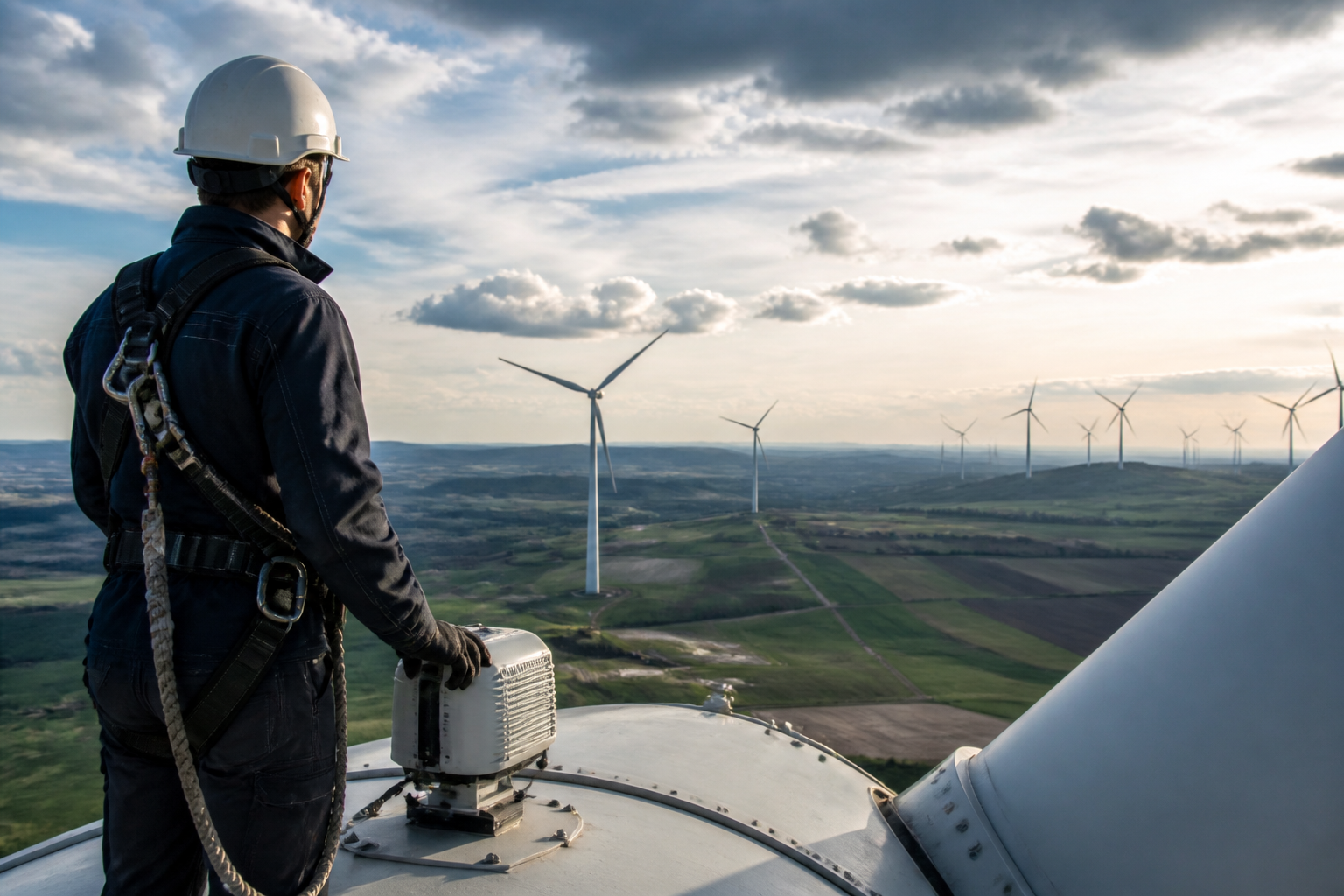
I had Hungary's first wind tender down as the moment the market reopened. Then I read the scoring sheet. Forty of its hundred points are bought with cash, and zero reward a wind measurement.
The Hungarian Energy and Public Utility Regulatory Authority (MEKH) posted the call at the end of August. Vilaggazdasag published the full weighting on 1 September 2026. A one-off payment to the affected municipalities carries 20 points. An annual payment to the same councils carries 15. Accepting a higher financial guarantee than required carries 5. Credible wind data, secured land, completed environmental studies and advanced permits carry none.
Two years of measurement, scored at zero
Green Energy Investhor closed a two-year LiDAR campaign at Vadosfa in the Kisalfold in late August. It measured wind at 130 metres, the height where modern rotors work. The average speed was 6.9 metres a second. Chief executive Antal Ritter put that at 2,600 to 3,000 full-load hours a year. That is a capacity factor of 30 to 34 per cent. A 7 MW turbine on the site yields at least 18 GWh a year.
Ritter also named the figure that should worry lenders. Individual years can sit 20 per cent away from the long-run average. One year of site data is the bankability minimum. A longer series is what makes an energy yield model survive credit committee. GEI asked the regulator to weight that kind of evidence. The final call does not.
702 MVA across nine nodes, two of them decisive
The tender offers 702 MVA at nine connection points in six districts. Ocsa takes 255 MVA and Szombathely OVIT takes 200. The other seven hold between 16 and 50 MVA each. Those two large nodes carry 455 MVA, about 65 per cent of the volume on this arithmetic. Ocsa sits in a densely populated area near a protected zone, which one prospective bidder has already questioned.
Bidders need at least 14 MW of wind and 14 MVA of feed-in capacity. The site must sit within 19 kilometres of the node. The entry fee is HUF 3 million. Applications close on 30 October 2026 and results are due by 13 December.
A shareholder nobody has met
The condition that should stop a credit committee earns no points at all. Up to 25 per cent of each project company must go to a state-designated renewable energy community. The transfer is compulsory. The draft had offered 30 per cent to municipalities or to a state-designated state company. REKK, the Regional Centre for Energy Policy Research, recommended cutting the share to 25 per cent.
So a bidder signs for a minority partner whose identity arrives later by government decision. Every shareholder agreement question follows from that. Who funds cost overruns. Which matters are reserved. How the stake is valued on exit. Whether a lender accepts an unnamed co-owner inside the security package.
The debt is the binding constraint
Ritter costs 100 MW of Hungarian wind at roughly HUF 40 billion. The tender's own benchmark caps eligible cost at HUF 406 million per MW of wind. Battery storage is capped at HUF 200 million per MW. The two numbers line up closely. Apply the benchmark to the 4,000 MW the government wants by 2030 and the bill reaches about HUF 1,624 billion. That figure is derived here rather than published. Ritter said plainly that it is hard to see where that volume of Hungarian bank debt comes from.
Nothing in the scoring sheet tests whether a bidder can raise that money. Fifteen points reward buying from EU suppliers, which pushes capital cost up. Another 15 reward installing storage alongside the turbines. Ten reward building more turbine capacity than the awarded feed-in allows.
Why the generation mix makes this urgent
Hungary needs the diversity. Solar reached about 27 per cent of the 2025 electricity mix, up from 7 per cent in 2020. Wind stayed near 2 per cent on a fleet frozen at roughly 330 MW since 2016. Paks supplies around 40 per cent of generation. Low Danube levels this summer cut cooling water and forced units down. A system leaning on one nuclear site and one weather-dependent technology carries a correlation problem.
What 13 December actually allocates
The award does not hand over a wind farm. It hands over a grid slot. The connection window opens on 30 September 2030 and closes on 30 September 2032. A bidder that wins on cash and starts measuring afterwards needs two years of data first. Then permits. Then a turbine delivery slot. That sequence does not fit inside the window.
Operators and investors should read the December results as a list of options rather than a pipeline. The annual rounds planned to 2030 should be priced on the assumption that some 2026 winners hand capacity back. Contractors and turbine makers should watch which winners already hold land and measured data. Those are the only names likely to place orders before 2029. Around EUR 1.5 billion of Recovery and Resilience Facility money is going into the networks that will receive this power. The grid will be ready. The question is whether the projects will.
📊 Analytics & Strategic Insight
The scoring sheet is the business plan
The decision most in this industry are avoiding:
👉 Read the award rules as a cost sheet. Points you buy with cash are costs you carry before any income arrives. Add them up before you decide to bid.
👉 Name the partner you cannot choose. A rule can hand you a part-owner picked by someone else. Ask who they are, what they must pay, and what they can block.
👉 Stop treating a grid slot as a project. A slot is permission to try. The work that makes a wind farm real starts after the slot is won.
Here's the full context:
→ 2016: Hungary stopped new wind building in practice. The fleet stayed near 330 MW for a decade.
→ 2020: Solar was about 7 per cent of the power mix. Wind was small and stayed small.
→ 2025: Solar reached about 27 per cent of the mix. Wind was still about 2 per cent.
→ August 2026: Green Energy Investhor finished two years of wind measuring at Vadosfa. It found 6.9 metres a second at 130 metres.
→ Most recent: On 1 September 2026 Vilaggazdasag published the scoring. Cash to councils is worth 40 points. Wind data is worth nothing.
What this means for infrastructure operators, contractors and investors:
✅ Cash rules pick a different winner. Bidders with deep pockets beat bidders with good sites. Expect some winners to hand capacity back.
✅ The build window is tight. Connection must happen between late 2030 and late 2032. A project starting from zero will struggle.
✅ The money is the real test. About HUF 1,624 billion is needed for 4,000 MW at the published cost cap. That total is our own arithmetic.
3 moves you can make this week:
1️⃣ Price the giveaways first. Work out the council payments per MW and the cost of buying EU-made kit. Put both in the model before you look at the wind.
2️⃣ Draft the shareholder terms now. Write the clauses you need from a 25 per cent partner you have not met. Funding, veto rights and exit price.
3️⃣ Check the clock backwards from 2032. Count the months for data, permits, finance and a turbine slot. If the sum does not fit, bid where you already own land.
Share it with your peers
Help your network stay ahead of CEE capital projects.




Explore our infograph library — strategic visuals for CEE capital projects leaders.
Project benchmarks, financing structures, tender dynamics and delivery risk — at a glance. Free access for investors, owners, contractors and strategy teams tracking CEE capital projects.
Browse the libraryRelated analyses
- Energy & Power
Constellation's $4.3bn Nuclear Uprate Deal With Google: 890 MW, No New Site, and a Finite Pool
Constellation will invest more than $4.3bn to lift 890 MW out of 11 existing reactors under a 20-year Google power purchase agreement, at roughly half the per-kilowatt cost of recent American new build. The point for Europe is that the national uprate pool runs to three to five gigawatts, ČEZ banked its Dukovany headroom by 2009, and the only route left to fresh capacity is a CZK 407bn new build.
Read analysis → - Energy & Power
NEK's EUR 350 Million Yadenitsa Dam Tender Turns Bulgaria's Chaira Storage Fix Into a Civils Job
Bulgaria's NEK has put EUR 350m on the market for the Yadenitsa dam and a six kilometre tunnel at the 864 MW Chaira pumped storage plant, with bids due 4 November 2026 and 60 months to build. The civil works are costed at more than three times the EUR 102m reconstruction of all four of the plant's machines.
Read analysis → - Energy & Power
EIB and BNP Paribas Guarantee EUR 700m of Grid Equipment Bonds: Europe's Network Bottleneck Moves to the Balance Sheet
The EIB and BNP Paribas signed a EUR 700m counter-guarantee portfolio on 29 September 2026, covering advance payment and performance bonds for European manufacturers of electricity grid components. The instrument is small, and it points at the constraint that now sets delivery dates on Europe's grid build: bonding capacity rather than factory floor.
Read analysis →
Building in Central Europe?
Tell us what you're building. We'll tell you what can go wrong — and how to prevent it.