We Help International Investors and Project Owners Deliver Major CEE Projects Without Expensive Surprises
Independent project intelligence and advisory across energy, transport, real estate and industrial construction.
EPCG's Carbon Bill Jumps to EUR 75 a Tonne: Montenegro Pays for Export Access With Pljevlja's Margin
Montenegro has tripled the carbon charge on state utility EPCG from EUR 24 to EUR 75 a tonne, a bill of about EUR 70 million a year. Read against a gross CBAM exposure of up to EUR 191 million, the charge is a payment for continued access to the European power market.
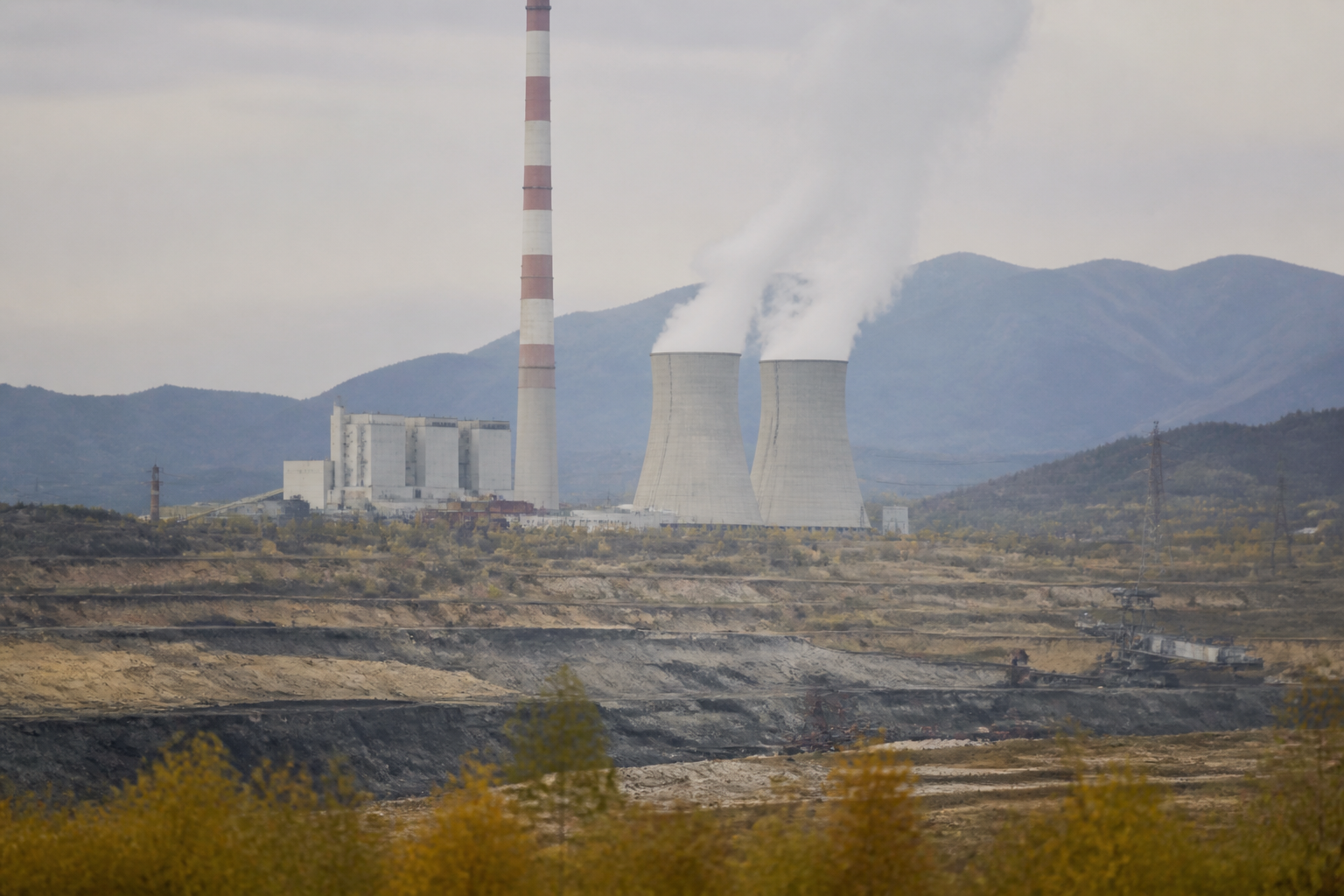
My view on this is simple. Montenegro has just bought access to the European power market, and it is paying for that access out of one coal plant's margin. On 25 September 2026 EPCG board president Milutin Đukanović confirmed the change. The state utility will pay a market carbon price of EUR 75 a tonne into Montenegro's Eco-Fund, up from EUR 24. The bill is about EUR 70 million a year (Balkan Green Energy News, 25 September 2026).
A tripled carbon charge lands on a single asset
The charge arrives through a government decree on Montenegro's emissions trading system. Montenegro was the first Western Balkan country to legislate such a scheme, back in 2020. Its carbon price has sat near the bottom of the European range ever since. Tripling it changes the marginal cost of the only coal-fired station in the country.
TE Pljevlja produces about 45 per cent of EPCG's electricity, on the company's own March 2026 figure. A carbon cost of EUR 75 a tonne is now embedded in every megawatt hour that station sends out. Domestic coal loses much of its edge over imported power in the hours when the reservoirs are full.
The charge is a payment for export access
CBAM, the EU Carbon Border Adjustment Mechanism, took effect on 1 January 2026. It covers cross-border electricity alongside steel, cement and aluminium. Exporters can set a carbon price already paid at home against the CBAM certificate they would otherwise buy. Certificate prices have been running close to EUR 75 a tonne, which is why the domestic number was set where it was.
The arithmetic behind the decision is visible. EPCG put Montenegro's gross CBAM exposure at up to EUR 191 million a year in March 2026. Electricity accounts for more than 35 per cent of national exports. A domestic charge of EUR 70 million a year buys down a much larger bill and keeps the revenue inside the country. Đukanović also disclosed EUR 12 million to EUR 13 million of lost first-quarter revenue caused by CBAM uncertainty alone.
Two conditions sit under that trade. The deduction works only if Brussels accepts the Eco-Fund payment as an effective carbon price. It also assumes the payment behaves like a levy with real coverage behind it. Sponsors financing Western Balkan generation should read the decree first. Then they should read the recognition test, before pricing the export leg of any offtake.
The plant costs most in the quarter it is worth most
Hydrology decides EPCG's cost base. Between June and August 2026 Pljevlja supplied around 65 per cent of the group's generation as drought cut hydro output. That was about 442,000 MWh at an average load near 200 MW. The output was valued above EUR 51 million. Buying the same volume on the Hungarian HUPX exchange would have cost roughly EUR 57.4 million.
Scale that against the system. Montenegro covered close to 30 per cent of demand from net imports in 2025, 1,031.9 GWh out of 3,430.5 GWh. The coal plant is the hedge against a dry summer and an expensive import curve. The new carbon charge is a tax on that same hedge. Both statements hold at once, which is what makes the next investment decision hard.
What repricing does to the build pipeline
Đukanović has said administrative measures will not answer CBAM, and that the generation mix has to change. That is the honest reading of the decree. A coal station carrying EUR 75 a tonne sets a much higher clearing bar. Solar, wind, storage and flexibility clear that bar more easily than they did at EUR 24.
Network condition then decides how much of the new capacity actually earns. Transmission and distribution losses reached 463.8 GWh in 2025, about 19 per cent of domestic generation. Every megawatt hour lost on the way to the customer is a megawatt hour of carbon paid for and never sold.
What to watch next
Serbia, Bosnia and Herzegovina, North Macedonia and Kosovo face the same export test. They carry larger coal fleets and thinner fiscal room. Montenegro has now set a regional reference point: price carbon at home, keep the money at home, and defend the export flow. Contractors and equipment suppliers should expect the resulting tenders as renewable and flexibility packages. The sponsor behind them will be a utility balance sheet under carbon pressure.
For lenders, the credit question has moved. A Western Balkan utility's cost curve now carries a European carbon price with no hedge behind it. Its revenue depends on exports into the mechanism that same price is meant to neutralise. Pricing that circularity correctly is the work of the next twelve months.
Share it with your peers
Help your network stay ahead of CEE capital projects.




Explore our infograph library — strategic visuals for CEE capital projects leaders.
Project benchmarks, financing structures, tender dynamics and delivery risk — at a glance. Free access for investors, owners, contractors and strategy teams tracking CEE capital projects.
Browse the libraryStrategic Insights
📊 Analytics & Strategic Insight
Montenegro has turned a carbon tax into an export licence, and handed the invoice to its only coal plant
The decision most in this industry are avoiding:
👉 The charge is procurement of market access, and it should be budgeted that way. Treating EUR 75 a tonne as an environmental levy misreads it. EPCG is paying EUR 70 million a year at home to avoid a bill the company itself sized at up to EUR 191 million. That is a purchase decision with a return, and it belongs in the commercial model rather than the sustainability annex.
👉 The hedge and the tax are the same asset. Pljevlja is what stands between Montenegro and an expensive import curve in a dry summer. It is also the single largest source of the carbon bill. Any closure date that ignores hydrology risk moves cost rather than removing it.
👉 Recognition risk is the real exposure, and almost nobody is pricing it. The whole trade rests on Brussels accepting an Eco-Fund payment as an effective carbon price. If that acceptance is partial, Montenegro pays twice: once domestically, once at the border. Offtake contracts signed before that test is settled carry an open-ended term.
Here's the full context:
→ 2020: Montenegro becomes the first Western Balkan country to legislate a CO2 emissions trading scheme, with the price set near the bottom of the European range.
→ 2025: Montenegro covers close to 30 per cent of electricity demand from net imports, 1,031.9 GWh of 3,430.5 GWh, with transmission and distribution losses of 463.8 GWh.
→ 1 January 2026: The EU Carbon Border Adjustment Mechanism takes effect, covering cross-border electricity alongside steel, cement and aluminium.
→ March 2026: EPCG puts Montenegro's gross annual CBAM exposure at up to EUR 191 million, notes electricity is over 35 per cent of national exports, and confirms about 45 per cent of its own output comes from TE Pljevlja.
→ Most recent: On 25 September 2026 EPCG board president Milutin Đukanović confirms the utility will pay a market carbon price of EUR 75 a tonne into the Eco-Fund, up from EUR 24, costing roughly EUR 70 million a year, after CBAM uncertainty cut first-quarter revenue by EUR 12 million to EUR 13 million.
What this means for infrastructure operators, contractors and investors:
✅ Western Balkan generation assets need a carbon line in the base case. Putting it in a sensitivity is already too late. A domestic price that tracks the EU level removes the discount that made regional coal look cheap to acquire. Valuations built on a EUR 24 assumption are stale.
✅ Grid loss reduction is now a carbon project with a payback. At 19 per cent of domestic generation, losses in Montenegro destroy carbon that has already been paid for. Metering, reconductoring and substation work compete directly with new build for the same euro.
✅ The tender pipeline shifts toward flexibility packages under utility credit. A balance sheet carrying EUR 70 million of annual carbon cost buys renewables, storage and demand response faster than it buys thermal life extension. Contractors should staff for that mix.
3 moves you can make this week:
1️⃣ Re-run your Western Balkan cost curves at EU-level carbon. Replace every legacy EUR 20 to EUR 30 assumption with a live certificate price and see which assets move above the import curve.
2️⃣ Put a CBAM recognition clause into any export-linked offtake you are negotiating. Define who carries the cost if a domestic carbon payment is only partly credited at the EU border.
3️⃣ Price the drought case explicitly in any coal retirement plan you are advising on. Model a summer where hydro falls and thermal covers two thirds of output, then test what replaces that block and at what cost.
Related analyses
- Energy & Power
Constellation's $4.3bn Nuclear Uprate Deal With Google: 890 MW, No New Site, and a Finite Pool
Constellation will invest more than $4.3bn to lift 890 MW out of 11 existing reactors under a 20-year Google power purchase agreement, at roughly half the per-kilowatt cost of recent American new build. The point for Europe is that the national uprate pool runs to three to five gigawatts, ČEZ banked its Dukovany headroom by 2009, and the only route left to fresh capacity is a CZK 407bn new build.
Read analysis → - Energy & Power
NEK's EUR 350 Million Yadenitsa Dam Tender Turns Bulgaria's Chaira Storage Fix Into a Civils Job
Bulgaria's NEK has put EUR 350m on the market for the Yadenitsa dam and a six kilometre tunnel at the 864 MW Chaira pumped storage plant, with bids due 4 November 2026 and 60 months to build. The civil works are costed at more than three times the EUR 102m reconstruction of all four of the plant's machines.
Read analysis → - Energy & Power
EIB and BNP Paribas Guarantee EUR 700m of Grid Equipment Bonds: Europe's Network Bottleneck Moves to the Balance Sheet
The EIB and BNP Paribas signed a EUR 700m counter-guarantee portfolio on 29 September 2026, covering advance payment and performance bonds for European manufacturers of electricity grid components. The instrument is small, and it points at the constraint that now sets delivery dates on Europe's grid build: bonding capacity rather than factory floor.
Read analysis →
Facing a decision on a CEE capital project?
Describe the situation in a few sentences. Within 72 hours you get an experienced read: the risks we see, what we'd check, and whether we can help — no calls, no obligation.