We Help International Investors and Project Owners Deliver Major CEE Projects Without Expensive Surprises
Independent project intelligence and advisory across energy, transport, real estate and industrial construction.
Bechtel, Westinghouse and PEJ Agree EPC Terms for Poland's First Nuclear Plant, With the EUR 42bn Aid Case Already Fixed
Bechtel said on 23 September 2026 that its consortium with Westinghouse and Polskie Elektrownie Jadrowe had agreed the main commercial terms of the EPC contract for Poland's first nuclear power plant. The equity, the sovereign guarantee and the 40 year contract for difference were settled long before the price was.
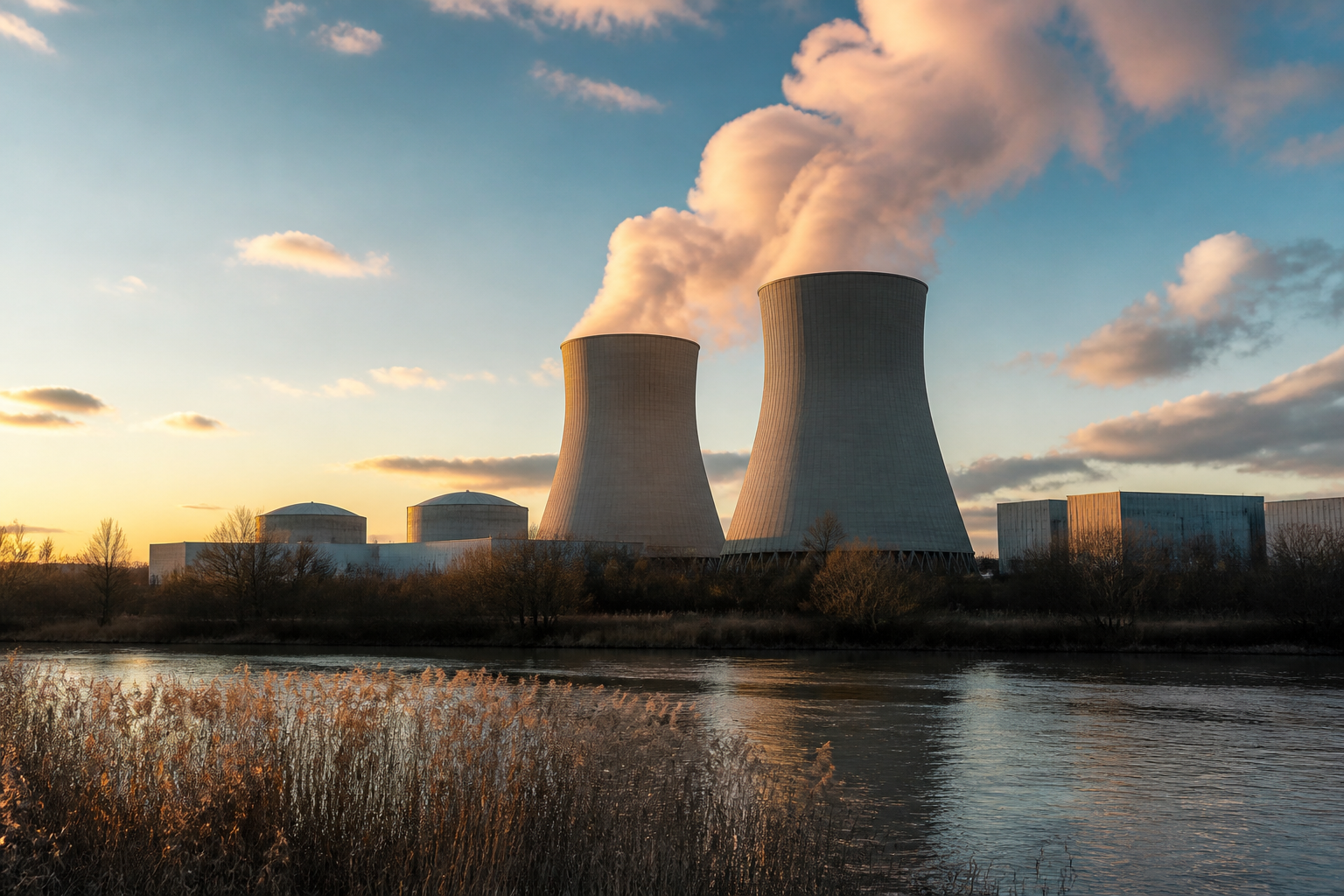
I keep seeing the same sequence on state backed megaprojects across this region. The capital structure gets fixed years before the price does. Poland has now done exactly that, at scale.
On 23 September 2026 Bechtel announced an agreement with Westinghouse and Polskie Elektrownie Jadrowe (PEJ). The three parties settled the main commercial terms of the engineering, procurement and construction contract. That is the EPC contract for Poland's first nuclear power plant, and it is still unsigned. Both sides said they aim to finish detailed negotiations by the end of 2026.
What the announcement actually covers
The scope is three Westinghouse AP1000 units at Lubiatowo-Kopalino, in the Choczewo commune on the Baltic coast. Combined capacity is 3,750 MWe. PEJ president Marek Woszczyk said the first electricity will flow to the Polish grid in 2036.
Engineering News-Record reported on 25 September 2026 that first nuclear concrete is scheduled for the fourth quarter of 2028. Commercial operation of the three units is set for 2036, 2037 and 2038. A building permit application follows in 2027.
The capital structure was settled first
The European Commission cleared the Polish state aid package on 9 December 2025. That decision was assessed against a total investment cost of EUR 42bn, as reported by World Nuclear News. Poland injects about EUR 14bn of equity, roughly 30 per cent of the cost.
The state then guarantees 100 per cent of the debt. A two way contract for difference gives 40 years of revenue stability. Brussels cut that term from the 60 years Poland first proposed. It also required at least 70 per cent of annual output to be sold on open exchanges.
By January 2026 PEJ had signed its first loan with the Export-Import Bank of the United States. It also held letters of intent from 11 export credit agencies worth more than PLN 100bn, about USD 28bn. So the sovereign has underwritten the debt and the revenue floor before anyone has priced the works.
The aid case and the programme have drifted apart
The Commission assessed that aid against commercial operation in 2033. The current plan puts the first unit three years later. No one revisits a state aid decision because a date moved.
Engineering News-Record put the Commission's cost estimate at USD 52bn on 25 September 2026. The decision itself carried EUR 42bn. Treat the gap carefully, because the two figures use different currencies and different vintages. The direction of travel is still one way.
Three years of slippage lengthens interest during construction. It lengthens the guarantee exposure and stretches the equity draw. None of that sits in the headline number.
The contract form is the whole question
Neither side has said whether the EPC will be fixed price, target price or cost reimbursable. That single choice decides where an overrun lands. It is why the remaining negotiation matters more than the announcement.
A first of a kind plant carries a contingency no contractor wants printed. Poland has no nuclear supply chain to soften it. A fixed price would show it. A cost reimbursable deal hides it until the invoices arrive.
With a full sovereign guarantee behind the debt, the Polish taxpayer stands behind either answer. Lenders will read the price mechanism before they read the schedule.
The year end target is the live constraint. A term sheet that does not convert by December pushes the building permit application. That permit sets the 2028 concrete date.
The local content figure is still small
Polish firms have won more than PLN 1bn, about USD 250m, of work so far. Budimex, Doraco, Unihouse, MSA Security and Barg M.B Gdansk are the named suppliers. Nearly 200 Polish nationals sit on the project team, with around 100 more in recruitment.
Set that against a build of EUR 42bn or more. The second and third tier packages are where the Polish market actually opens. They also land in a strained labour market. Polish construction is short of about 150,000 workers, on Randstad figures reported by EurobuildCEE on 1 September 2026.
What to watch from here
The number that matters next is the strike price under the contract for difference. It converts the EPC outcome into a consumer bill for 40 years. Until the contract is signed, that price is an estimate resting on another estimate.
Czechia, Hungary and Romania are all running new nuclear programmes with similar sovereign support. Poland is the largest live test of this sequence in the region. Sponsors, contractors and lenders should watch closely to see which party ends up holding the first overrun.
Share it with your peers
Help your network stay ahead of CEE capital projects.




Explore our infograph library — strategic visuals for CEE capital projects leaders.
Project benchmarks, financing structures, tender dynamics and delivery risk — at a glance. Free access for investors, owners, contractors and strategy teams tracking CEE capital projects.
Browse the libraryStrategic Insights
📊 Analytics & Strategic Insight
Poland has financed a EUR 42bn nuclear programme before fixing what it is buying
The decision most in this industry are avoiding:
👉 The unsigned part of a term sheet is the risk register. A main commercial terms announcement tells you what both sides could already agree. The pricing mechanism, the change regime and the delay damages usually sit in what is left.
👉 A full state guarantee dulls lender discipline. When a sovereign covers all of the debt, banks stop being the party that stress tests the contract price. That job then falls to a ministry with a political calendar.
👉 The 2033 date in the aid file is doing quiet work. Every year of slippage past it adds interest during construction. The approved case never carried that cost, and nobody reopens the decision to say so.
Here's the full context:
→ 2022: Poland selected the Westinghouse AP1000 design for its first nuclear power plant, on the Baltic coast in Pomerania.
→ 2023: Westinghouse, Bechtel and PEJ signed an 18 month engineering services contract covering site specific design for three nuclear islands.
→ December 2025: The European Commission approved the state aid on 9 December. It was assessed on EUR 42bn of investment and EUR 14bn of equity. A full debt guarantee and a 40 year contract for difference came with it.
→ Early 2026: PEJ filed its construction licence application in March. It had already signed a first loan with US EXIM. Letters of intent from 11 export credit agencies stood above PLN 100bn.
→ Most recent: On 23 September 2026 Bechtel said the main commercial EPC terms were agreed. Full negotiations are targeted for year end, and first power for 2036.
What this means for infrastructure operators, contractors and investors:
✅ The supply chain window is open now. Package allocation happens while the head contract is still being negotiated. Regional contractors who wait for signature will be late to the second tier.
✅ Know who your real counterparty is. A sovereign guarantee on a twelve year build changes the credit you are exposed to. It changes the political risk with it.
✅ A slipping commercial operation date is a financing event. Model interest during construction against the date in the approved aid case. The latest press release is the wrong anchor.
3 moves you can make this week:
1️⃣ Map the unallocated packages. Pull the PEJ and Bechtel supplier registration routes and identify which second tier scopes have no named contractor yet.
2️⃣ Rebuild your own interest during construction line. If your business case still carries a commercial operation date set three years ago, that number is wrong today.
3️⃣ Ask for the price mechanism in writing. On any EPC still in negotiation, get the fixed, target or reimbursable answer before you commit bid resource.
Related analyses
- Energy & Power
Constellation's $4.3bn Nuclear Uprate Deal With Google: 890 MW, No New Site, and a Finite Pool
Constellation will invest more than $4.3bn to lift 890 MW out of 11 existing reactors under a 20-year Google power purchase agreement, at roughly half the per-kilowatt cost of recent American new build. The point for Europe is that the national uprate pool runs to three to five gigawatts, ČEZ banked its Dukovany headroom by 2009, and the only route left to fresh capacity is a CZK 407bn new build.
Read analysis → - Energy & Power
NEK's EUR 350 Million Yadenitsa Dam Tender Turns Bulgaria's Chaira Storage Fix Into a Civils Job
Bulgaria's NEK has put EUR 350m on the market for the Yadenitsa dam and a six kilometre tunnel at the 864 MW Chaira pumped storage plant, with bids due 4 November 2026 and 60 months to build. The civil works are costed at more than three times the EUR 102m reconstruction of all four of the plant's machines.
Read analysis → - Energy & Power
EIB and BNP Paribas Guarantee EUR 700m of Grid Equipment Bonds: Europe's Network Bottleneck Moves to the Balance Sheet
The EIB and BNP Paribas signed a EUR 700m counter-guarantee portfolio on 29 September 2026, covering advance payment and performance bonds for European manufacturers of electricity grid components. The instrument is small, and it points at the constraint that now sets delivery dates on Europe's grid build: bonding capacity rather than factory floor.
Read analysis →
Building in Central Europe?
Tell us what you're building. We'll tell you what can go wrong — and how to prevent it.