We Help International Investors and Project Owners Deliver Major CEE Projects Without Expensive Surprises
Independent project intelligence and advisory across energy, transport, real estate and industrial construction.
Balfour Beatty Booked £446 Million of UK Grid Work in Four Days. The Real Competition Ended Months Before the Contracts Were Signed
Balfour Beatty collected £446 million of substation contracts in four days in late June, and both awards came through framework seats secured long before. Europe's transmission buildout is quietly moving from open tenders to locked-in supply-chain partnerships.
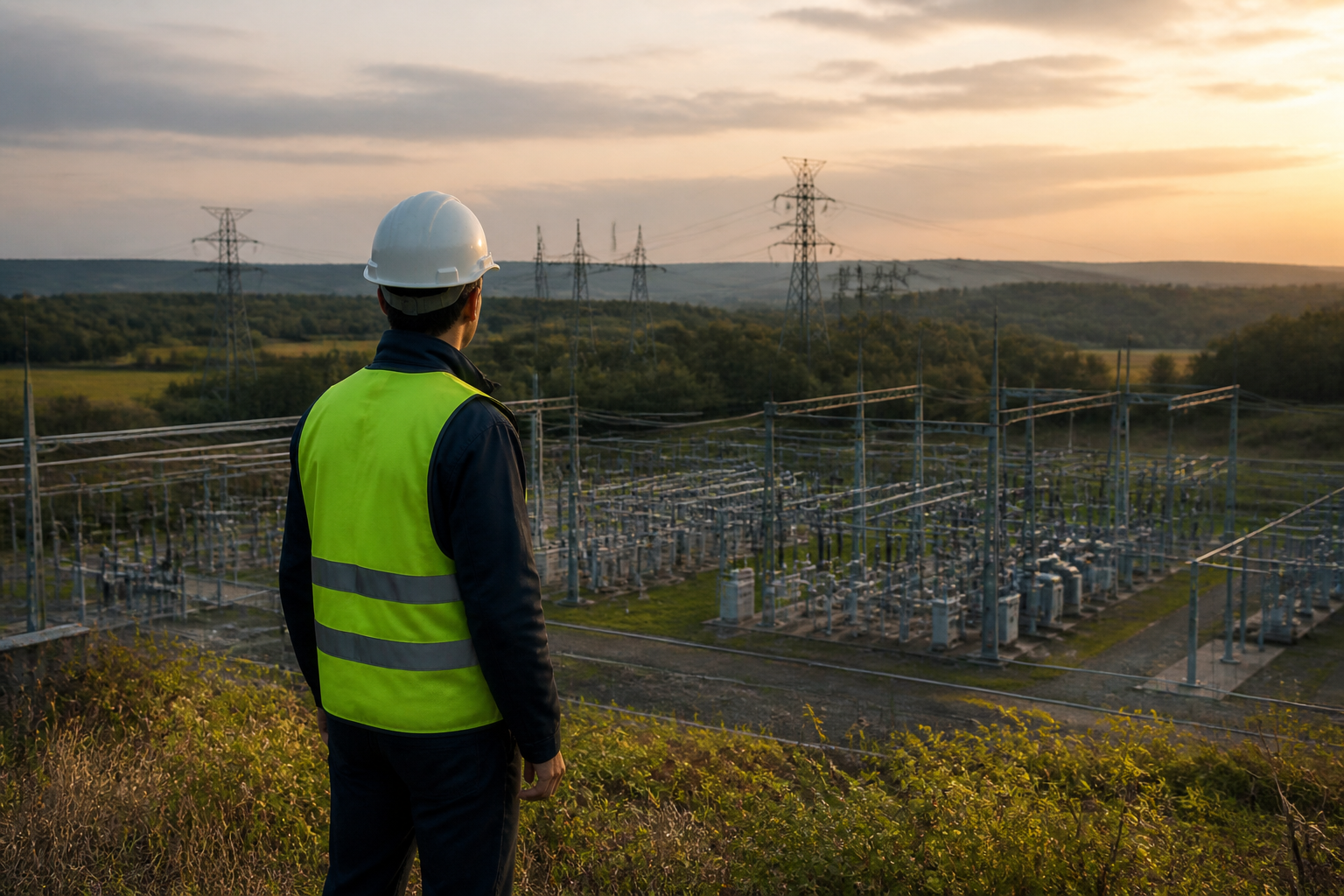
In the space of four days in late June, Balfour Beatty announced £446 million of UK electricity-transmission work: a £121 million substation extension at Bramford in Suffolk for National Grid, followed by a £325 million civils package at the Netherton Hub in Aberdeenshire for SSEN Transmission. Neither contract was contested in an open tender. Both were called off framework agreements the contractor had secured months, or years, earlier. That procurement detail matters more than the headline numbers, because it describes how Europe's grid buildout will be bought for the next decade.
Four days, two frameworks, £446 million
The Bramford award came first. On 22 June 2026, National Grid handed Balfour Beatty a £121 million, four-year contract to extend the Bramford 400kV substation as part of the Bramford to Twinstead project within the Great Grid Upgrade. The scheme connects four new circuits, including two new grid supply points, and adds two shunt reactors to improve network reliability, with completion expected in 2030 and roughly 150 people on site at peak (Balfour Beatty press release, 22 June 2026). The route to the contract was National Grid's EPC Framework, a standing supplier panel, with no open competition at award stage.
Three days later, SSEN Transmission awarded the company a £325 million, two-year contract to deliver the earthworks and civil infrastructure for the Netherton Hub in Aberdeenshire: five platforms carrying two substations and three converter stations, plus an operations base, employing more than 800 people at peak. That award came through SSEN's Accelerated Strategic Transmission Investment (ASTI) offshore delivery framework and builds on enabling works Balfour Beatty had already secured at the site in 2025 (Balfour Beatty, 25 June 2026).
The seats were bought in 2025
To understand June, look back a year. In July 2025, National Grid appointed Balfour Beatty as regional delivery partner for the North East of England on its £8 billion Electricity Transmission Partnership, the vehicle for accelerating substation delivery across England and Wales. A month later, in August 2025, the contractor took two of the lots on National Grid's circa £59 billion High Voltage Direct Current (HVDC) supply chain framework: the only company appointed to two lots, covering converter-station civil works and onshore underground cabling. Nineteen suppliers share that framework, which runs five years with a three-year extension option, and National Grid said at the time that call-off contracts would begin flowing in 2026 (Balfour Beatty, 21 August 2025).
June 2026 is that machine operating as designed. The competitive event happened at framework letting. Everything since is allocation.
The cable consortium signed the same deal
The pattern extends upstream of the contractors. On 9 July 2026, SSEN Transmission signed a long-term framework agreement with the Sumitomo Electric and Van Oord consortium covering the engineering, supply, transport and installation of HVDC subsea cable systems across the north of Scotland (Van Oord press release, 9 July 2026). HVDC cable factories and installation vessels are booked out years ahead across Europe, so grid owners have stopped purchasing projects and started reserving capacity. The same scarcity logic that made utilities lock cable slots is now being applied to civils capability, certified high-voltage crews and substation engineering. A contractor's qualified workforce has become scarce infrastructure in its own right.
Where this goes next
For the UK, the model is now standard across both major transmission owners. For continental Europe, it is a preview. Grid operators from TenneT to Poland's PSE, which plans roughly €15 billion of network investment to 2034, face the same shortage of HVDC equipment, transformers and experienced delivery teams. As those programmes accelerate, framework-style procurement follows, because scarcity punishes anyone buying job by job.
The consequence for contractors is uncomfortable but clear. When procurement moves upstream, business development must move with it. Prequalification, framework bids and long-term capacity commitments now decide market share years before any excavator arrives, and a contractor that skips one framework round in a core market may find itself locked out until the 2030s. Investors should read order books accordingly: backlog called off framework seats carries different, and mostly better, risk than backlog won in hard-fought open tenders. Public sponsors in CEE should study the UK trade-off now, since frameworks buy speed and supply-chain certainty at the price of long stretches without price competition — a bargain worth striking deliberately, and not by default.
Share it with your peers
Help your network stay ahead of CEE capital projects.
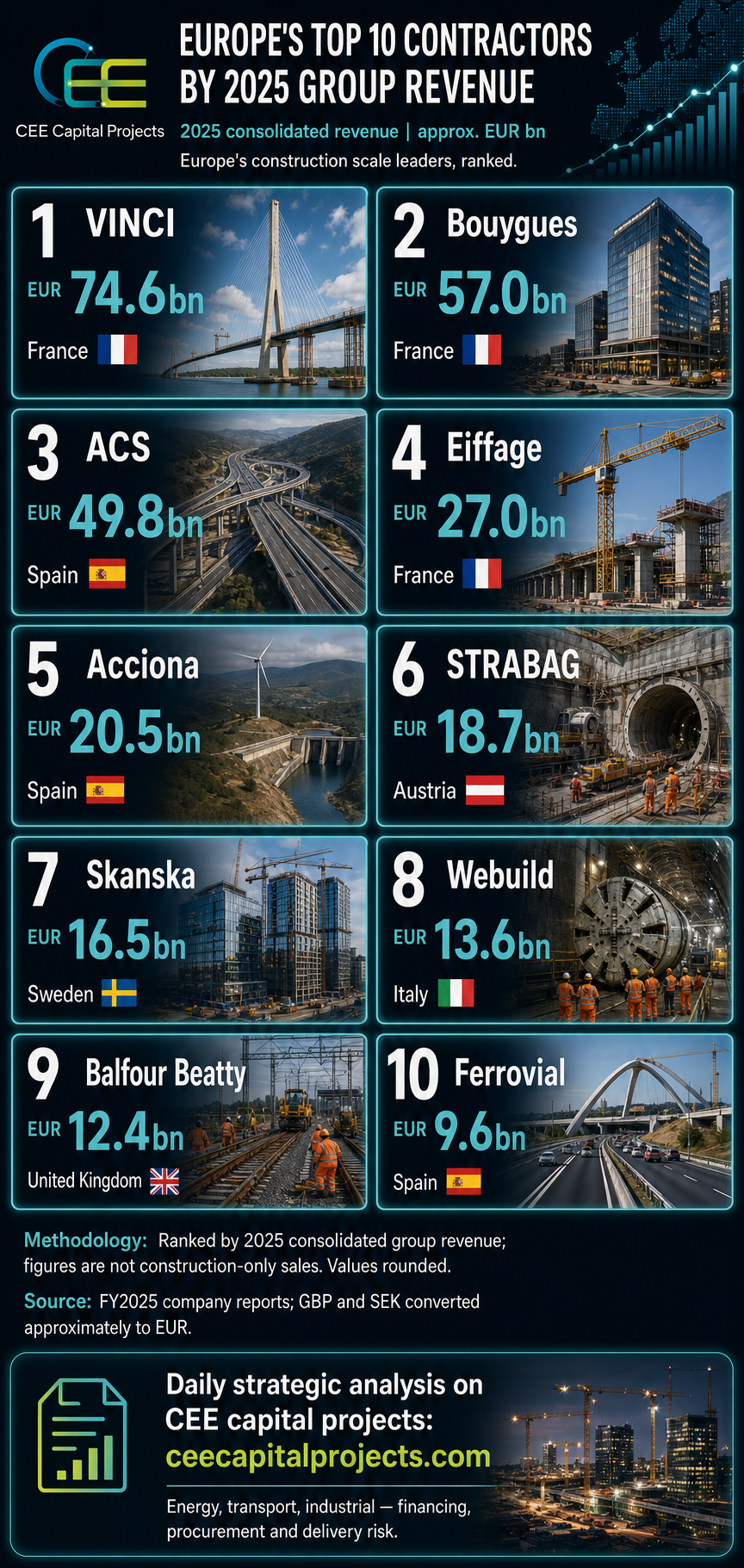
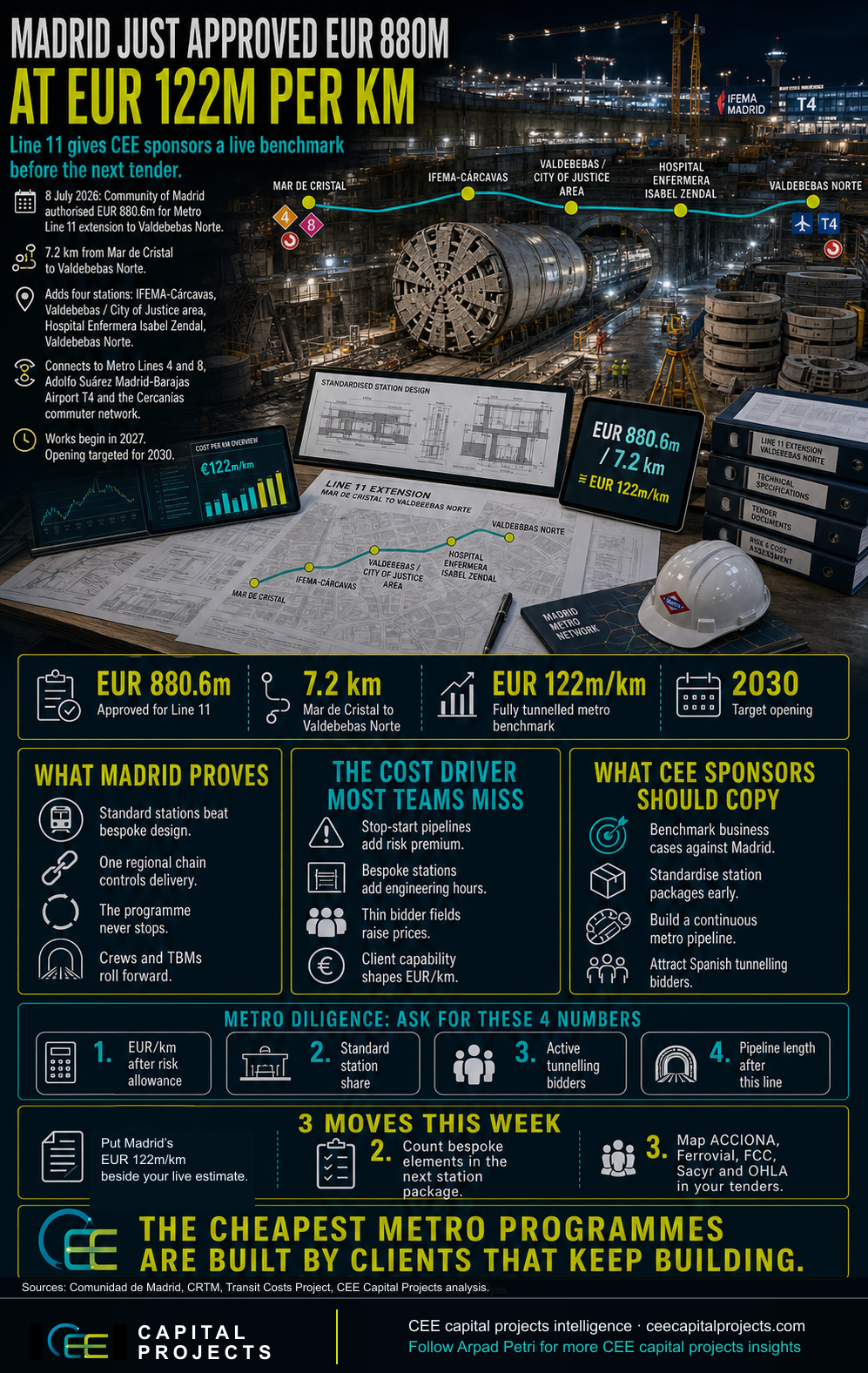
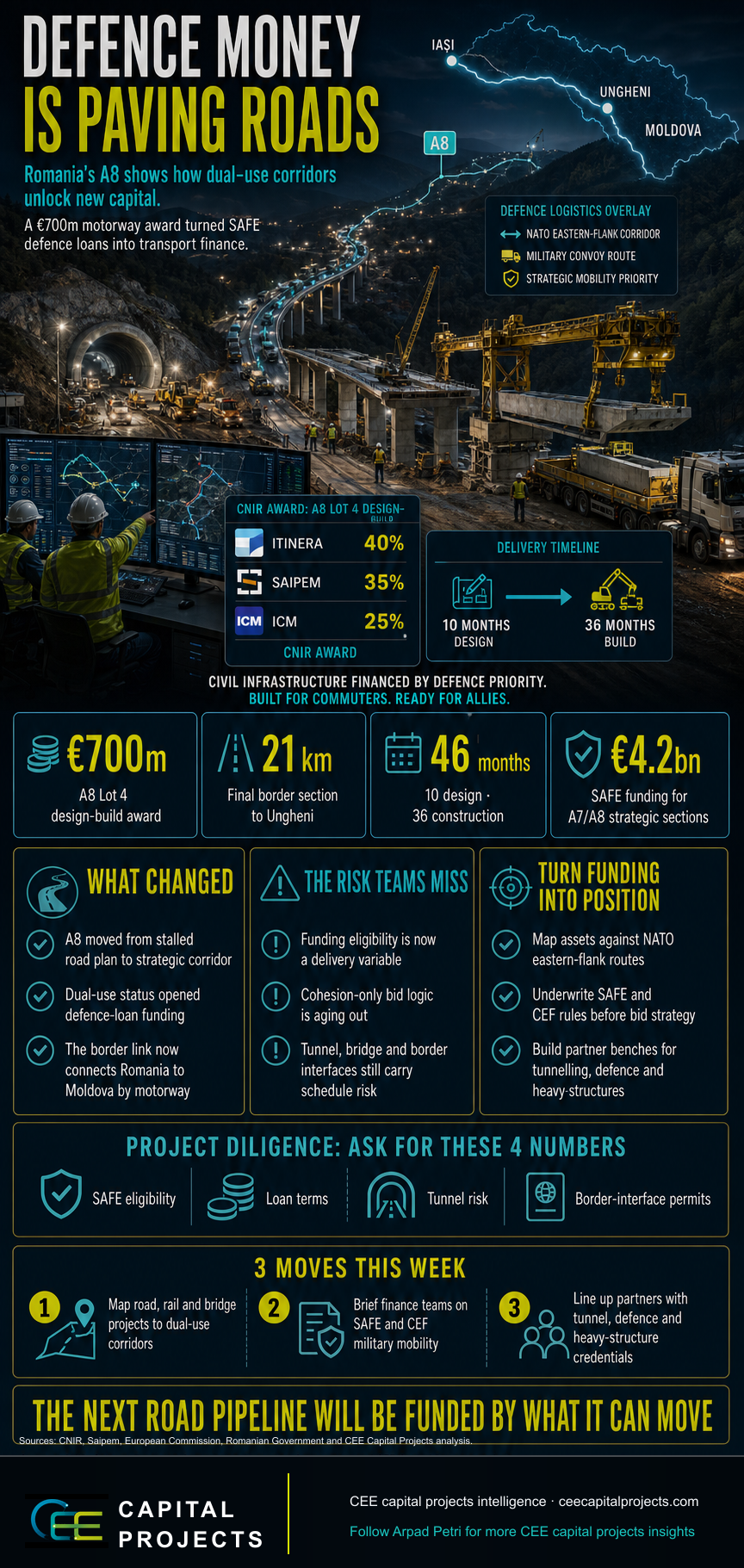
Explore our infograph library — strategic visuals for CEE capital projects leaders.
Project benchmarks, financing structures, tender dynamics and delivery risk — at a glance. Free access for investors, owners, contractors and strategy teams tracking CEE capital projects.
Browse the libraryStrategic Insights
📊 Analytics & Strategic Insight
Europe's grid buildout is becoming a members-only market: the contest has moved from tenders to framework seats
The decision most in this industry are avoiding:
👉 The framework seat is the asset; the contract is only the drawdown. Balfour Beatty's £446 million June was booked with zero at-award competition. Order-book quality now depends on how many standing panels a contractor holds, and rivals cannot take that work away until the framework expires.
👉 Delivery capacity is being hoarded like cable slots. Utilities learned from HVDC cable scarcity that waiting means paying more or waiting years. They are now reserving civils crews and substation engineers the same way, which turns a contractor's certified workforce into infrastructure in its own right.
👉 Price competition now happens once per decade. Rates and commercial mechanisms are set at framework letting. Whoever misprices that single round either loses ten years of work or carries thin margins all the way through it.
Here's the full context:
→ 2023–2024: Balfour Beatty installs 68 km of high-voltage cabling on Viking Link, the Denmark–Great Britain interconnector, its reference HVDC delivery for National Grid.
→ July 2025: National Grid names Balfour Beatty regional delivery partner for North East England on the £8 billion Electricity Transmission Partnership.
→ August 2025: National Grid lets its circa £59 billion HVDC supply chain framework to 19 suppliers; Balfour Beatty is the only company on two lots, covering converter-station civils and onshore cabling.
→ 22–25 June 2026: The £121 million Bramford substation extension and the £325 million Netherton Hub civils package land within four days, both called off frameworks rather than won in open tenders.
→ Most recent: On 9 July 2026, SSEN Transmission signs a long-term HVDC subsea cable framework with Sumitomo Electric and Van Oord, locking the supply chain upstream as well.
What this means for infrastructure operators, contractors and investors:
✅ Contractors: qualification is the new bidding. Track every framework opening in your target markets and resource framework pursuits like megaproject bids, because missing one round can mean a decade outside the market.
✅ TSOs and public sponsors: the model travels. Framework procurement buys speed and supply-chain certainty, but it concentrates the market. Sponsors in CEE should decide consciously how much price competition they trade away, and for how long.
✅ Investors: read backlog by its source. Framework-fed order books carry lower win-costs, steadier margins and higher revenue visibility than tender-won backlog. Contractor valuations will increasingly divide along that line.
3 moves you can make this week:
1️⃣ Build a framework calendar. List every transmission, rail and water framework due for letting or renewal in your markets over the next 18 months, and assign an owner to each entry.
2️⃣ Audit your prequalification file. Certifications, high-voltage-qualified staff numbers, safety statistics and reference projects decide framework entry. Fix the gaps now, before the next round opens.
3️⃣ Reprice your capacity. If buyers are reserving delivery capacity years ahead, long-term availability is a product. Package crews, plant and engineering as multi-year commitments and charge for the certainty.
Related analyses
- Energy & Power
Constellation's $4.3bn Nuclear Uprate Deal With Google: 890 MW, No New Site, and a Finite Pool
Constellation will invest more than $4.3bn to lift 890 MW out of 11 existing reactors under a 20-year Google power purchase agreement, at roughly half the per-kilowatt cost of recent American new build. The point for Europe is that the national uprate pool runs to three to five gigawatts, ČEZ banked its Dukovany headroom by 2009, and the only route left to fresh capacity is a CZK 407bn new build.
Read analysis → - Energy & Power
NEK's EUR 350 Million Yadenitsa Dam Tender Turns Bulgaria's Chaira Storage Fix Into a Civils Job
Bulgaria's NEK has put EUR 350m on the market for the Yadenitsa dam and a six kilometre tunnel at the 864 MW Chaira pumped storage plant, with bids due 4 November 2026 and 60 months to build. The civil works are costed at more than three times the EUR 102m reconstruction of all four of the plant's machines.
Read analysis → - Energy & Power
EIB and BNP Paribas Guarantee EUR 700m of Grid Equipment Bonds: Europe's Network Bottleneck Moves to the Balance Sheet
The EIB and BNP Paribas signed a EUR 700m counter-guarantee portfolio on 29 September 2026, covering advance payment and performance bonds for European manufacturers of electricity grid components. The instrument is small, and it points at the constraint that now sets delivery dates on Europe's grid build: bonding capacity rather than factory floor.
Read analysis →
Building in Central Europe?
Tell us what you're building. We'll tell you what can go wrong — and how to prevent it.