We Help International Investors and Project Owners Deliver Major CEE Projects Without Expensive Surprises
Independent project intelligence and advisory across energy, transport, real estate and industrial construction.
CEE Battery Storage Turns Bankable: R.Power, EBRD and the Poland-Romania Financing Wave
R.Power has closed non-recourse project finance on standalone batteries in Poland and Romania, pushing grid-scale storage across the bankability line. Here is why CEE's energy capital is shifting from generation to flexibility, and what it means for operators, contractors and investors.
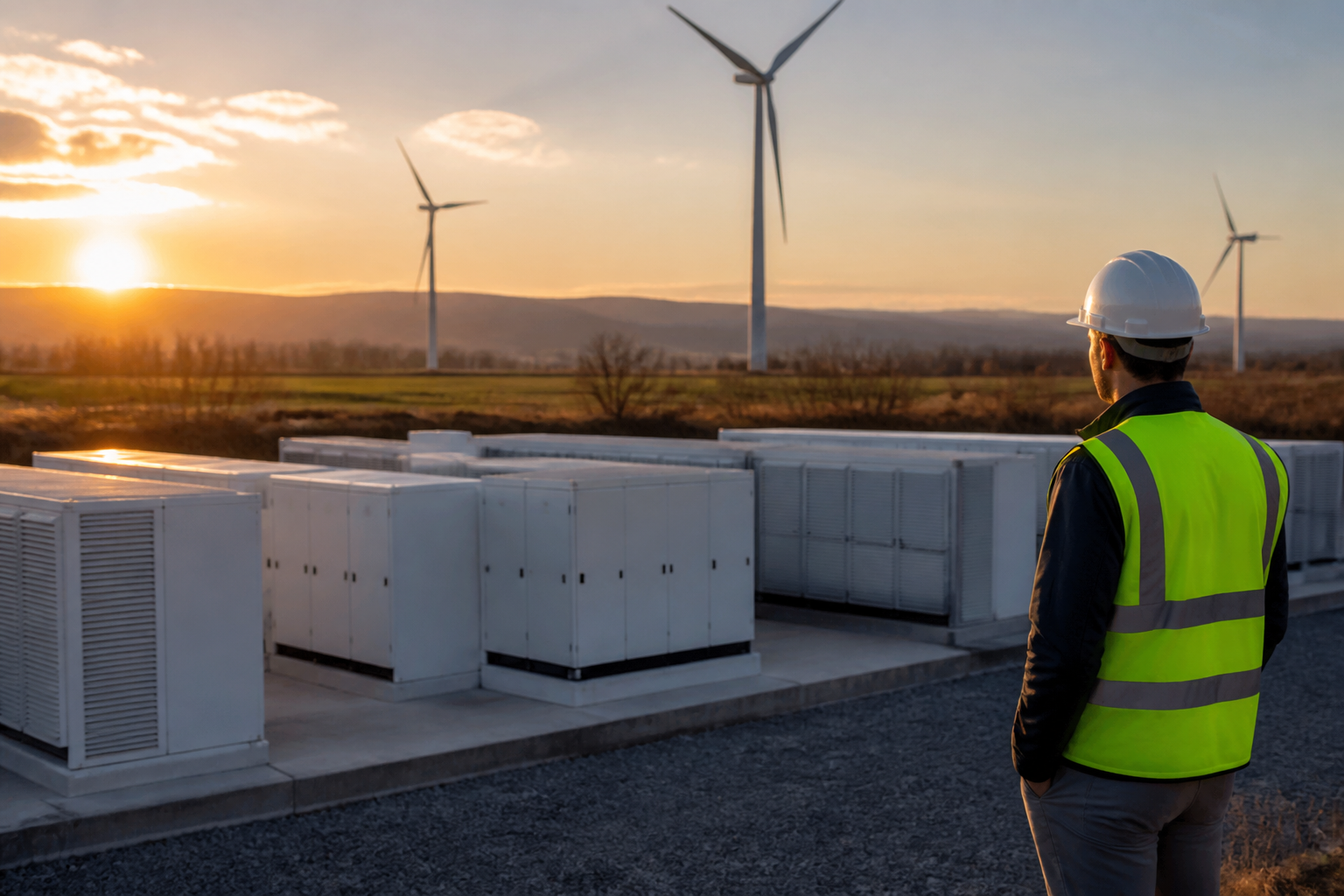
The most important number in Central and Eastern Europe's energy transition this summer is not a gigawatt of new solar. It is a debt facility. In June, developer R.Power closed non-recourse project finance on two standalone battery plants at once, one in Poland and one in Romania, and in doing so pushed a technology that lenders treated as speculative barely two years ago firmly across the bankability line.
The deal that proves the point
R.Power Group signed financing for two grid-scale battery energy storage systems (BESS): Project Jedwabno in Poland, with capacity of up to 160 MW, and Project Scornicești in Romania, rated 127 MW / 254 MWh. The Polish facility was arranged by Siemens Bank and Erste Group as mandated lead arrangers, with total commitments of up to around PLN 270 million (roughly EUR 64 million) across a term loan, a VAT facility and a debt service reserve. The Romanian facility was arranged by the EBRD and Poland's state development bank BGK, with total commitments of EUR 46.4 million; the EBRD's own share runs to EUR 44 million, of which EUR 29 million carries an InvestEU first-loss guarantee. (Sources: CMS, 15 June 2026; EBRD, 4 June 2026.)
Two details matter more than the headline euros. First, both are standalone batteries, not solar-plus-storage hybrids where the panels carry the credit. Second, both are non-recourse: lenders are taking project risk on merchant and balancing-market revenues rather than a parent-company guarantee. That is the working definition of bankable.
Why the money is moving to batteries
The driver is a grid that can no longer swallow what the region is building. Romania targets 38.3% renewables in final energy consumption by 2030 under its updated National Energy and Climate Plan (EBRD, 4 June 2026), and the solar pipeline is running ahead of the wires. When the grid fills up, generators are curtailed and prices swing violently. Storage is both the arbitrage and the shock absorber. The Scornicești plant will earn mainly merchant revenues through Romania's developing ancillary and balancing-services market. The economic case has stopped being a subsidy story and become a volatility story.
A regional pattern, not a one-off
Look across the map and the same trade repeats. The EBRD is lending EUR 70 million to Slovenia's NGEN for five BESS across Latvia, Poland, Romania and Slovenia, with Tesla supplying the hardware (EBRD, May 2026). In Hungary, the EBRD put EUR 70 million into a EUR 210 million package for Renalfa IPP's 450 MW solar portfolio paired with 250 MW / 1 GWh of batteries (SeeNews/EBRD, April 2026), while Greenvolt financed a 99 MW / 288 MWh plant at Buj, Hungary's largest, on a ten-year contract-for-difference with UniCredit Bank Hungary (Energy-Storage.news, January 2026). Romania's Aukera Energy raised a EUR 60 million debt facility from Kommunalkredit Austria for a 250 MW / 500 MWh project at Gura Ialomiței. And in the Baltics, Futureal Energy Partners is due to start construction this month on two Riga sites totalling 45 MW / 120 MWh (IPE Real Assets).
The structure is the story
What connects these deals is the financing architecture, not the chemistry. Development banks and vendor-linked lenders, from the EBRD and BGK to Kommunalkredit and Siemens Bank, are anchoring the senior debt; the EU's InvestEU guarantee is absorbing first losses on merchant exposure; and commercial banks are syndicating alongside. That layering is exactly what turns an untested revenue model into a financeable one. Hungary and Greece have used CfDs and capacity payments to give lenders a contracted floor. Poland and Romania are now proving that even largely merchant batteries can clear a credit committee.
For contractors and EPC firms, the storage pipeline is a rare growth channel while road and rail budgets tighten. For utilities and grid operators, batteries are becoming a cheaper answer to congestion than copper in many corridors, and a faster one to permit. For investors, the risk has shifted from "will it get built" to "how will merchant spreads hold once everyone builds the same asset." The developers who lock in tolling agreements, capacity contracts or strong balancing-market positions now, before CEE storage saturates, will own the margin. The rest will be price-takers in a market they helped create.
Share it with your peers
Help your network stay ahead of CEE capital projects.
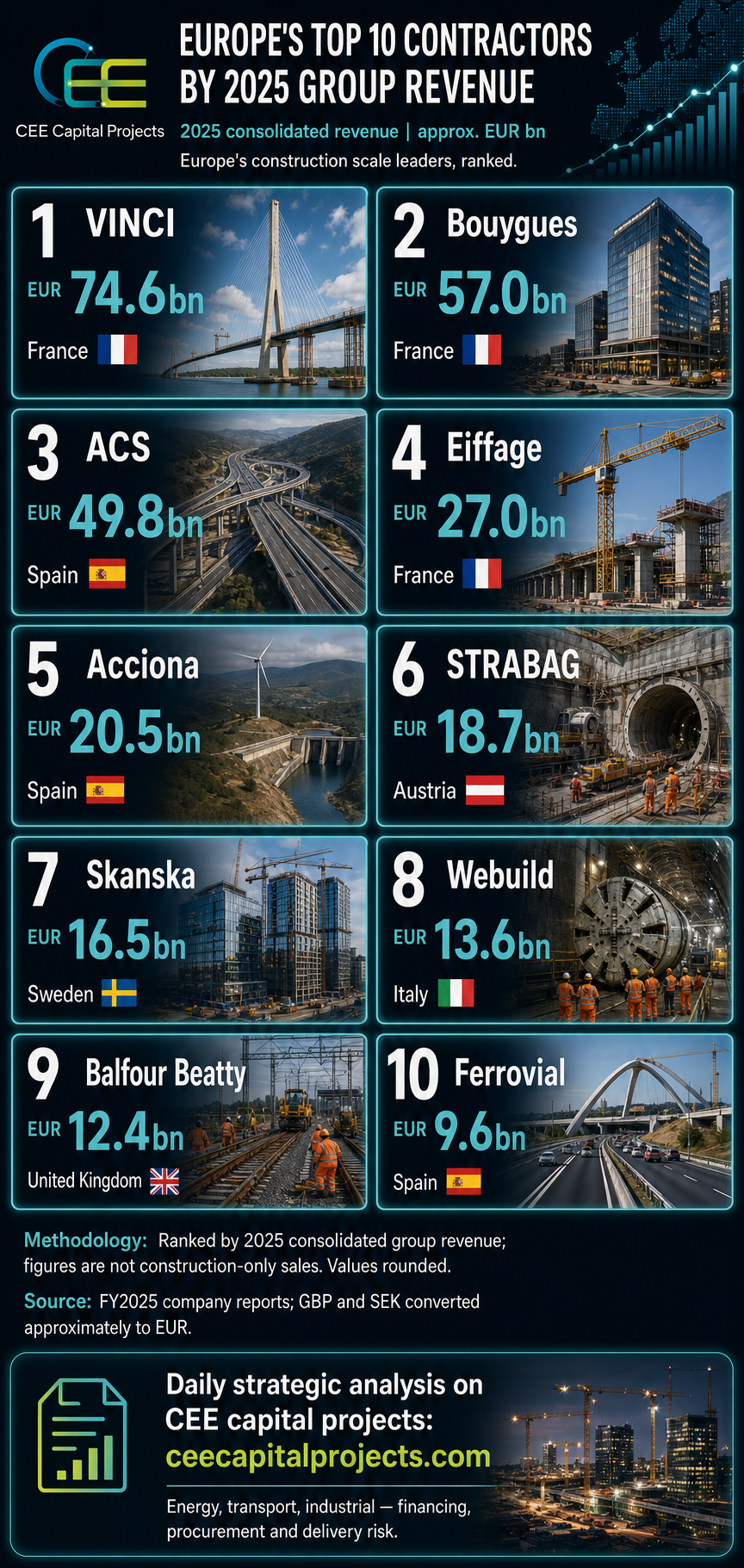
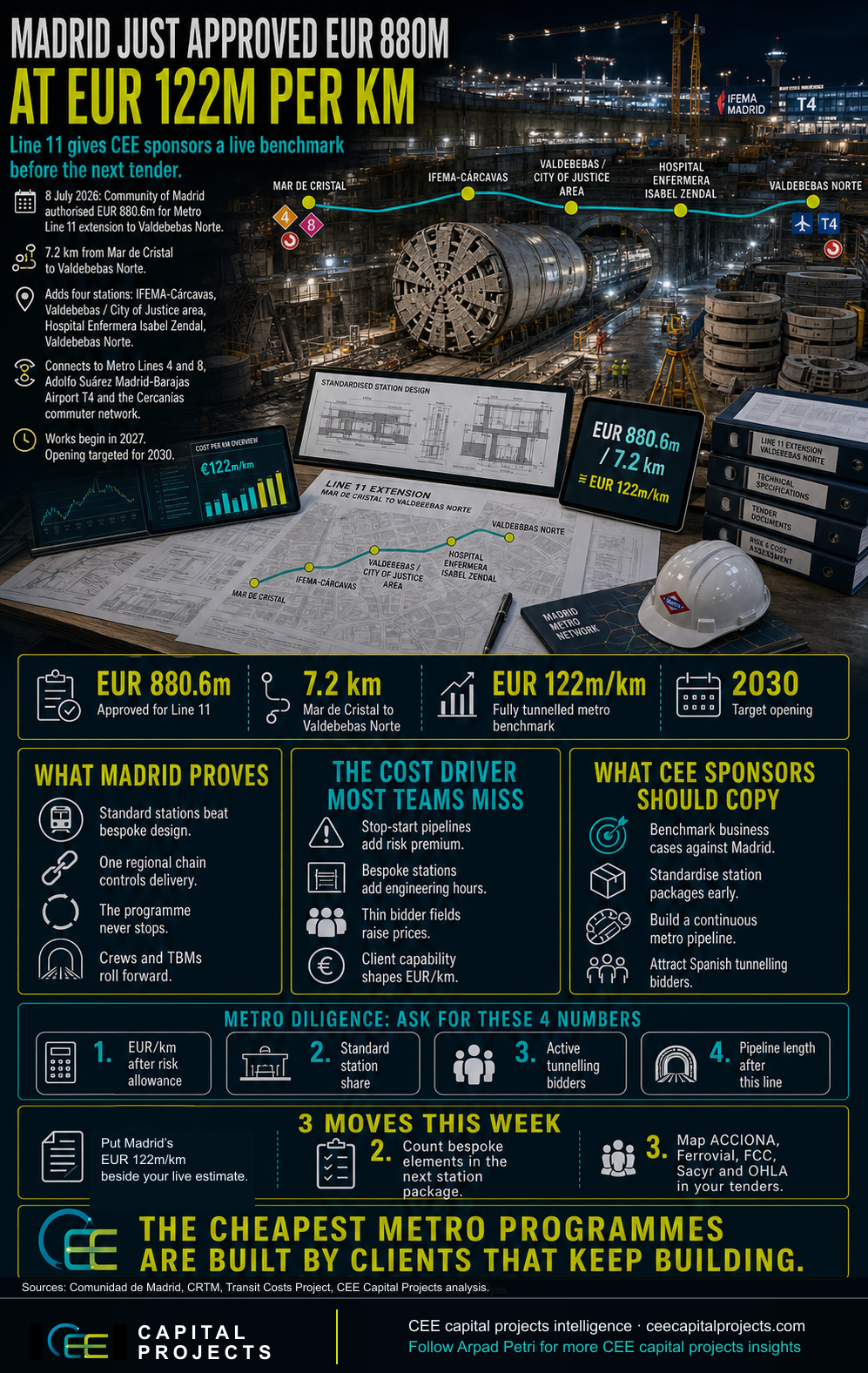
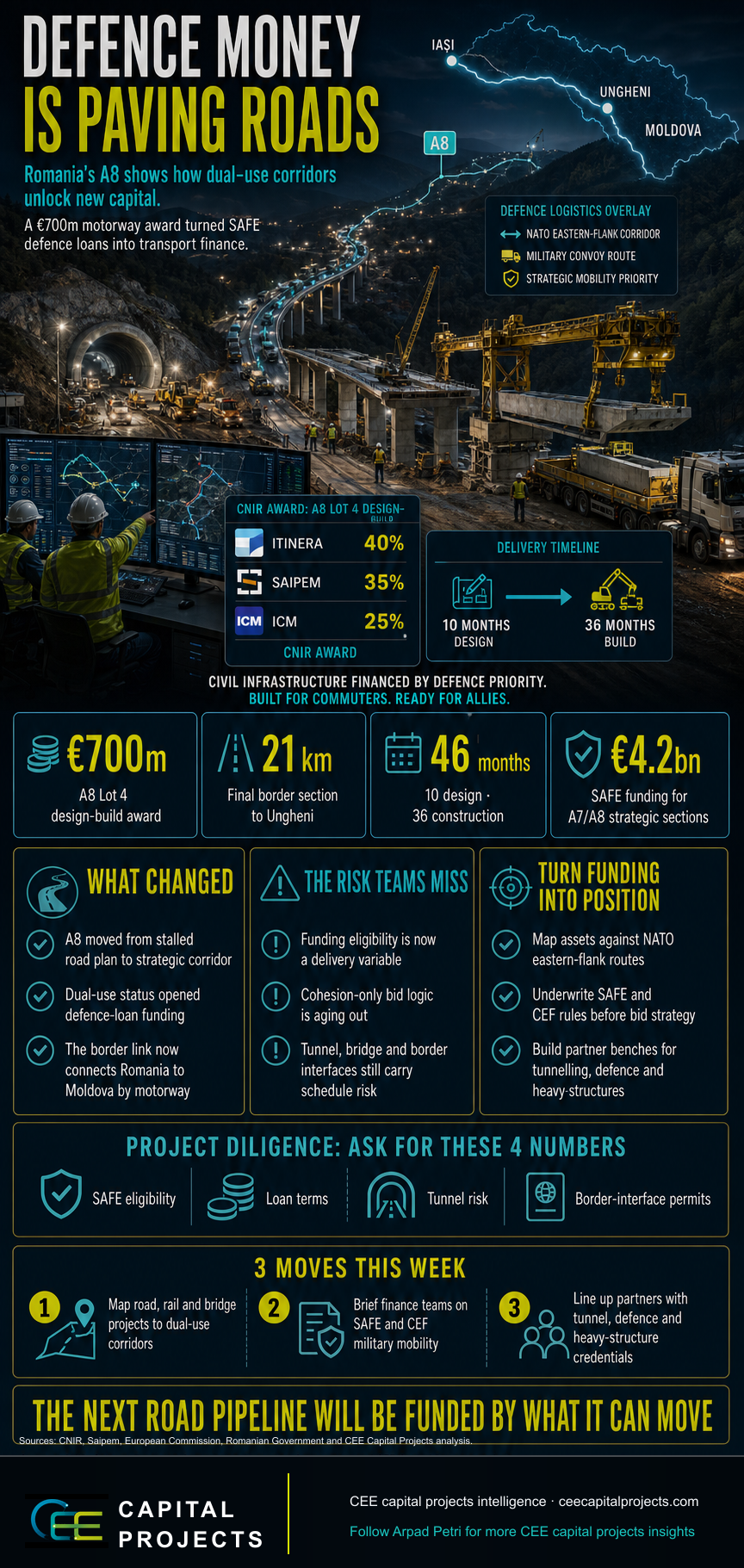
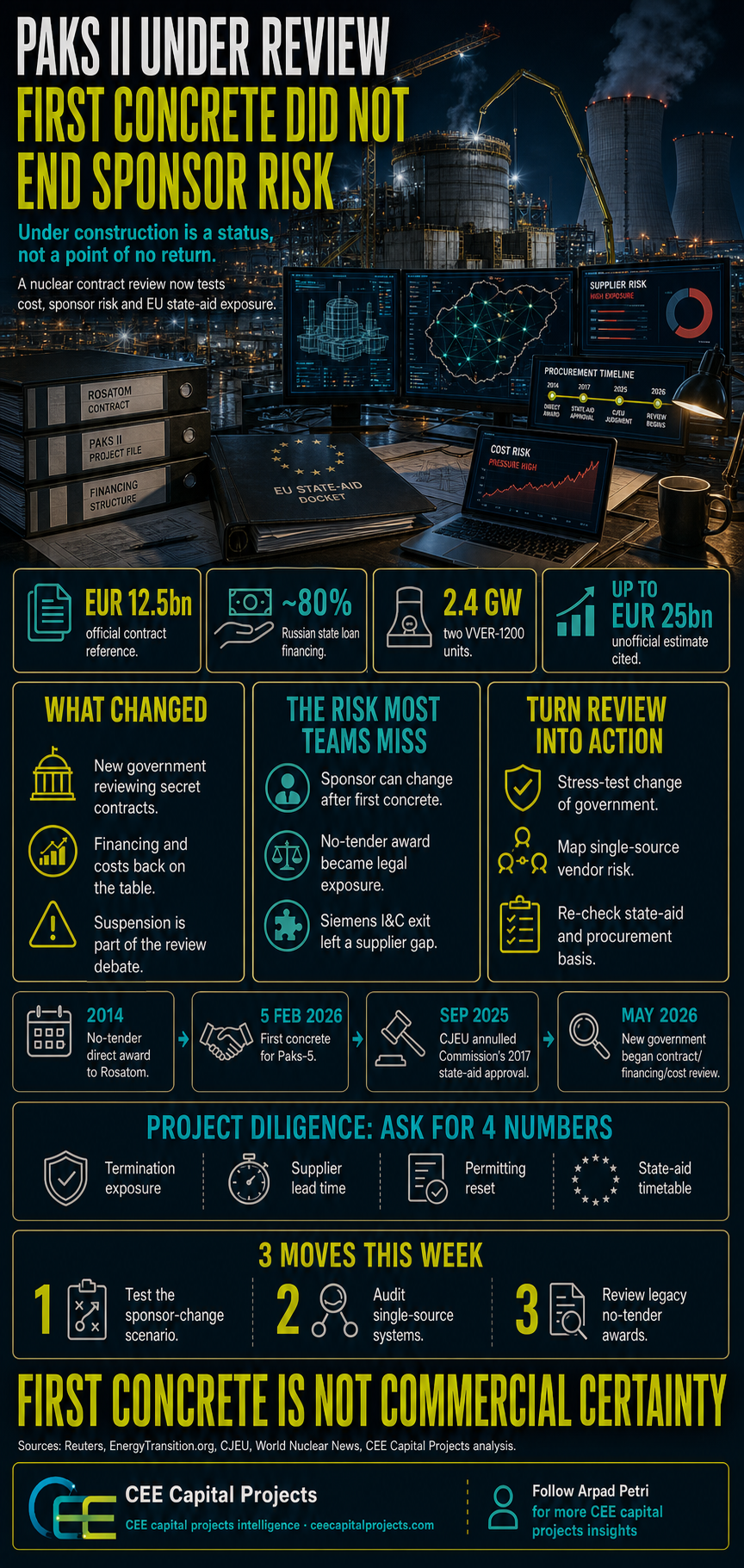
Explore our infograph library — strategic visuals for CEE capital projects leaders.
Project benchmarks, financing structures, tender dynamics and delivery risk — at a glance. Free access for investors, owners, contractors and strategy teams tracking CEE capital projects.
Browse the libraryStrategic Insights
📊 Analytics & Strategic Insight
CEE's energy capital is quietly repricing: from megawatts to flexibility
The decision most in this industry are avoiding:
👉 Treating storage as a bolt-on to solar. The bankable deals closing now are standalone. The value sits in flexibility and arbitrage, and framing batteries as a hybrid accessory understates the balance-sheet opportunity in front of you.
👉 Waiting for a contracted revenue floor before committing. Poland and Romania closed largely merchant deals. Firms holding out for a subsidy or CfD in every market will watch merchant-comfortable rivals lock up the best grid connections and sites first.
👉 Assuming the grid constraint is a generation problem. It is a flexibility problem. The scarce, valuable asset in CEE is now the ability to move energy in time, not simply to produce more of it.
Here's the full context:
→ 2023-24: CEE solar and wind pipelines balloon on EU cohesion and Recovery and Resilience money, but grid-connection queues and curtailment start biting.
→ 2025: The EU adds 27.1 GWh of new battery capacity, up 45% on 2024, with utility-scale systems overtaking home batteries for the first time (SolarPower Europe). Storage goes industrial.
→ Early 2026: Hungary's CfD-backed batteries, Greenvolt's 99 MW / 288 MWh Buj plant and Renalfa's 250 MW / 1 GWh package, show contracted revenue models clearing finance.
→ Mid-2026: The EBRD's EUR 70 million NGEN facility across four countries and R.Power's Poland-Romania close prove standalone, largely merchant batteries are financeable with development-bank and InvestEU support.
→ Most recent: This month, Baltic and Romanian projects (Futureal in Riga, Aukera at Gura Ialomiței) move into construction and operation, carrying the wave to the region's edges.
What this means for infrastructure operators, contractors and investors:
✅ Storage is the new grid-relief capex. Where a transmission upgrade takes years to permit, a battery can be sited and built in months. Operators facing congestion should model batteries head-to-head against copper.
✅ Merchant risk is now financeable, but priced. Development banks and InvestEU guarantees are carrying the tail risk today. That support will thin as the market matures, so first-mover economics are real and time-limited.
✅ The margin will compress. Everyone is building the same asset into the same balancing markets. Revenue stacking, siting near constraint points and longer-duration differentiation will separate the winners from the price-takers.
3 moves you can make this week:
1️⃣ Map your congestion. Identify the grid nodes where curtailment or price spread is worst; those are where a battery earns the most and permits the fastest.
2️⃣ Pressure-test a merchant case. Build a revenue-stack model (arbitrage plus balancing plus capacity) and see whether it clears without a CfD, as Poland's Jedwabno did.
3️⃣ Line up blended debt early. Open conversations with the EBRD, EIB, BGK and InvestEU-backed structures now; the first-loss support that made these deals work is a finite window.
Related analyses
- Energy & Power
Constellation's $4.3bn Nuclear Uprate Deal With Google: 890 MW, No New Site, and a Finite Pool
Constellation will invest more than $4.3bn to lift 890 MW out of 11 existing reactors under a 20-year Google power purchase agreement, at roughly half the per-kilowatt cost of recent American new build. The point for Europe is that the national uprate pool runs to three to five gigawatts, ČEZ banked its Dukovany headroom by 2009, and the only route left to fresh capacity is a CZK 407bn new build.
Read analysis → - Energy & Power
NEK's EUR 350 Million Yadenitsa Dam Tender Turns Bulgaria's Chaira Storage Fix Into a Civils Job
Bulgaria's NEK has put EUR 350m on the market for the Yadenitsa dam and a six kilometre tunnel at the 864 MW Chaira pumped storage plant, with bids due 4 November 2026 and 60 months to build. The civil works are costed at more than three times the EUR 102m reconstruction of all four of the plant's machines.
Read analysis → - Energy & Power
EIB and BNP Paribas Guarantee EUR 700m of Grid Equipment Bonds: Europe's Network Bottleneck Moves to the Balance Sheet
The EIB and BNP Paribas signed a EUR 700m counter-guarantee portfolio on 29 September 2026, covering advance payment and performance bonds for European manufacturers of electricity grid components. The instrument is small, and it points at the constraint that now sets delivery dates on Europe's grid build: bonding capacity rather than factory floor.
Read analysis →
Building in Central Europe?
Tell us what you're building. We'll tell you what can go wrong — and how to prevent it.