We Help International Investors and Project Owners Deliver Major CEE Projects Without Expensive Surprises
Independent project intelligence and advisory across energy, transport, real estate and industrial construction.
Skanska Just Signed Two of Britain's Eleven New Hospitals. BAM, Bouygues and Multiplex Lost the £37 Billion Pipeline for Up to 12 Years
England signed eleven hospital delivery agreements on 30 July 2026, a first wave worth around £14bn inside a £37bn framework. Seven of the schemes exist because a 1960s concrete panel is failing, and the real competition ended five months before the contracts were signed.
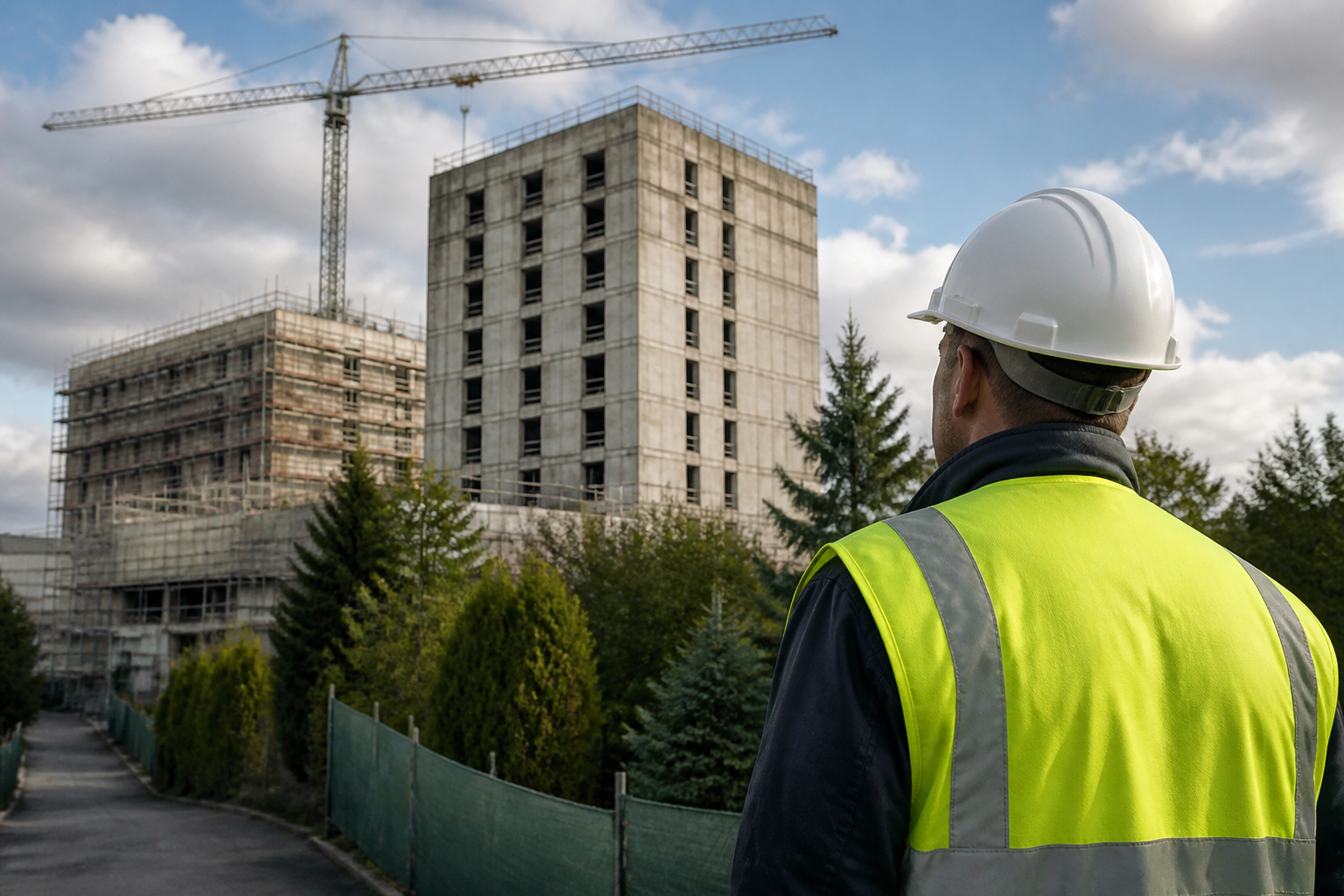
Eleven hospital contracts were signed in England on 30 July. Seven of them exist because of a concrete panel that was never meant to outlast the buildings it went into.
The New Hospital Programme (NHP) has signed long-term delivery agreements with contractors for the first wave of schemes under its Hospital 2.0 Alliance, a wave collectively valued at around £14bn. Skanska took two of the eleven. Integrated Health Projects, the VINCI Building and Sir Robert McAlpine joint venture, took one. Spain's Sacyr UK and Dragados took one each. GRAHAM, Kier Construction, Willmott Dixon, Laing O'Rourke, Morgan Sindall Construction and Bovis Construction took the rest (Building Better Healthcare and Construction Enquirer, both 30 July 2026).
The trigger is a materials defect, not demand growth
Seven of the eleven schemes replace hospitals built substantially from reinforced autoclaved aerated concrete. RAAC is a lightweight aerated panel used widely in British public buildings from the 1950s to the mid-1990s, with a working life that turned out to be shorter than the estates it was installed in. Airedale General, Frimley Park, Hinchingbrooke, James Paget, Leighton, West Suffolk and the Queen Elizabeth Hospital King's Lynn are in this wave because their structure is failing, not because their catchment populations grew.
Europe's largest healthcare construction programme is, at its front end, a structural-defect bill. Those buildings were signed off, insured, inspected and occupied for decades before anyone put a number on the end of their service life. The capital plan was written by the asset register, and the asset register was written in the 1970s.
The competitive event happened in March, not July
The eleven signings read like eleven awards. They are allocations. The competition finished on 2 March 2026, when NHS England named ten contractors to the Hospital 2.0 Alliance framework, worth up to £37bn and running for up to 12 years, from a 16-strong shortlist. BAM, Bouygues, FCC, McLaren, Multiplex and Sisk did not make the cut (Construction Enquirer, 2 March 2026).
Six substantial contractors are therefore outside the UK's biggest building pipeline for the better part of a decade, on the strength of a single evaluation held five months ago. Karin Smyth, Minister of State for Health, framed the change as an attack on procurement delay, noting that schemes with full approval and funding in place had still been stuck in tendering. Removing that delay also removed the repeated price test that came with it.
Four continental groups hold five of the eleven schemes
Skanska is Swedish. Sacyr and Dragados are Spanish, and Dragados sits inside ACS alongside HOCHTIEF. VINCI is French. Between them, four continental European parents hold five of the eleven first-wave schemes, including both Norfolk hospitals. Construction News reported on 5 August 2026 that Skanska's two Norfolk appointments, an estimated £1bn at Queen Elizabeth King's Lynn and £950m at James Paget, put the contractor top of the July contract league.
That is the predictable result of a client that stops buying buildings and starts buying a production line. A 12-year relationship across multiple schemes rewards balance-sheet depth, offsite manufacturing capacity and the ability to move design and delivery teams between sites. It does not reward the ability to win a single job on price.
Standardisation only pays if the wave keeps moving
Hospital 2.0 is a bet on repetition: national standard designs, digital delivery and modern methods of construction, with the same teams building scheme three faster and cheaper than scheme one. The saving is a learning curve, and learning curves are fragile.
The programme's own timetable is the risk. The January 2025 reset placed 41 schemes into four waves stretching to 2045-46. Wave 1 construction starts between 2027-28 and 2028-29; Wave 2 does not begin until 2031-32. The National Audit Office reported in January 2026 that the RAAC replacements are now not expected to open until 2032-33, against a 2030 commitment.
A gap between waves does to a standardised programme what a stop-start order book does to any factory. Trained crews disperse. Suppliers who tooled up for a repeatable component go back to bespoke work. The second hospital then costs what the first one cost.
What to watch
Three tests will show whether this model works, and they apply well beyond England. First, whether the second scheme in each contractor's portfolio beats the first on cost and programme, which is the only proof that standardisation is real rather than rhetorical. Second, whether the supply chain behind the standard design commits capital to tooling, which it will only do if the order flow looks continuous. Third, whether the excluded six find a route back through joint ventures, acquisitions or the specialist packages sitting under the tier-one layer.
For public sponsors across Europe facing comparable estate problems, from Hungarian and Polish hospital stock to German school and rail renewal, the English experiment is the live test case. It is considerably cheaper to watch someone else discover whether a hospital can be built like a product than to find out on your own programme.
Share it with your peers
Help your network stay ahead of CEE capital projects.
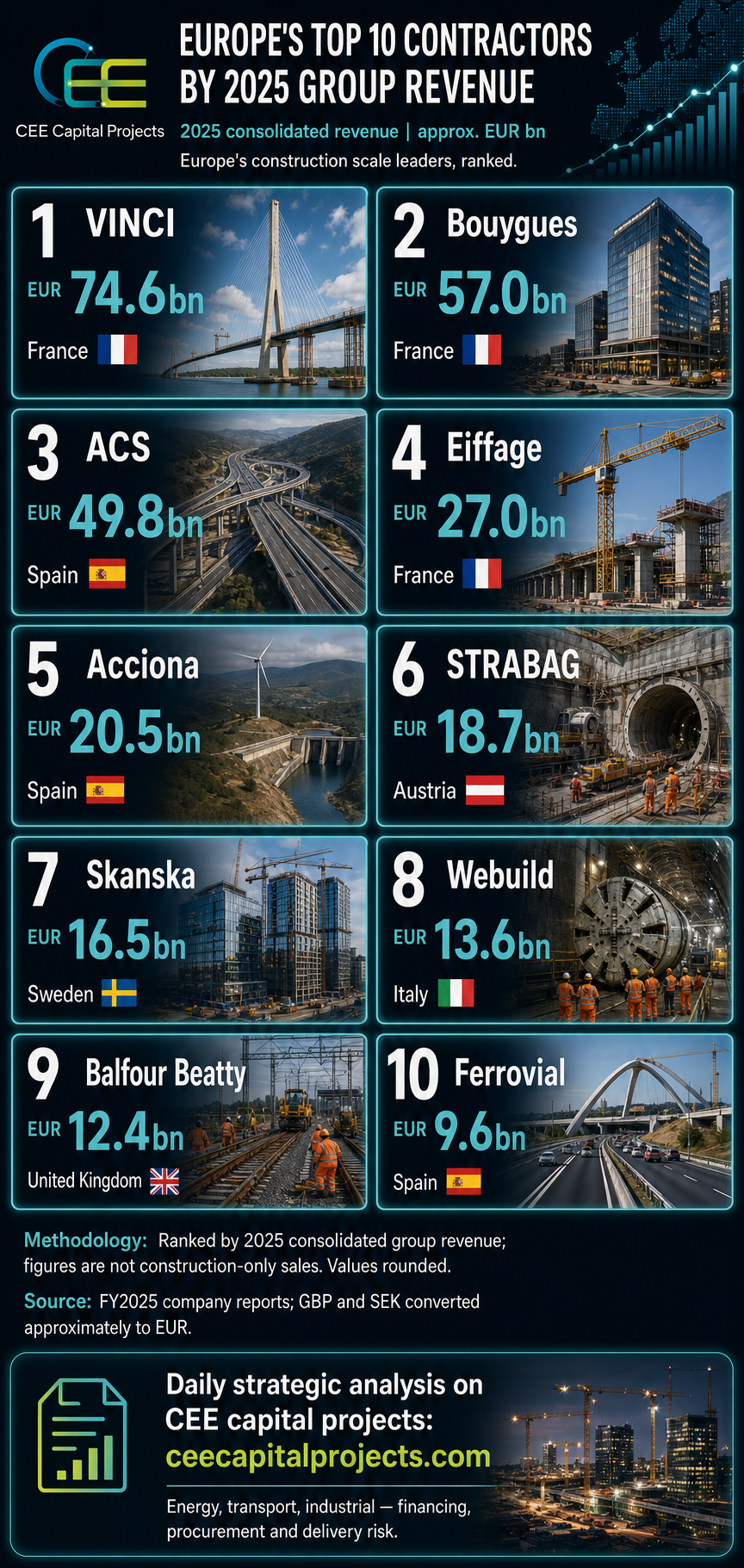
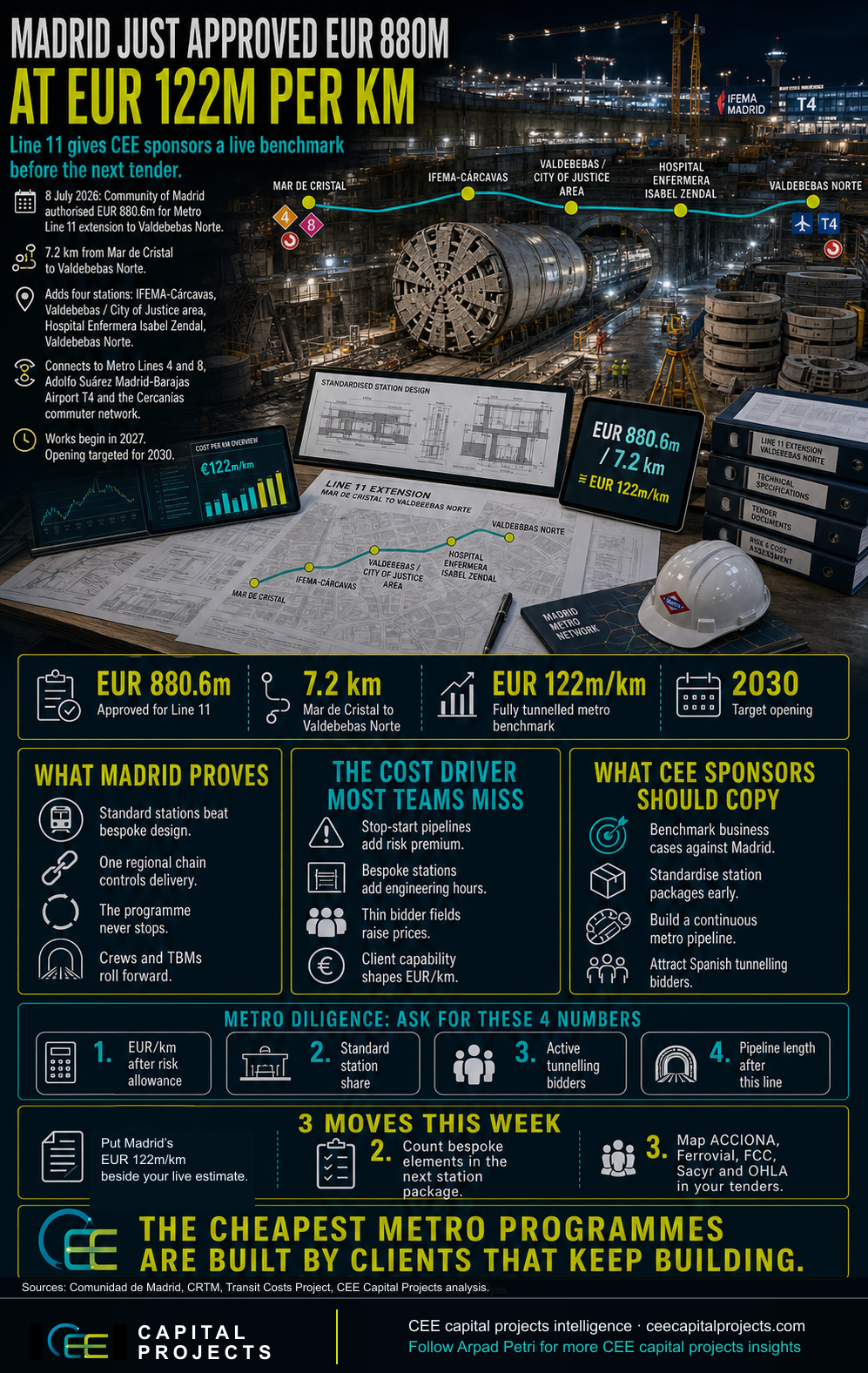
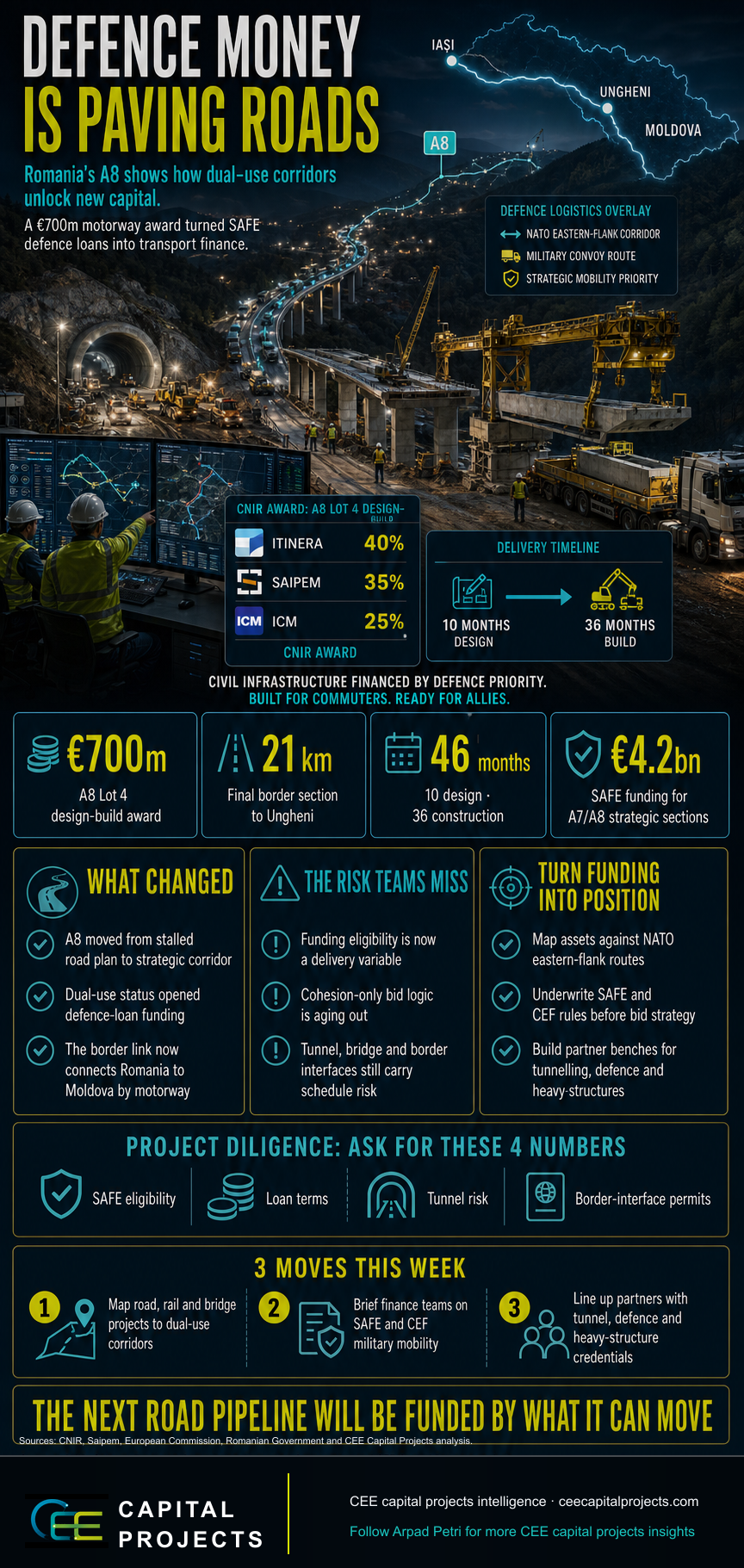
Explore our infograph library — strategic visuals for CEE capital projects leaders.
Project benchmarks, financing structures, tender dynamics and delivery risk — at a glance. Free access for investors, owners, contractors and strategy teams tracking CEE capital projects.
Browse the libraryStrategic Insights
📊 Analytics & Strategic Insight
Britain is rebuilding hospitals because the concrete failed, and it has changed how it buys them
The decision most in this industry are avoiding:
👉 Nobody checks what their own buildings will force them to spend. Most capital plans start with what the client wants. Seven of these eleven hospitals started with what a roof panel did. Old buildings set budgets more often than strategy does.
👉 A framework win is now worth more than a project win. Ten firms got seats in March. Six good firms did not. Those six lost close to a decade of work in one afternoon, and most of the market still treats framework bids as paperwork.
👉 Standard designs save money only if the work keeps coming. The saving comes from doing the same thing again. Stop for two years and the saving goes away. Almost nobody plans for that gap.
Here's the full context:
→ 1950s to 1990s: British public buildings used RAAC, a light concrete panel. It was cheap and quick to fit. Its working life was shorter than the buildings it went into.
→ 2020: The government promised 40 new hospitals. Prices and dates were set before the designs existed.
→ January 2025: The programme was reset. 41 schemes, four waves, the last one finishing in 2045-46.
→ 2 March 2026: NHS England picked ten builders for a £37bn framework lasting up to 12 years. BAM, Bouygues, FCC, McLaren, Multiplex and Sisk were left out.
→ Most recent: On 30 July 2026 eleven hospital deals were signed, worth about £14bn. Skanska got two. Four European parent groups hold five of them.
What this means for infrastructure operators, contractors and investors:
✅ Your old buildings are part of your capital plan. A material that fails can move more money than a new policy. Find out what your estate is made of before you plan the next five years.
✅ Long frameworks now decide who eats. One bad framework bid can cost a firm a decade in a whole sector. That bid deserves the team you would put on a megaproject.
✅ Repeat work is the whole business case. If a client wants standard designs, ask how many buildings and how close together. Without that answer, the promised saving is only a wish.
3 moves you can make this week:
1️⃣ List the buildings you cannot vouch for. Pull the structural records for anything built between 1955 and 1995. Flag every roof or floor system with no inspection record. That list is your real risk register.
2️⃣ Map the long frameworks in your market. Write down every multi-year panel that will be let in the next 18 months, who sits on the current one, and when it expires. Then decide which two you must win.
3️⃣ Price the second job, not the first. Show a client what building number two costs if it follows straight after number one, and what it costs after a two-year gap. That one page changes how programmes get funded.
Related analyses
- Real Estate & Construction
Echo Investment's Owner Bid PLN 5.20 a Share for the Rest of Poland's Biggest Developer. The Market Never Came Down to Meet It
Lisala, the vehicle through which Hungary's WING controls Echo Investment, has notified Poland's regulator of a PLN 5.20 per share offer for the 37.63 per cent it does not own, about 4.4 per cent below the close that preceded it. Echo's shares have stayed above the bid, and two Polish pension funds now decide whether the country's largest developer leaves the Warsaw exchange after three decades.
Read analysis → - Real Estate & Construction
RSK Hits GBP 2.47bn Revenue With GBP 965m Net Debt: Why Clients Should Prequalify Their Engineering Advisers
RSK lifted revenue 10.3 per cent to GBP 2.47bn in the year to 5 April 2026 and reported GBP 112m of interest against GBP 18.1m of operating profit, with net debt up to GBP 965m from GBP 734m. The engineering and environmental advisers who sign designs, ground reports and consents are consolidating on borrowed money, and almost no client tests them the way it tests a contractor.
Read analysis → - Real Estate & Construction
WING Group Grew Revenue 41% While 63% of Its Assets Sat Outside Hungary
WING Group lifted first-half 2026 revenue 41 per cent to HUF 130.3bn, with 63 per cent of its assets now in Poland and Germany. Its Hungarian half year ran on standing-asset purchases while Budapest's office pipeline stayed just above 100,000 sqm.
Read analysis →
Facing a decision on a CEE capital project?
Describe the situation in a few sentences. Within 72 hours you get an experienced read: the risks we see, what we'd check, and whether we can help — no calls, no obligation.