We Help International Investors and Project Owners Deliver Major CEE Projects Without Expensive Surprises
Independent project intelligence and advisory across energy, transport, real estate and industrial construction.
Inter and Milan Just Raised €354 Million Against San Siro. Europe Built 50 Stadiums in 15 Years While Italy Modernised Three
Italian clubs spent two decades unable to finance new grounds, and the reason has almost nothing to do with football. San Siro Spa's first €354m round shows what changes the moment a building sits on land the borrower actually owns.
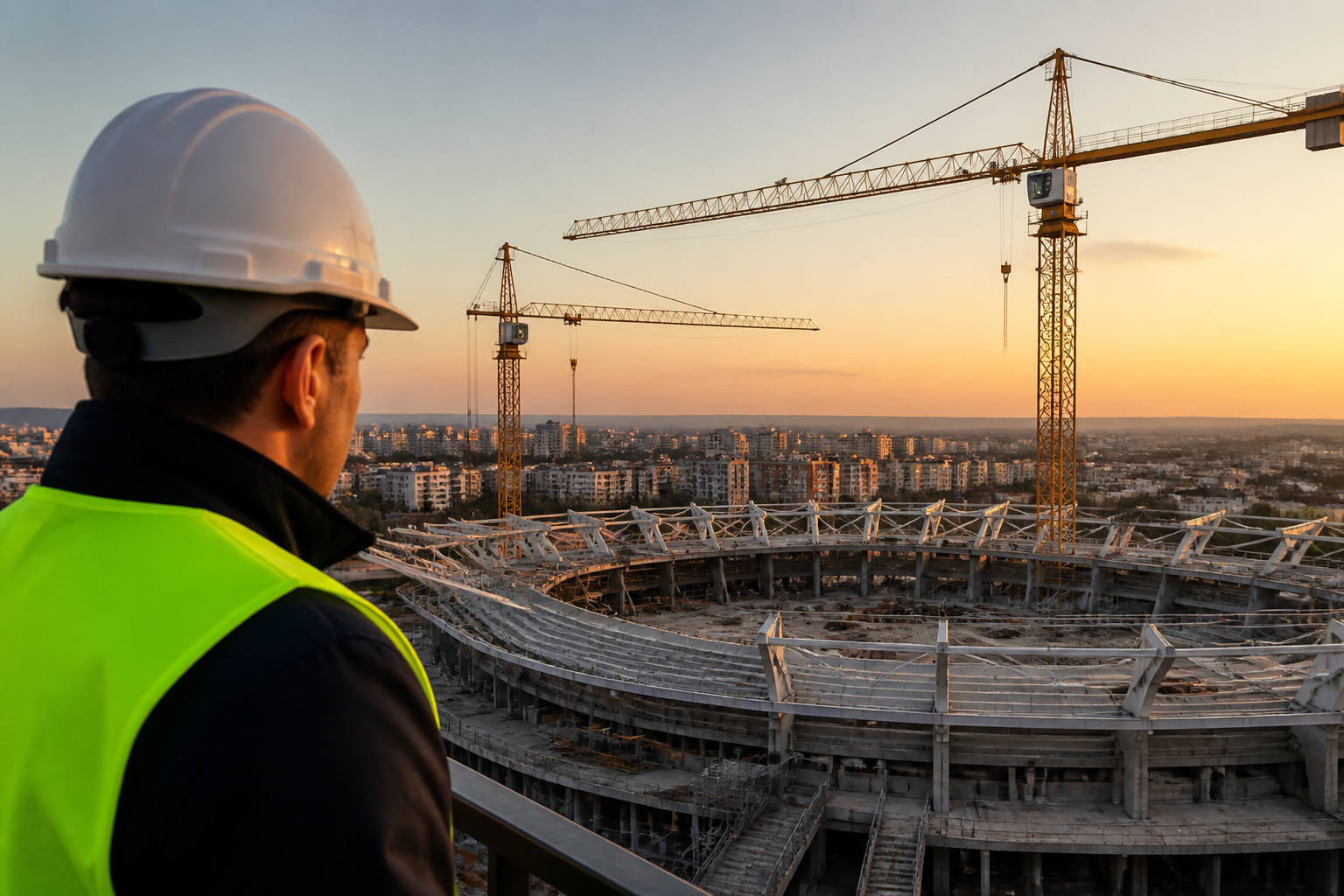
A stadium that will not see a machine on site until October 2027 has just raised €354 million. For anyone who finances or builds large projects, that sequence is the story.
On 12 August 2026, La Gazzetta dello Sport reported that San Siro Spa, the joint vehicle set up by Inter and AC Milan, had closed a first financing round of €354 million with a group of international banks. Construction is scheduled to start in October 2027 and run about 36 months, putting completion in October 2030 and the opening between December 2030 and January 2031. Foster + Partners and MANICA are designing the 71,500-seat ground, and the two club owners, Oaktree at Inter and RedBird at Milan, are running the project directly.
The money followed the land, not the design
The design has existed for years. The revenue case has existed for longer: two clubs, one of Europe's largest matchday markets, a shared asset with roughly double the event calendar of a single-tenant stadium. None of that was ever the obstacle.
What changed is the title deed. In November 2025 the clubs paid €197 million to the Comune di Milano for the stadium and the surrounding land, ending municipal ownership that ran back to 1947. Until then, Inter and Milan were tenants on public ground. A tenancy cannot be pledged. A concession over municipal land can be revoked, renegotiated or overturned by the next council, which is why lenders price it as political risk rather than as real estate.
The closing date was set by a heritage clock rather than a funding window. The second tier of the Meazza was completed on 10 November 1955, and Italy's cultural heritage code triggers a verification of cultural interest on publicly owned works once they pass 70 years of age. Complete the sale after that date and the building becomes considerably harder to touch. The deed was signed on 5 November 2025, five days inside the deadline.
Why Europe built 50 stadiums and Italy modernised three
Roughly 90% of Italian stadiums are publicly owned, most of them built between the 1930s and the 1960s. Italian football-finance analysts put the last 15 years at around 50 new stadiums across Europe for some €20 billion of investment, against three modernisations in Italy. UEFA president Aleksander Ceferin has said Italy has by far the worst infrastructure among the big European football nations, and Serie A general manager Luigi De Siervo has warned that without upgrades by October 2026 Italy risks losing its share of Euro 2032.
Set that against Madrid. Real Madrid funded the Bernabeu rebuild with a €575 million facility led by JP Morgan and Bank of America Merrill Lynch, repayable over 30 years at a fixed 2.5%, later extended to around €800 million. Thirty-year money at that price is not a reward for being a big club. It is what a lender charges when it can take security over the asset itself.
The risk has moved into the calendar
The San Siro facility is reported in three lines of up to €124 million, €205 million and €25 million, released against milestones rather than drawn in one go. The clubs present the final implementation plan in February, with the approvals process targeted to conclude by summer 2027. Every one of those steps is a drawdown condition.
The programme then carries an unusual operating overlay. The Meazza keeps hosting matches while the new ground goes up beside it, so a live venue for tens of thousands of people sits alongside a 36-month construction site. The old stadium is not removed until much later: the demolition tender is pencilled in for October 2030 to March 2031, with demolition itself running from April 2031 to May 2032. The site is not clear until 2032.
Two legal overhangs remain. Appeals against the sale sit before the Lombardy regional administrative court, and Milan prosecutors have opened an investigation into how the sale was run. Neither has stopped the financing. Both sit inside the conditions attached to it.
The package contractors have not seen yet
The main works contract has not been let. Webuild had promoted a renovation of the existing stadium; the clubs chose a new build instead, which leaves a roughly €1.2 billion, 36-month building programme in the middle of a dense European city still to come to market before 2028. Few packages of that size and profile will be tendered in Italy this decade, and the winner will be delivering it next to an operating 70,000-seat venue on match days.
The wider lesson travels well beyond football. Across Europe, public bodies are trying to pull private capital into ageing public assets: exhibition centres, covered markets, station quarters, municipal sports estates, hospital sites. The San Siro sequence says the ownership question gets answered before the revenue question. Sponsors who want third-party money in a public asset should expect the first bank meeting to be about the land registry, and should treat the transfer of title as the first work package rather than as a legal formality somewhere in year two.
Share it with your peers
Help your network stay ahead of CEE capital projects.
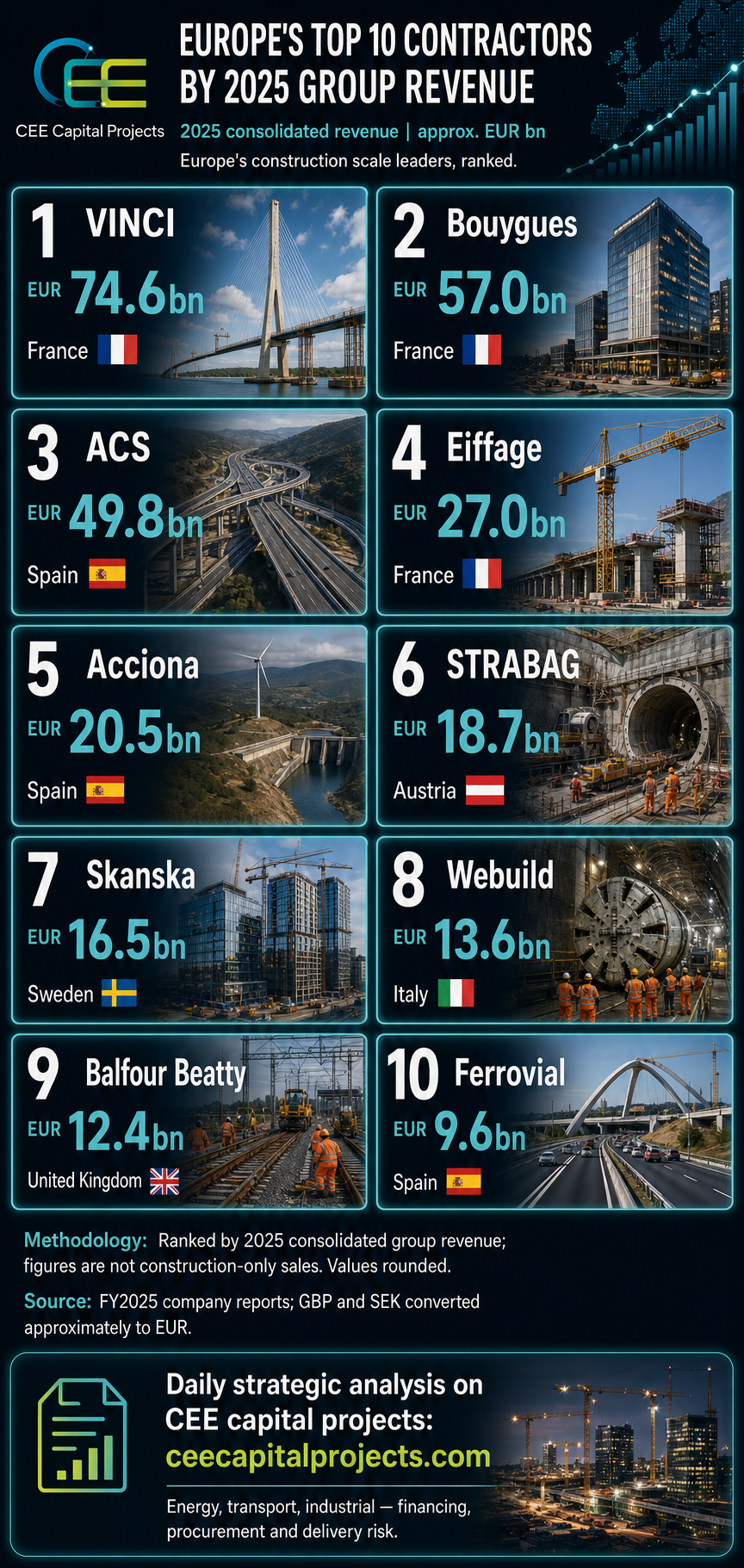
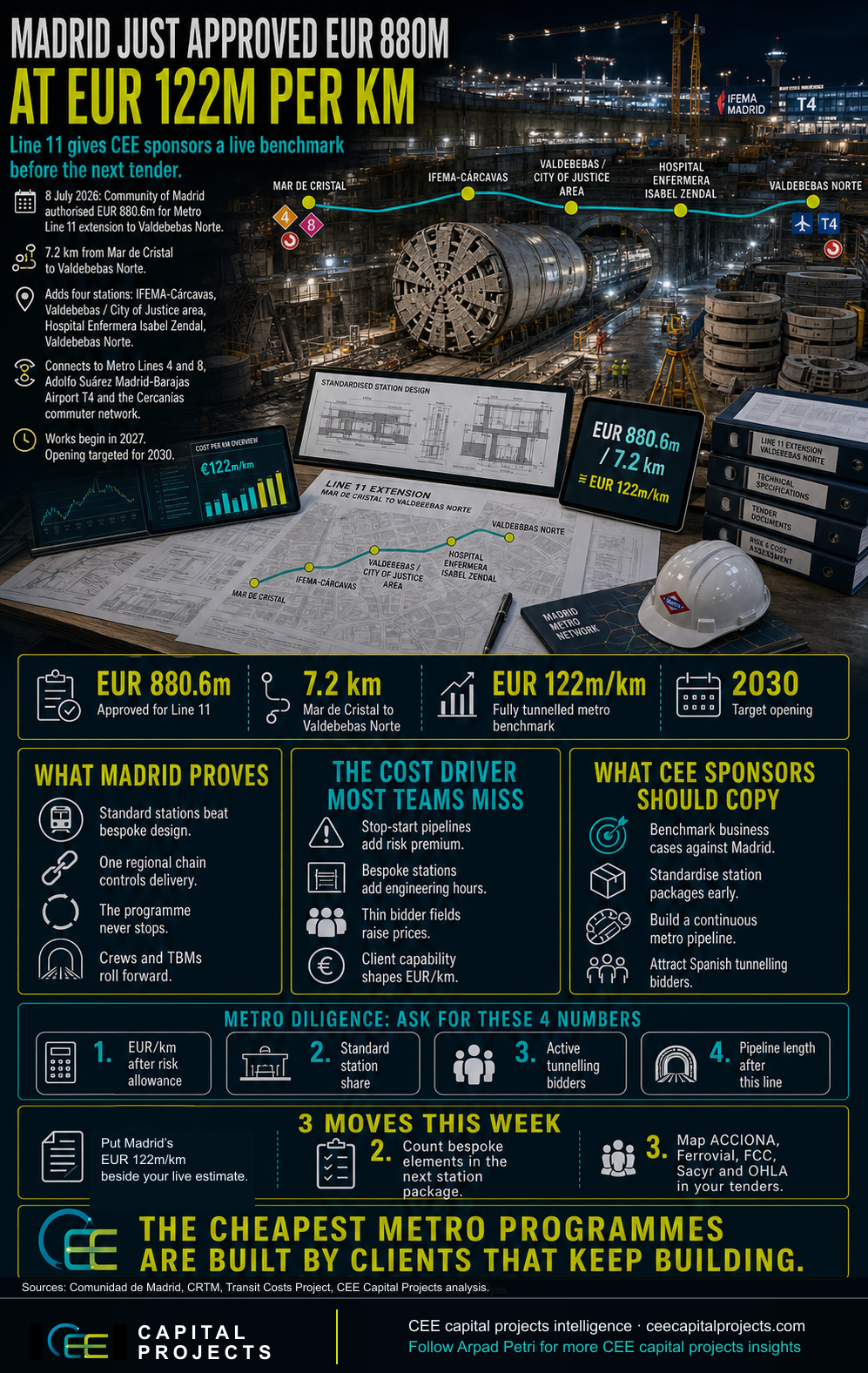
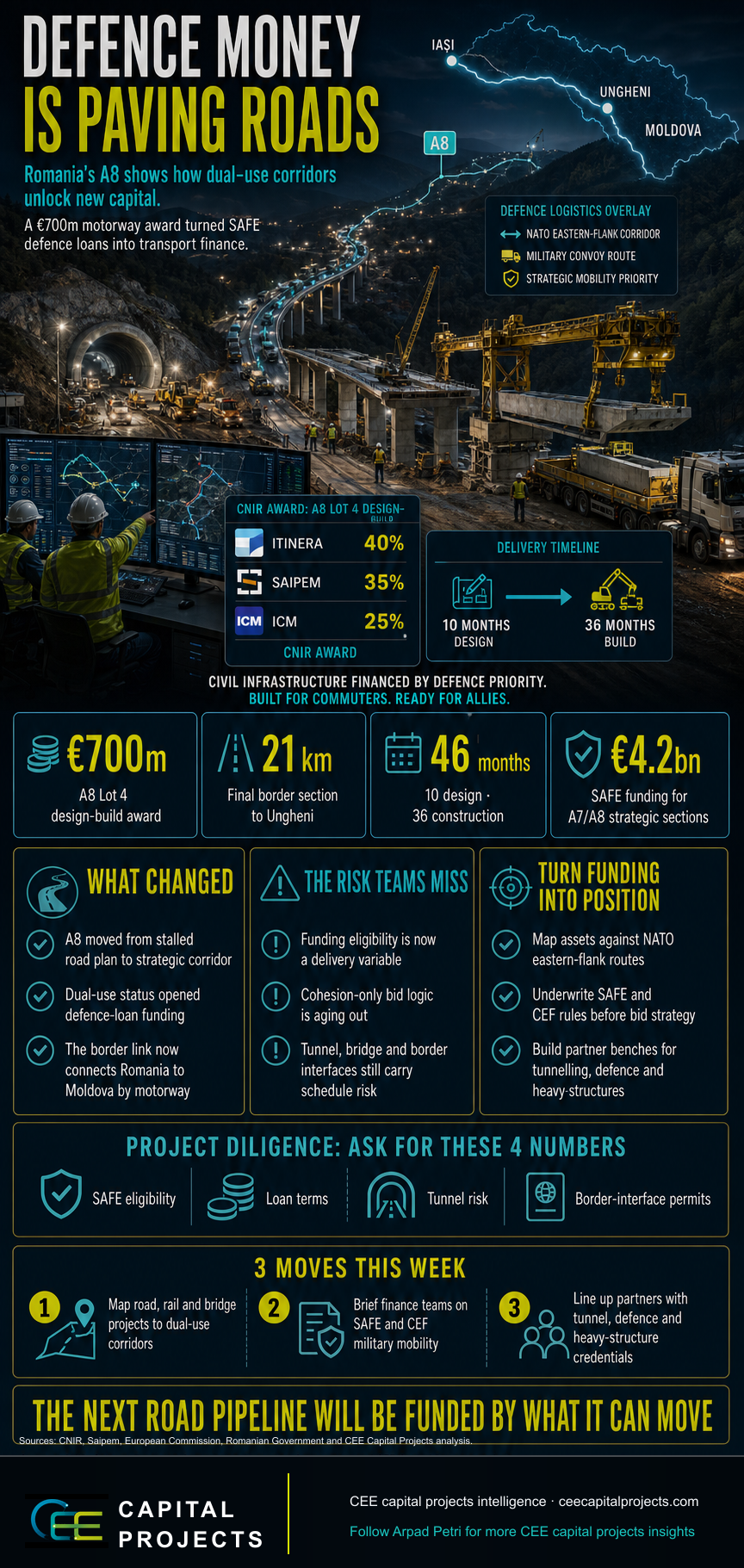
Explore our infograph library — strategic visuals for CEE capital projects leaders.
Project benchmarks, financing structures, tender dynamics and delivery risk — at a glance. Free access for investors, owners, contractors and strategy teams tracking CEE capital projects.
Browse the libraryStrategic Insights
📊 Analytics & Strategic Insight
The banks did not lend against the football. They lent against the ground under it.
The decision most in this industry are avoiding:
👉 Who owns the land is a money decision, not a legal chore. Most teams hand land title to the lawyers and get on with the design. It sets the price of your debt. Sort it first.
👉 A lease on public land is not something a bank can hold. If the council can take it back, the bank cannot lend long against it. That is why so many old public buildings never get fixed.
👉 Good income does not make a project bankable on its own. The clubs always had the crowds and the money coming in. They still could not borrow. What they lacked was something to pledge.
Here's the full context:
→ 1947: The city of Milan takes ownership of San Siro. For the next 78 years the two clubs are tenants on someone else's land.
→ 1955: The second ring is finished on 10 November. Italian law protects public buildings once they turn 70, so that date became a hard deadline.
→ 2019 to 2021: Real Madrid borrows €575m, later about €800m, over 30 years at 2.5% fixed. It can do that because it controls its own ground.
→ November 2025: Inter and Milan pay €197m for the stadium and the land around it, five days before the 70-year rule would have bitten.
→ Most recent: On 12 August 2026 the clubs raise €354m against the site. Work starts October 2027 and the new ground opens around the turn of 2031.
What this means for infrastructure operators, contractors and investors:
✅ Check the title before you build the model. Ask who owns the ground and what the bank can take if things go wrong. Do that in week one, not month nine.
✅ Money released in stages pushes risk onto the builder. This loan comes in three parts, each tied to a planning step. If a step slips, the cash slips with it. Price that.
✅ A very large building job is coming to market. A €1.2bn, three-year build in central Milan still has no main contractor. Bidders should be getting ready now, not in 2028.
3 moves you can make this week:
1️⃣ List every project you are building on someone else's land. Write down who can take it away and how quickly. That list is your real risk register.
2️⃣ Read your drawdown conditions as a programme. Put each one on the schedule with a date and a named owner. Most delays start there, not on site.
3️⃣ Get in front of the Milan job early. Talk to the design team, the local supply chain and the site logistics people well before the tender lands.
Related analyses
- Real Estate & Construction
Echo Investment's Owner Bid PLN 5.20 a Share for the Rest of Poland's Biggest Developer. The Market Never Came Down to Meet It
Lisala, the vehicle through which Hungary's WING controls Echo Investment, has notified Poland's regulator of a PLN 5.20 per share offer for the 37.63 per cent it does not own, about 4.4 per cent below the close that preceded it. Echo's shares have stayed above the bid, and two Polish pension funds now decide whether the country's largest developer leaves the Warsaw exchange after three decades.
Read analysis → - Real Estate & Construction
RSK Hits GBP 2.47bn Revenue With GBP 965m Net Debt: Why Clients Should Prequalify Their Engineering Advisers
RSK lifted revenue 10.3 per cent to GBP 2.47bn in the year to 5 April 2026 and reported GBP 112m of interest against GBP 18.1m of operating profit, with net debt up to GBP 965m from GBP 734m. The engineering and environmental advisers who sign designs, ground reports and consents are consolidating on borrowed money, and almost no client tests them the way it tests a contractor.
Read analysis → - Real Estate & Construction
WING Group Grew Revenue 41% While 63% of Its Assets Sat Outside Hungary
WING Group lifted first-half 2026 revenue 41 per cent to HUF 130.3bn, with 63 per cent of its assets now in Poland and Germany. Its Hungarian half year ran on standing-asset purchases while Budapest's office pipeline stayed just above 100,000 sqm.
Read analysis →
Facing a decision on a CEE capital project?
Describe the situation in a few sentences. Within 72 hours you get an experienced read: the risks we see, what we'd check, and whether we can help — no calls, no obligation.